Essential HVAC Maintenance Tips for Peak Performance and Efficiency
Maintaining your heating, ventilation, and air conditioning (HVAC) system is fundamental to controlling your home’s comfort, ensuring system longevity, and minimizing utility expenses.
This guide equips you with the actionable knowledge to manage key upkeep tasks, ranging from optimizing airflow through diligent filtration to recognizing when professional support is genuinely necessary. You will learn the best schedules for seasonal tune-ups, understand the vital signs that precede a total breakdown, and discover tangible strategies to boost energy efficiency across your entire home. By mastering these homeowner responsibilities and understanding technician input, you take full stewardship of your climate control investment.
Optimizing System Airflow Through Proactive Filtration
Maintaining high-quality airflow is one of the most effective hvac maintenance tips for ensuring your system runs efficiently. Your air filter acts as a gatekeeper; while its primary job is to protect sensitive internal components from dust and debris, it also plays a vital role in your home’s air quality. Without regular attention, a clogged filter can lead to a significant drop in energy efficiency.
Choosing the Correct Filter for Your System
Air filters are rated using the MERV (Minimum Efficiency Reporting Value) scale. Think of a MERV rating as the “mesh size” of your filter: a higher number means a tighter mesh that catches smaller particles. However, there is a balance to strike between air purity and system health.
A common mistake is choosing the highest MERV rating available without considering your system’s power. If a filter is too restrictive, your blower motor must work significantly harder to pull air through the material. This extra strain leads to higher utility costs, uneven cooling, and can eventually cause the motor to burn out prematurely.
| MERV Rating | Filtration Level | Common Contaminants Captured | Airflow Impact |
|---|---|---|---|
| 1–4 | Low | Large dust particles, lint, carpet fibers | Minimal (Best for airflow) |
| 5–8 | Medium | Pollen, dust mites, mold spores | Moderate |
| 9–12 | High | Lead dust, pet dander, fine dust | Significant |
| 13–16 | Superior | Bacteria, smoke, sneeze droplets | High (Check system compatibility) |
Establishing a Routine Replacement Schedule
The frequency of filter changes depends heavily on your lifestyle and environmental factors. Dirty air filters reduce airflow and force your unit to cycle longer than necessary. Use these categories to determine your ideal schedule:
- Single Occupant/No Pets: Change every 90 days.
- Average Family Home (No Pets): Change every 60 days.
- Homes with Pets: Change every 30–45 days to manage fur and dander.
- Occupants with Allergies or Asthma: Change every 30 days using a MERV 11+ filter.
- Peak Summer/Winter Months: Check your filter monthly regardless of household size, as the system runs more frequently during these seasons.
Identifying Causes of Weak Airflow
If your filter is clean but you still notice weak air coming from your vents, there may be an underlying issue with your system’s distribution. Restricted airflow is a leading cause of frozen evaporator coils and total system shutdowns. Common culprits include:
- Blocked Vents: Ensure that furniture, rugs, or curtains are not obstructing supply or return registers.
- Ductwork Leaks: Holes or disconnected segments in your ducts allow conditioned air to escape into unconditioned spaces like attics or crawlspaces.
- Closed Dampers: Check if any manual dampers in your ductwork have been accidentally closed, restricting air to specific rooms.
For homeowners in the Rock Hill area, professional diagnostics can provide precise measurements of your system capacity and airflow patterns to identify hidden bottlenecks.
Essential DIY Maintenance Tasks for Homeowners
While complex technical repairs should always be left to the pros, performing basic hvac maintenance tips can significantly extend the life of your equipment. Here are the essential tasks you can handle safely at home.
Cleaning the Outdoor Condenser Unit
The outdoor unit is exposed to the elements, leading to a buildup of dirt, leaves, and grass clippings that can restrict airflow and force your system to work harder. Follow these steps to clean it safely:
- Turn off the power: Safety is the most important step. Locate the service disconnect box near the outdoor unit and pull the plug or flip the switch to the “off” position. You should also turn off the power at the main breaker panel.
- Remove large debris: Hand-pick any leaves, twigs, or weeds from around the base and top of the unit.
- Clear the perimeter: Trim back any bushes or vegetation to ensure at least two feet of clear space around the unit for proper ventilation.
- Clean the fins: Use a garden hose with a gentle stream to wash away dirt from the exterior fins. Avoid using a pressure washer, as the high pressure can easily bend and damage the delicate aluminum fins.
- Straighten bent fins: If you notice any bent fins, you can carefully straighten them using a specialized “fin comb” or a soft-bristle brush.
Clearing the Condensate Drain Line
As your air conditioner removes humidity from the air, the moisture collects in a drain pan and exits through the condensate line. Over time, algae and mold can grow inside this pipe, leading to clogs and potential water damage.
To keep this line clear, locate the access point (usually a T-shaped pipe near the indoor unit). Every few months, pour about one cup of distilled white vinegar down the line to kill any biological growth. If you suspect a clog has already formed, use a wet/dry shop vac on the outside end of the drain line to pull the blockage through. Regular HVAC maintenance of this line prevents messy overflows in your attic or crawlspace.
Vent and Registry Upkeep
Maintaining proper airflow inside your home is just as important as the health of the unit itself. Follow these guidelines to keep your vents and registries in top shape:
- Vacuum regularly: Use a brush attachment to remove dust and pet hair from the slats of your supply and return vents.
- Check for obstructions: Ensure that furniture, rugs, or curtains are not blocking any registers. Blocking airflow can cause the system to freeze up or lead to air conditioning repair needs.
- Inspect for moisture: If you see condensation or dark spots around your vents, it may indicate a leak or high humidity levels that require professional attention.
Strategic Timing for Seasonal HVAC Maintenance
Timing is one of the most overlooked factors in effective HVAC maintenance. While many homeowners wait until their system stops working to call a technician, the most cost-effective and stress-free approach is to schedule service during the “shoulder seasons.” By staying ahead of the weather, you ensure your home remains comfortable regardless of the temperature in Rock Hill.
The Benefits of Spring and Fall Tune-Ups
Scheduling your AC maintenance in the spring and your heating maintenance in the fall offers significant financial and operational advantages. During these off-peak months, HVAC companies often have more flexible scheduling, allowing you to secure an appointment that fits your calendar without the long wait times common in mid-summer or mid-winter.
From a cost-saving perspective, off-season scheduling allows technicians to identify and fix minor issues, like a worn fan belt or a flickering igniter, before they escalate into expensive emergency repairs. Furthermore, a well-tuned system operates at peak energy efficiency, which directly translates to lower monthly utility bills for your household.
Crucial Pre-Summer Preparation
In South Carolina, the transition from mild spring days to sweltering summer humidity can happen overnight. Preparing your system before the first heatwave hits is essential to prevent a total cooling failure. Use the following checklist to stay on top of your system’s needs throughout the year:
Seasonal Maintenance Checklist
- Spring (Pre-Summer Prep):
-
- Schedule a professional AC tune-up.
- Clean or replace air filters.
- Clear weeds, leaves, and debris from around the outdoor condenser unit.
- Inspect the condensate drain line for clogs.
- Summer:
-
- Check air filters monthly and replace them as needed (especially if you have pets).
- Monitor for unusual sounds like grinding or squealing.
- Ensure supply and return vents are not blocked by furniture or curtains.
- Fall (Pre-Winter Prep):
-
- Schedule a professional heating inspection.
- Test the thermostat to ensure it switches to “Heat” mode correctly.
- Vacuum dust out of floor registers and vents.
- Check for drafts around windows and doors that could overwork your heater.
- Winter:
- Replace air filters to ensure proper airflow during heavy furnace use.
- If using a heat pump, ensure the outdoor unit is clear of ice or heavy snow accumulation.
- Test carbon monoxide detectors (crucial for gas-powered heating systems).
Avoiding Peak Season Emergencies
Proactive scheduling is the only reliable way to avoid the dreaded peak season emergency. Most HVAC failures occur during the first week of extreme heat or cold because the system is suddenly forced to run at 100% capacity after months of lighter use. If your system hasn’t been serviced, these high-stress periods will expose any underlying weaknesses.
By investing in a tune-up during the spring or fall, you essentially “stress-test” your equipment under controlled conditions. This ensures that when the temperature reaches 95 degrees in July, your system is already optimized to handle the load. If you do encounter an issue during the peak of summer, having a history of regular maintenance can often lead to faster AC repair and a better understanding of your system’s warranty coverage.
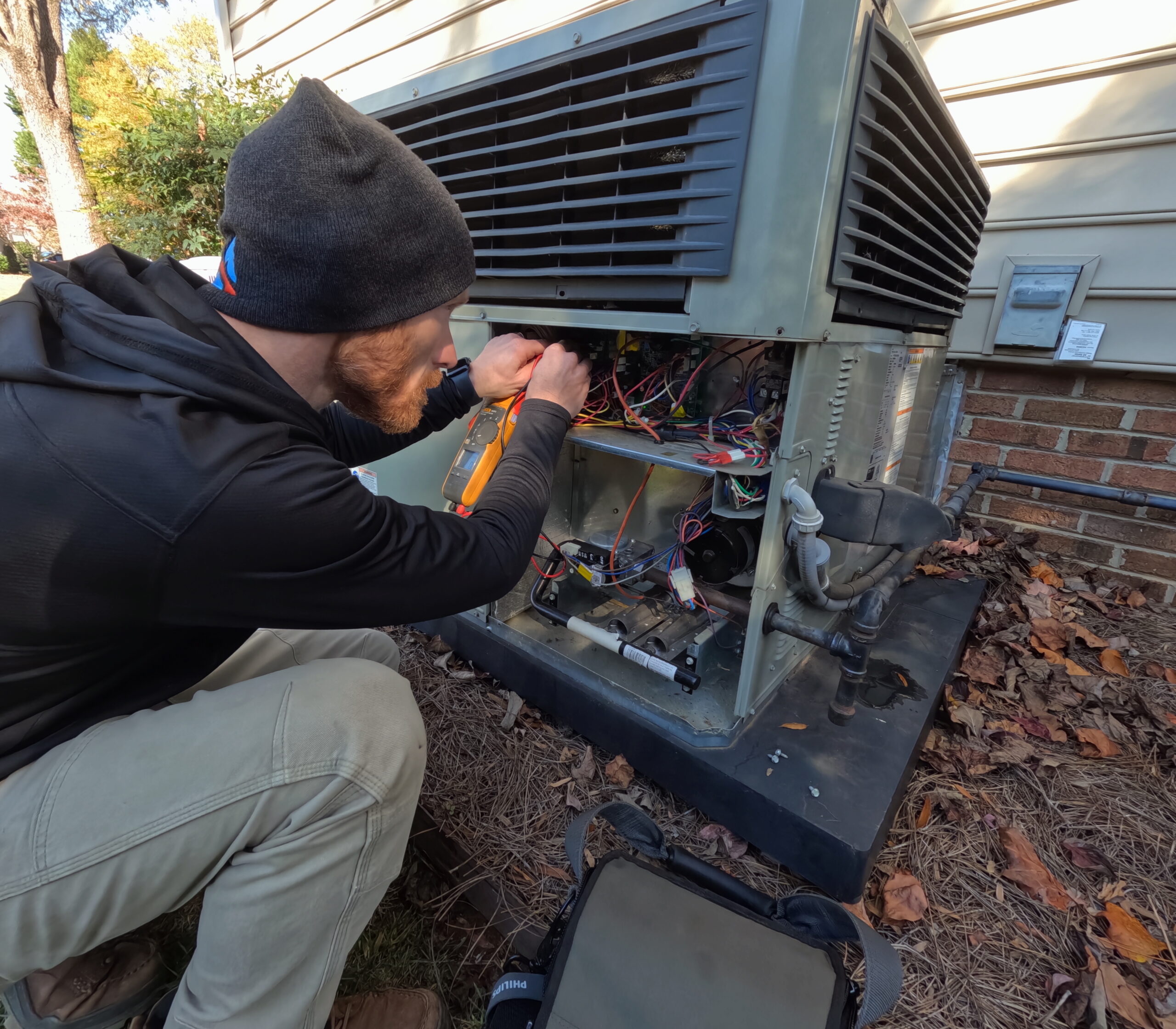
Recognizing Warning Signs of HVAC System Failure
Your HVAC system often signals distress long before a total breakdown occurs. Catching these early warning signs is the most effective way to avoid the cost and stress of an emergency AC repair. If your unit begins acting out of the ordinary, it is vital to address the issue before it causes secondary damage to expensive internal components.
Unusual Noises and What They Mean
While no HVAC system is silent, new or intensifying sounds usually point to specific mechanical failures. If you hear any of the following, your system is likely struggling:
- Banging or Clanking: This usually indicates a loose or broken part, such as a connecting rod or crankshaft, inside the compressor, or a blower assembly that has come out of balance.
- Whistling or Hissing: Often caused by refrigerant leaks or significant air gaps in your ductwork. A high-pitched whistle can also mean your system is “starving” for air due to a restricted return.
- Grinding or Screeching: This typically points to worn-out motor bearings or a failing fan belt. Ignoring this sound often leads to the motor burning out entirely.
- Constant Clicking: While a few clicks are normal at startup, repetitive clicking suggests an electrical issue, such as a failing capacitor or a faulty relay.
Addressing Persistent Odors
Your sense of smell is a powerful diagnostic tool for HVAC health. It is important to distinguish between “nuisance” odors and those that indicate an immediate safety hazard.
Burning Smells: If you notice the scent of burning plastic, gunpowder, or ozone, turn the system off at the breaker immediately. This is a sign of electrical overheating, frayed wiring, or a seized motor. Because this is a fire risk, it requires urgent professional intervention.
Musty or Damp Smells: A “dirty gym sock” odor usually signals mold or mildew growth on the evaporator coils or inside the ducts. This occurs when condensate drainage is blocked, allowing moisture to settle. While not an immediate fire hazard, it severely degrades your indoor air quality and should be addressed during your next heating maintenance or cooling tune-up.
Short-Cycling and Performance Declines
Short-cycling happens when your HVAC system turns on and off every few minutes without ever reaching your thermostat’s goal.
This is one of the most damaging patterns for a compressor.
Each start-up requires a massive surge of energy. This causes your utility bills to skyrocket.
The constant “stop-and-go” motion creates excessive heat in the motor. This leads to premature equipment failure.
Short-cycling also prevents your AC from dehumidifying the air. Your home will feel clammy and uncomfortable.
This issue is often caused by a clogged filter or a refrigerant leak. Proactive AC maintenance can identify these triggers before they lead to a system-wide failure.
Strategies for Improving Energy Efficiency and Air Quality
Maintaining your HVAC system is about more than just preventing breakdowns; it is a critical strategy to maximize energy efficiency and ensure the air your family breathes is clean. By implementing advanced solutions and consistent care, you can transform your home into a healthier, more cost-effective environment.
Advanced Air Quality Solutions
Indoor air quality (IAQ) is often overlooked until allergy symptoms or respiratory issues arise. To significantly improve the air in your home, consider upgrading to high-efficiency filtration. While standard filters catch large dust particles, filters with a MERV 13 rating or higher can trap microscopic pollutants, including bacteria and virus-carrying droplets.
In addition to filtration, the installation of UV lights (ultraviolet germicidal irradiation) within your HVAC cabinet is a powerful way to combat biological contaminants. These lights are positioned to shine on the evaporator coil, effectively killing mold, mildew, and bacteria before they can be circulated through your ductwork. When combined with regular HVAC maintenance, these advanced tools provide a comprehensive shield for your indoor environment.
Reducing Monthly Utility Costs
An inefficient HVAC system is one of the primary drivers of high energy bills. Small, proactive steps can lead to substantial savings over time. To keep your system running at peak performance, follow these key strategies:
- Schedule Professional Tune-Ups: Annual inspections ensure that all components are clean and calibrated, which prevents the system from overworking.
- Seal Your Ductwork: Leaky ducts can waste up to 30% of your conditioned air. Ensuring your home is properly sealed helps maximize energy efficiency throughout the year.
- Utilize Government Resources: For expert-level advice on system optimization, refer to the Department of Energy HVAC Maintenance Guide and explore these Energy Star Heating and Cooling Tips for additional ways to lower consumption.
- Install a Smart Thermostat: Automating your temperature settings based on your daily schedule reduces unnecessary cooling and heating when the home is empty.
The Environmental Impact of HVAC Care
Proper HVAC maintenance is a vital component of sustainable living. When a system is neglected, it consumes significantly more electricity, increasing your home’s carbon footprint. Furthermore, systems that are well-maintained last years longer than those that are ignored. Extending the lifespan of your equipment reduces the environmental waste associated with manufacturing and disposing of heavy machinery.
Maintaining your system also includes checking for refrigerant leaks. Modern refrigerants are safer than older versions, but any leak contributes to environmental degradation. By ensuring your system is tightly sealed and operating efficiently, you are doing your part to protect the local environment in Rock Hill while enjoying a more comfortable home.
Understanding Professional Service Options and Service Plans
While many homeowner tasks help maintain efficiency, professional HVAC tune-ups are essential for deep cleaning and technical calibrations that require specialized tools. Professional intervention ensures your system operates safely and prevents small issues from escalating into expensive emergency repairs.
What to Expect During a Professional Tune-Up
A comprehensive professional service visit goes beyond a simple visual inspection. When a technician arrives at your Rock Hill home, they perform a series of technical tasks designed to optimize performance and safety.
- Cleaning and inspecting coils: Technicians clean the evaporator and condenser coils to ensure maximum heat transfer and efficiency.
- Checking refrigerant levels: Ensuring your system has the correct charge is vital for cooling performance and compressor health.
- Tightening electrical connections: This prevents safety hazards and ensures components receive the correct voltage.
- Lubricating moving parts: Reducing friction in motors and fans extends the life of these critical components.
- Testing safety controls: Technicians verify that high-pressure switches and carbon monoxide detectors (for gas furnaces) are functioning correctly.
- Calibrating the thermostat: Ensuring your thermostat accurately communicates with your HVAC system for consistent indoor temperatures.
Evaluating HVAC Maintenance Agreements
Maintenance agreements, often called service plans, provide a proactive way to manage your home comfort. These plans are designed to simplify your maintenance schedule by automating appointments and providing financial protection against sudden breakdowns. At Atlas Heating & Cooling, Atlas Assurance members get two tune-ups a year, priority booking when call volume spikes, and a member discount on any repair found during the year.
Selecting a Qualified Technician
Choosing the right partner for your HVAC care is as important as the maintenance itself. Not all technicians possess the same level of training or equipment.
Look for technicians with NATE (North American Technician Excellence) certification. This industry-standard credential confirms the professional has passed rigorous exams and possesses the specialized knowledge required to handle complex HVAC systems efficiently and safely.
Beyond certifications, ensure your provider is fully licensed and insured in the state of South Carolina. Local expertise in the Rock Hill area is also beneficial, as technicians familiar with South Carolina’s humidity and temperature swings can better tune your system for the specific regional climate. Always check for transparent pricing and positive customer reviews to ensure a reliable service experience.
Evaluating System Lifespan and the Repair vs. Replace Dilemma
Deciding whether to continue investing in an older unit or to upgrade to a modern system is one of the most significant choices a homeowner faces. While regular HVAC maintenance can significantly extend the operational life of your equipment, every system eventually reaches a point of diminishing returns. Understanding where your unit sits in its lifecycle helps you avoid the stress of an emergency breakdown during a Rock Hill heatwave or a sudden winter cold snap.
Average HVAC Life Expectancy
The longevity of your system depends heavily on the local climate, usage patterns, and how consistently you follow hvac maintenance tips. In the Carolinas, where humidity and high temperatures put significant strain on cooling components, systems typically fall within the following age ranges:
| System Type | Average Lifespan (Years) |
|---|---|
| Air Conditioning Units | 15 – 20 Years |
| Furnaces (Gas/Electric) | 15 – 25 Years |
| Heat Pumps | 10 – 15 Years |
If your system is approaching the upper end of these ranges, it is often more cost-effective to begin planning for a replacement rather than waiting for a total mechanical failure.
The 5,000 Rule for Repairing vs. Replacing
When a major component fails, homeowners often struggle to decide if the fix is worth the cost. To simplify this, industry experts use the “5,000 Rule.” This simple math formula provides a clear financial threshold for deciding whether to repair or replace your furnace or AC.
How to calculate the 5,000 Rule:
-
- Determine the Age: Identify exactly how many years old your current HVAC unit is.
- Get a Repair Quote: Obtain a firm estimate for the total cost of the required repair.
- Multiply the Two: Multiply the Age of the Unit by the Repair Cost.
- Evaluate the Result:
- If the total is less than $5,000, it is generally advisable to proceed with the repair.
- If the total is greater than $5,000, the investment is better spent on a new, more reliable system.
Example: If a 12-year-old AC unit requires a $500 repair, the total is $6,000. In this scenario, the rule suggests that replacement is the smarter long-term financial move.
Modern Efficiency Gains with New Systems
The ROI of a new system isn’t just about avoiding the next repair bill; it’s about the immediate reduction in monthly utility costs. Modern high-efficiency HVAC systems now utilize SEER2 ratings, which measure cooling efficiency under more realistic conditions than previous standards.
Upgrading an older, 10-SEER unit to a modern 16 or 18-SEER2 system can reduce your cooling costs by 20% to 40%. Furthermore, taking care of repairs early on a newer system ensures it maintains these efficiency gains for its entire lifespan. When you combine energy savings with the peace of mind of a new manufacturer’s warranty, the “dilemma” of replacement often resolves itself as the most logical path for long-term home comfort.
The Connection Between Home Reliability and HVAC Performance
A home’s reliability is often defined by its ability to provide safety and comfort regardless of the weather outside. Because the HVAC system regulates temperature, humidity, and air quality, it serves as the primary engine of a home’s operational stability.
Proactive Stewardship and Climate Resilience
In regions like Rock Hill, South Carolina, climate resilience is a critical component of homeownership. Extreme summer humidity and unexpected winter cold snaps put immense pressure on a building’s structure.
A well-maintained HVAC system acts as a shield against these environmental stressors. By consistently controlling indoor moisture levels, you prevent the growth of mold and the warping of wood flooring or cabinetry.
Furthermore, a reliable system ensures that pipes do not freeze during winter lows, protecting the home from the catastrophic water damage associated with burst lines. Proactive stewardship turns a reactive repair cycle into a strategy for long-term resilience.
Maintaining Long-Term Property Value
The HVAC system is one of the most significant mechanical assets in any residential property. Its condition is often a deciding factor during the home inspection process, directly influencing the final sale price.
Prospective buyers view a neglected system as a looming financial liability. Conversely, a system that has received regular hvac maintenance tips and professional care signals that the entire property has been well-managed.
To maximize your return on investment, we recommend that homeowners maintain a detailed service log. This documentation should include dates of filter changes, professional tune-ups, and any part replacements.
Providing a comprehensive service history during a home sale offers verifiable proof of care. This transparency builds buyer confidence and helps justify a higher market valuation for your property.
HVAC Maintenance FAQs
Can I run my HVAC system without a filter for a short time?
Operating your system without a filter allows dust and debris to accumulate directly on the evaporator coils and blower motor. This buildup acts as an insulator that restricts heat transfer and can cause the motor to overheat or the coils to freeze. Even a few hours of operation without filtration can compromise indoor air quality and lead to costly internal cleaning requirements.
Why is my outdoor unit freezing up in the summer?
Ice accumulation on an outdoor unit during the summer is typically the result of restricted airflow or low refrigerant levels. When air cannot circulate properly due to a clogged filter or dirty coils, the temperature of the evaporator coil drops below freezing, causing condensation to turn into ice. This condition requires immediate attention to prevent permanent compressor damage.
Does regular maintenance really validate my manufacturer’s warranty?
Most manufacturers require proof of annual professional maintenance to honor the terms of their limited warranties. If a major component like a compressor or heat exchanger fails, the manufacturer may request service records to prove the system was not neglected. Regular checkups ensure your investment remains protected under these corporate guidelines.
How can I tell if my ductwork needs cleaning along with my unit?
Visible dust buildup around supply registers and persistent musty odors often indicate that your ductwork requires attention. If you notice a significant increase in allergy symptoms or find that your new air filters are becoming clogged much faster than usual, a professional inspection can determine if debris within the ducts is impacting your system performance. Understanding these signs helps you stay ahead of potential system failures.
Professional Maintenance for Rock Hill Homeowners
Consistent efficiency starts with expert oversight. Our team specializes in professional HVAC tune-ups that optimize every component of your system for the changing seasons. By scheduling your service today, you secure your home against unexpected outages and ensure that your heating and cooling equipment continues to run at its highest possible capacity.