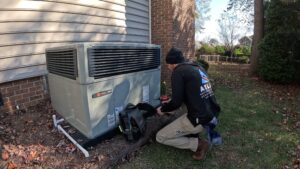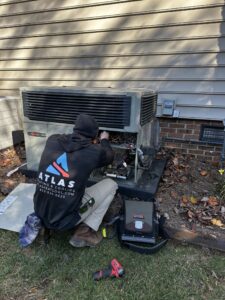
Spring weather in Fort Mill brings unique challenges for heat pump systems, especially in neighborhoods like Baxter Village and Carolina Crossroads where homes built in different decades use varying HVAC configurations. The transition from heating to cooling mode during South Carolina’s unpredictable spring temperatures requires specific adjustments that many homeowners overlook. ## What to Do for Spring Heat Pump Optimization in Fort Mill – Clean or replace air filters before the first 80-degree day hits Fort Mill
- Clear all vegetation and debris from the outdoor unit after winter storms
- Check that the reversing valve switches properly between heating and cooling modes
- Schedule professional refrigerant level inspection before peak cooling season
- Test thermostat programming for spring’s fluctuating temperatures
- Inspect ductwork in crawl spaces common to Fort Mill ranch-style homes ## Heat Pump Maintenance Fort Mill Spring Requirements Fort Mill’s clay-heavy soil and high humidity create specific maintenance needs that differ from other regions. The Piedmont Geological Survey shows Fort Mill sits on decomposed granite bedrock, which retains moisture and affects outdoor unit placement and drainage. When temperatures swing from 45 degrees at dawn to 78 degrees by afternoon – common in Fort Mill’s March and April weather patterns – heat pumps work harder switching between heating and cooling modes. Your heat pump’s reversing valve handles this mode switching, but the constant cycling during spring puts extra stress on the system. The National Weather Service Charlotte office records show Fort Mill experiences an average of 15 days per spring where temperatures fluctuate more than 25 degrees in a single day. This temperature volatility forces heat pumps to switch modes multiple times daily, wearing down components faster than steady seasonal operation. The refrigerant lines running to your outdoor unit expand and contract with these temperature swings. In Fort Mill’s humid spring air, condensation forms on these lines more frequently than in drier climates, potentially causing efficiency losses if not properly insulated. ## Fort Mill HVAC Energy Savings Through Local Climate Adaptation Fort Mill’s spring weather patterns create specific opportunities for heat pump efficiency that Atlas technician Stephen Estes sees repeatedly across neighborhoods like Regent Park and Waterstone. The area’s average spring humidity levels hover around 65-70%, according to NOAA climate data for York County, which affects how your heat pump processes air and removes moisture. Homes in Fort Mill’s established neighborhoods like Stonecroft and Heritage at Fort Mill often feature crawl space construction rather than slab foundations. This design, common in 1980s and 1990s construction, creates unique ductwork challenges during spring humidity fluctuations. The South Carolina Energy Office reports that improperly sealed crawl space ducts can reduce heat pump efficiency by 15-20% during high humidity periods. Fort Mill’s location just 15 miles south of Charlotte puts it in a microclimate zone where morning fog from the Catawba River basin affects outdoor unit operation. This morning moisture can reduce heat pump efficiency if coils aren’t properly maintained. The outdoor unit’s defrost cycle, designed primarily for winter ice formation, sometimes activates unnecessarily during foggy spring mornings when sensors detect moisture as frost. Neighborhoods closer to the Catawba River, including parts of Baxter Village and areas near Nation Ford Road, experience higher overnight humidity that can trigger false defrost cycles. These unnecessary defrost operations waste energy and reduce overall system efficiency during the spring transition period. ## Heat Pump Seasonal Performance Warning Signs Watch for heat pumps that struggle to maintain consistent temperatures during Fort Mill’s variable spring weather. If your system runs continuously when outdoor temperatures reach 75-80 degrees, the refrigerant charge likely needs professional attention. Atlas technician John Sorrell frequently finds low refrigerant levels in Fort Mill heat pumps after winter operation, especially in systems installed before 2015 when refrigerant leak detection standards were less stringent. Strange noises during mode switching indicate reversing valve problems common in Fort Mill’s high-humidity environment. The reversing valve contains internal seals that swell and contract with humidity changes, sometimes causing clicking or grinding sounds when switching between heating and cooling. This component failure typically occurs gradually, first appearing during spring’s frequent mode changes before becoming constant during summer operation. ## Spring Heat Pump Tune-Up Fort Mill Professional Approach Atlas Heating & Cooling’s spring tune-up process addresses Fort Mill’s specific environmental challenges through systematic refrigerant testing and humidity control optimization. Their technicians use digital manifold gauges to measure refrigerant pressures at multiple outdoor temperatures, accounting for Fort Mill’s elevation of 590 feet above sea level and its effect on refrigerant performance. The team’s approach includes testing the reversing valve operation under load conditions that simulate Fort Mill’s typical spring temperature swings. They’ve found that heat pumps in Fort Mill require reversing valve lubrication more frequently than manufacturer recommendations due to the area’s humidity and temperature volatility. Atlas Heating & Cooling’s preventative maintenance program includes spring refrigerant leak detection using electronic sensors rather than visual inspection alone. This approach catches small leaks before they become efficiency problems during Fort Mill’s hot summer months when refrigerant loss becomes more apparent. Heat pump efficiency in Fort Mill depends heavily on proper spring preparation and professional maintenance that accounts for local humidity and temperature patterns. The investment in professional HVAC maintenance pays dividends through reduced energy costs and reliable operation during South Carolina’s demanding summer cooling season. Contact Atlas Heating & Cooling at their Rock Hill location for heat pump efficiency optimization specific to Fort Mill’s climate conditions. ## Frequently Asked Questions #### How often should Fort Mill homeowners change heat pump filters during spring? Replace standard 1-inch filters monthly during Fort Mill’s spring season due to high pollen counts from the area’s oak and pine trees. The South Carolina Department of Health reports that York County experiences moderate to high pollen levels from March through May, requiring more frequent filter changes than summer or winter months. Homes with pets or family members with allergies should consider changing filters every 2-3 weeks during peak pollen season. #### What temperature should I set my heat pump thermostat during Fort Mill spring weather? Set your thermostat to 72-74 degrees and avoid frequent adjustments during Fort Mill’s variable spring temperatures. The Department of Energy recommends maintaining consistent settings to prevent excessive cycling between heating and cooling modes. #### Why does my heat pump run constantly during mild spring days in Fort Mill? Constant operation during mild weather often indicates low refrigerant levels or dirty coils, both common issues in Fort Mill’s humid spring environment. Heat pumps should cycle on and off even during moderate temperatures around 65-70 degrees. If your system runs continuously without reaching the set temperature, contact Atlas Heating & Cooling for professional diagnosis as this typically requires refrigerant testing or coil cleaning that homeowners cannot safely perform themselves.
For more information on heat pump installation and how it compares to furnaces, read our comprehensive guide: Heat Pump Installation in Rock Hill, SC: Complete Guide for Homeowners.