Rock Hill HVAC Experts | Local Team You Can Trust

Tega Cay’s Early Summer Challenge: How Dirty AC Coils Wreck Your Energy Bills This Spring

When spring arrives in Tega Cay’s waterfront neighborhoods like Stonebridge and The Peninsula, homeowners face a hidden energy drain that drives up utility bills before summer even starts. Dirty AC coils force your system to work 30-40% harder to cool your home, turning what should be moderate April and May bills into budget-busting expenses. Atlas Heating & Cooling’s Grady Armstrong has seen this pattern repeat across York County since the company started serving the area in 2023, with their licensed technicians (SC License #M11700) consistently finding neglected coils as the top cause of early-season efficiency problems. The issue hits Tega Cay particularly hard because of the community’s proximity to the Catawba River and Lake Wylie. The higher humidity and seasonal pollen loads create a perfect storm for coil contamination that starts impacting performance the moment you switch from heat to cool.

What to Do About Dirty AC Coils in Tega Cay – Turn off your AC and visually inspect the outdoor unit for obvious debris, leaves, or thick dust buildup on the condenser coils

  • Check your indoor air filter and replace it if it’s gray or clogged, which indicates the evaporator coil likely needs attention too
  • Clear vegetation and debris at least 3 feet around your outdoor unit, especially important given Tega Cay’s mature landscaping
  • Schedule professional coil cleaning before the first 85-degree day, typically by mid-April in the Charlotte metro area
  • Review your last 12 months of Duke Energy bills to establish a baseline for spotting unusual spring increases
  • Document any rooms that feel warmer than others, which often indicates reduced airflow from dirty evaporator coils
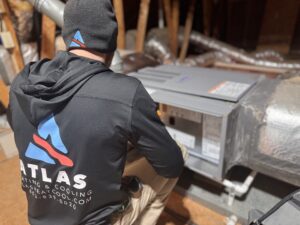
How Dirty Coils Kill Tega Cay AC Efficiency Your air conditioner relies on two sets of coils to transfer heat effectively. The evaporator coil inside your home absorbs heat from indoor air, while the condenser coil outside releases that heat to the atmosphere. When either coil accumulates dirt, dust, or debris, it creates an insulating barrier that blocks proper heat transfer. According to the Department of Energy, a dirty evaporator coil can reduce system efficiency by 30% or more. The condenser coil faces even greater contamination risks in Tega Cay’s environment. Pollen from the area’s abundant oak and pine trees combines with river-carried moisture to create a sticky film that attracts more particles throughout the spring months. This contamination forces your compressor to run longer cycles to achieve the same cooling effect. Where a clean system might run 15-minute cycles, a system with dirty coils often runs 25-30 minute cycles to reach the same temperature. That extra runtime translates directly to higher energy consumption and increased wear on components like the compressor and fan motors.

Tega Cay’s Spring AC Maintenance Challenges The Lake Wylie area creates unique maintenance demands that differ from inland Charlotte suburbs. Tega Cay’s elevation changes and proximity to water generate morning dew patterns that keep outdoor coils damp longer than typical residential areas. This extended moisture exposure allows airborne particles to stick more readily to coil surfaces. Neighborhoods like Windswept and The Sanctuary, with their established tree canopies, see particularly heavy pollen loads during March and April. The National Weather Service reports that the Charlotte region typically experiences “very high” pollen counts for 4-6 weeks each spring, with tree pollen peaking in early April when many residents first test their AC systems. Tega Cay’s newer subdivisions like Stonecrest and Harbor Point often have HVAC systems installed during construction phases when drywall dust and other construction debris can contaminate ductwork and coils. Homes built between 2015-2020 frequently show accelerated coil contamination during their first few years of operation. The city’s building codes, which follow South Carolina’s adoption of the International Mechanical Code, require proper filtration, but construction-phase contamination often bypasses these protections. High energy bills during spring months in Tega Cay also result from the area’s variable weather patterns. Lake Wylie’s thermal mass creates microclimates where temperatures can swing 15-20 degrees between morning and afternoon. These temperature fluctuations force AC systems to cycle more frequently, and dirty coils make each cycle less efficient and more expensive.

Signs of Condenser Coil Problems in Spring Dirty condenser coils show several warning signs before they drive your energy bills through the roof. The most obvious indicator is visible debris accumulation on the outdoor unit’s fins. In Tega Cay’s wooded neighborhoods, you’ll often see cottonwood seed clusters, pine needles, and leaves packed against the coil surfaces after spring storms roll through from the northwest. Listen for changes in your outdoor unit’s sound patterns. Clean coils allow proper airflow, creating a steady whoosh of air movement. Contaminated coils restrict airflow, causing the fan to work harder and creating a more labored sound. You might also notice the outdoor unit’s fan cycling on and off more frequently as the system struggles to reject heat effectively. Ross, one of Atlas Heating & Cooling’s experienced technicians, reports that homeowners in The Point and Stonebridge often call about “weird noises” from their outdoor units that turn out to be fans working overtime to push air through clogged coil fins.

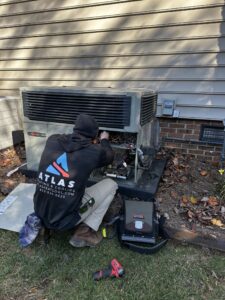
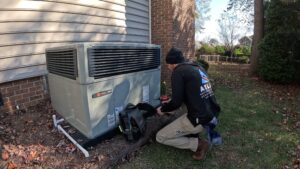
Atlas Heating & Cooling’s Coil Cleaning Process Atlas Heating & Cooling approaches dirty AC coils in Tega Cay with a systematic cleaning process that addresses both evaporator and condenser coils during the same service call. Their technicians start with a complete system evaluation, checking refrigerant pressures and airflow measurements to establish baseline performance before cleaning begins. For condenser coil cleaning, Atlas uses specialized coil cleaning solutions designed for the aluminum fins common in residential units. The process involves carefully removing the unit’s top panel and fan assembly to access coil surfaces that homeowners can’t reach. They clean from the inside out, using controlled water pressure to avoid damaging the delicate fins while removing accumulated debris. David, an Atlas technician who frequently services Tega Cay accounts, recently helped a Windswept homeowner whose March energy bill had jumped 40% compared to the previous year. The outdoor unit’s coils were packed with cottonwood fibers and pollen that had formed a felt-like mat across the coil face. After cleaning, the homeowner’s system runtime decreased by 35%, and their next month’s Duke Energy bill dropped by $85. The cleaning also revealed that two coil fins had been damaged by previous DIY attempts, which Atlas straightened using proper fin combs. Atlas backs their coil cleaning with documentation that includes before-and-after photos and system performance measurements. Their South Carolina Residential Builders Commission license requires detailed service records, and they provide customers with specific data about system improvements following professional maintenance.

Getting Ahead of Summer Energy Costs Addressing dirty AC coils in Tega Cay during April and May sets your system up for efficient operation during the region’s hottest months. July and August temperatures regularly hit the mid-90s, and Lake Wylie’s humidity keeps heat index values above 100 degrees for weeks at a time. Clean coils make the difference between manageable summer energy bills and budget-breaking surprises. The investment in spring coil cleaning typically pays for itself within two months of regular AC operation. Atlas Heating & Cooling offers comprehensive AC maintenance that includes coil cleaning as part of a complete system tune-up. Their maintenance plans help Tega Cay homeowners stay ahead of efficiency problems while extending equipment life. If you’re seeing early signs of reduced efficiency or higher spring energy bills, don’t wait until summer heat arrives to address the problem. Contact Atlas Heating & Cooling at (803) 384-9070 to schedule AC repair or maintenance service that will restore your system’s efficiency and keep your energy costs under control.

Frequently Asked Questions

How often should I have my AC coils professionally cleaned in Tega Cay? Most Tega Cay homes need professional coil cleaning annually due to the area’s heavy pollen loads and humidity from Lake Wylie. Homes in heavily wooded areas like Windswept or The Sanctuary may benefit from cleaning every 8-10 months, especially if you run your system year-round. Atlas Heating & Cooling recommends scheduling coil cleaning during spring maintenance visits, typically in March or early April before cooling season begins.

Can I clean my AC coils myself, or should I hire a professional? While you can rinse debris from your outdoor unit’s exterior with a garden hose, thorough coil cleaning requires specialized tools and cleaning solutions that professionals use. DIY attempts often damage delicate aluminum fins or miss interior coil surfaces where the worst contamination accumulates. Professional cleaning also includes evaporator coil service, which requires accessing indoor components safely. Atlas technicians have the proper equipment to clean coils without causing damage while checking for other issues like refrigerant leaks or electrical problems.

Why do my energy bills spike in spring even before hot weather arrives? Spring energy bill increases in Tega Cay often result from dirty coils combined with the area’s variable weather patterns. Your AC works harder when coils are contaminated, and Lake Wylie’s influence creates temperature swings that force more frequent system cycling. Additionally, many homeowners switch from heat to cool earlier in spring when outdoor temperatures are still moderate, but indoor humidity from cooking and showering creates more cooling demand than expected. Professional system evaluation can identify whether dirty coils or other efficiency problems are driving higher costs.

Latest Posts

Call NowBook Online