Introduction
If you’re a homeowner in Rock Hill, South Carolina, you know our weather swings from hot, humid summers to chilly winters. A heat pump installation could be the smartest upgrade for year‑round comfort and energy savings. Unlike traditional furnaces and air conditioners, heat pumps provide both heating and cooling in one efficient system—perfect for our Carolina climate.
At Atlas Heating & Cooling, we’ve installed hundreds of heat pumps in York County homes. This guide walks you through everything you need to know about heat pump installation, from how it works to what it costs, so you can make an informed decision for your home.
Benefits of Heat Pump Installation
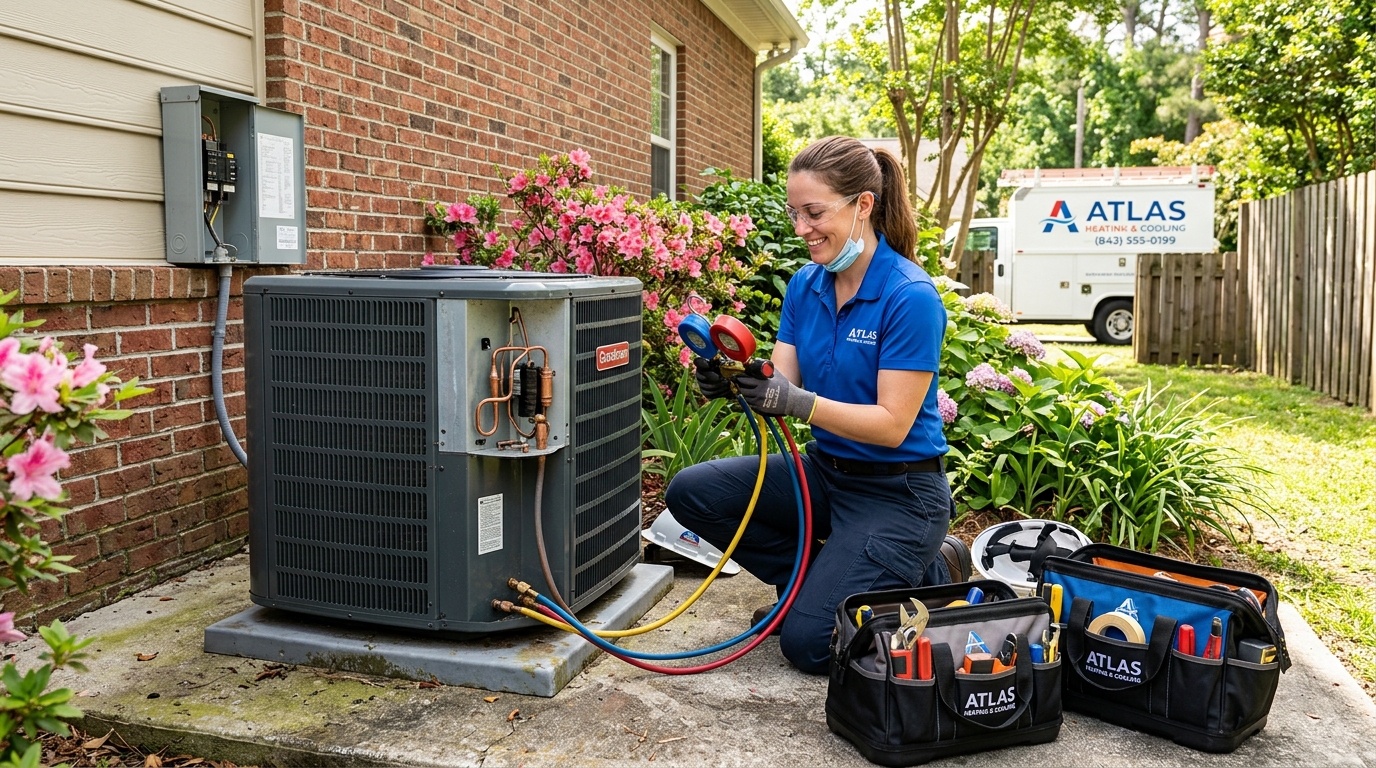
Heat pumps offer several advantages over conventional HVAC systems, especially in our region:
- Year‑Round Comfort – One system handles both heating and cooling, eliminating the need for separate furnace and AC units.
- Lower Energy Bills – Heat pumps move heat rather than generate it, making them 2–3 times more efficient than electric resistance heating. Many Rock Hill homeowners see utility savings of 30–50%.
- Eco‑Friendly – Because they use electricity and don’t burn fossil fuels, heat pumps reduce your home’s carbon footprint.
- Long Lifespan – A well‑maintained heat pump can last 15–20 years, similar to a high‑efficiency furnace.
- Quiet Operation – Modern heat pumps are designed to run quietly, both indoors and outdoors.
How Heat Pump Installation Works
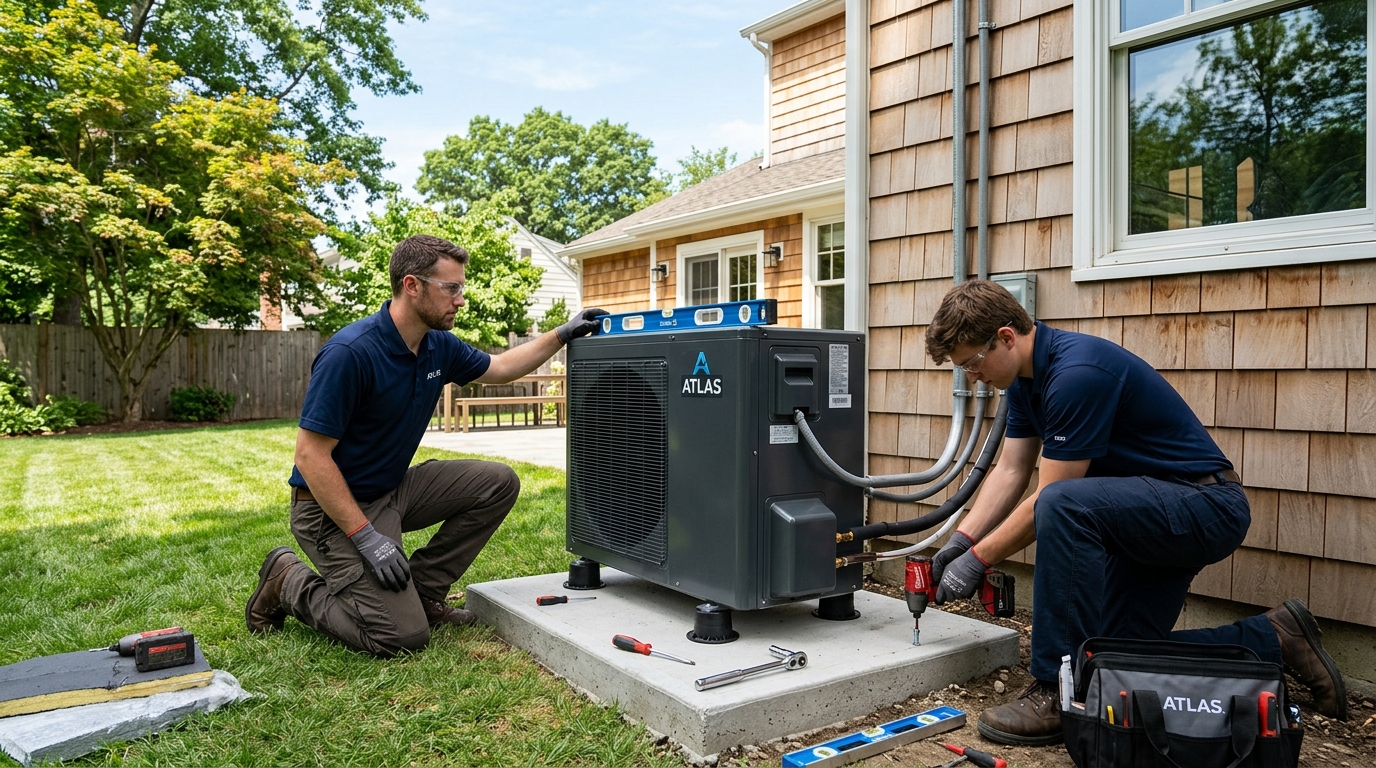
Installing a heat pump is a multi‑step process that our certified technicians follow to ensure safety, efficiency, and reliability.
- Site Assessment – We visit your home to evaluate existing ductwork, electrical service, insulation, and the best location for the outdoor unit.
- System Sizing – Using Manual J calculations, we determine the right capacity (in tons) for your home’s square footage, orientation, and insulation levels.
- Removal of Old Equipment – If you’re replacing an aging furnace or AC, we safely disconnect and remove the old units.
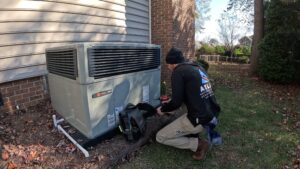
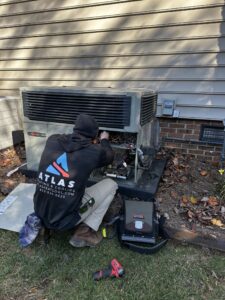
- Installation of Outdoor Unit – The condenser/compressor is placed on a concrete pad or wall bracket, with proper clearance for airflow and service.
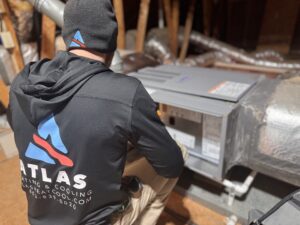
- Installation of Indoor Unit – For ducted systems, the air‑handler is mounted in your attic, basement, or closet. For duct‑free mini‑splits (also called ductless mini‑split systems), wall‑mounted heads are installed in selected rooms.
- Refrigerant Line Connection – Copper lines are run between indoor and outdoor units, then vacuum‑tested to ensure no leaks.
- Electrical & Thermostat Wiring – The system is connected to your home’s electrical panel, and a new thermostat (often a programmable or smart model) is installed.
- Start‑up & Commissioning – We charge the system with refrigerant, check all connections, and verify heating and cooling modes work correctly.
From start to finish, a standard heat pump installation takes one to two days, depending on the complexity of your home.
Heat Pump vs Furnace Comparison
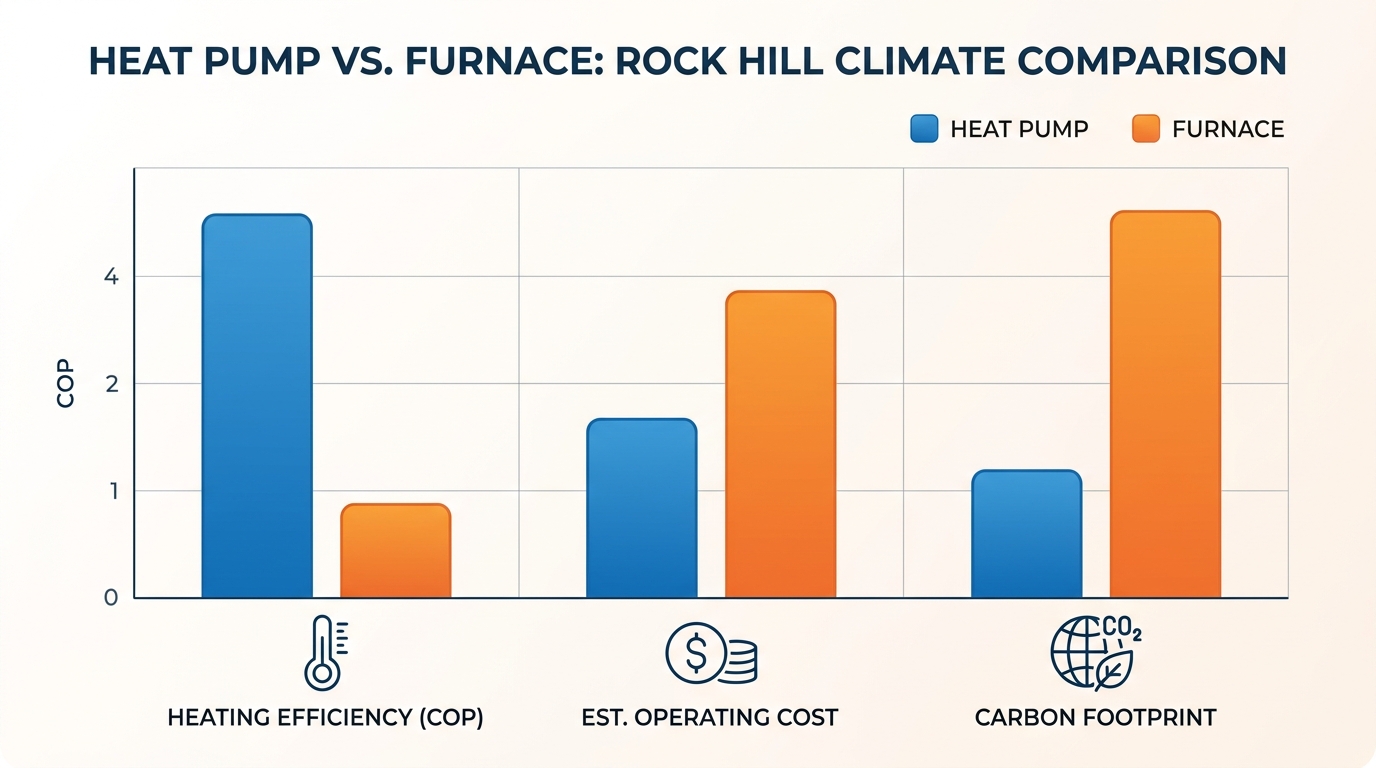
Many Rock Hill homeowners wonder whether a heat pump can replace your existing furnace. Here’s how the two technologies stack up:
| Feature | Heat Pump | Gas Furnace |
|---|---|---|
| Heating Efficiency | 200‑300% (COP 2‑3) | 80‑98% AFUE |
| Cooling Capability | Yes (built‑in) | No (requires separate AC) |
| Fuel Source | Electricity | Natural gas, propane, oil |
| Installation Cost | Higher upfront | Lower upfront |
| Operating Cost | Lower in mild climates | Lower where gas is cheap |
| Lifespan | 15‑20 years | 15‑25 years |
For most York County homes, a heat pump is an excellent choice because our winters are relatively mild. In extreme cold (below freezing), a heat pump’s efficiency drops, which is why some homeowners opt for a dual‑fuel system that pairs a heat pump with a gas furnace for backup.
Cost and Incentives for Heat Pump Installation
The cost of a heat pump installation in Rock Hill varies based on system size, brand, and your home’s existing infrastructure. On average, you can expect:
- Ducted Heat Pump: $5,000 – $10,000
- Duct‑Free Mini‑Split: $3,500 – $8,000 (per indoor unit)
These prices include equipment, labor, and materials. Keep in mind that upgrading ductwork or electrical service will add to the total.
Financial Incentives
Several rebates and tax credits can significantly reduce your out‑of‑pocket cost:
- Federal Tax Credit – The Inflation Reduction Act offers a tax credit of up to $2,000 for qualified heat pump installations.
- Duke Energy Rebates – Duke Energy customers in South Carolina may be eligible for rebates of $300‑$800 for installing an ENERGY STAR® certified heat pump.
- SC State Programs – Check the South Carolina Office of Resilience for additional incentives.
Our team at Atlas Heating & Cooling can help you navigate these programs to maximize your savings.
FAQs About Heat Pump Installation
1. Will a heat pump work in Rock Hill’s winter?
Yes. Modern cold‑climate heat pumps are designed to operate efficiently down to 0°F. Our average winter lows rarely drop that low, so a heat pump is a reliable primary heating source for York County homes.
2. How long does installation take?
Most single‑family home installations are completed in one to two days. Complex jobs (e.g., adding ductwork or upgrading electrical panels) may take longer.
3. Can I keep my existing ductwork?
Often, yes. Our technicians will inspect your ducts for leaks and proper sizing. If they’re in good condition, we can reuse them. If not, we’ll recommend sealing or replacement to ensure efficiency.
4. Do I need a backup heating source?
For most Rock Hill homes, a heat pump alone is sufficient. If you’re concerned about extreme cold snaps, a dual‑fuel system (heat pump + gas furnace) provides peace of mind.
5. What maintenance does a heat pump require?
Like any HVAC system, heat pumps need regular maintenance: cleaning or replacing filters every 1‑3 months, annual professional tune‑ups, and keeping the outdoor unit clear of debris.
Conclusion
A heat pump installation is a smart, energy‑efficient upgrade for Rock Hill homeowners. It delivers both heating and cooling from one system, cuts utility bills, and reduces your environmental impact. With federal and local incentives available, now is an excellent time to explore this technology.
At Atlas Heating & Cooling, we’re here to answer your questions, provide a precise estimate, and handle the entire installation with the professionalism you deserve. Contact us today to schedule a free, no‑obligation consultation and see how a heat pump can improve your home’s comfort and efficiency.
If you’re experiencing issues with your heat pump, check out our guide on heat pump repair in Rock Hill, SC.
Not sure whether a heat pump or a gas furnace is right for your home? Read our detailed comparison: Heat Pump vs. Gas Furnace: Which Is Cheaper to Run in the Carolinas?.
\nLearn more about heat pump rebates and tax credits in South Carolina to maximize your savings.