Homeowners in Gastonia’s Crowders Creek and Highland neighborhoods know the frustration of turning on their AC only to feel warm air flowing through the vents. The issue becomes more common as temperatures climb toward summer, particularly in Gastonia’s humid climate where AC systems work harder than in drier regions.
What to Do When Your AC Runs But Won’t Cool in Gastonia
- Check your thermostat setting – ensure it’s on “cool” mode and set 5-7 degrees below current room temperature
- Replace your air filter if it looks dirty or hasn’t been changed in 60-90 days
- Walk outside and listen to your condenser unit – it should be running when the indoor unit operates
- Check all vents throughout your home to ensure they’re open and unobstructed
- Look for ice buildup on indoor or outdoor AC components and turn the system off if present
- Verify your circuit breakers haven’t tripped, especially the outdoor unit breaker
Why Your Gastonia AC Blows Warm Air
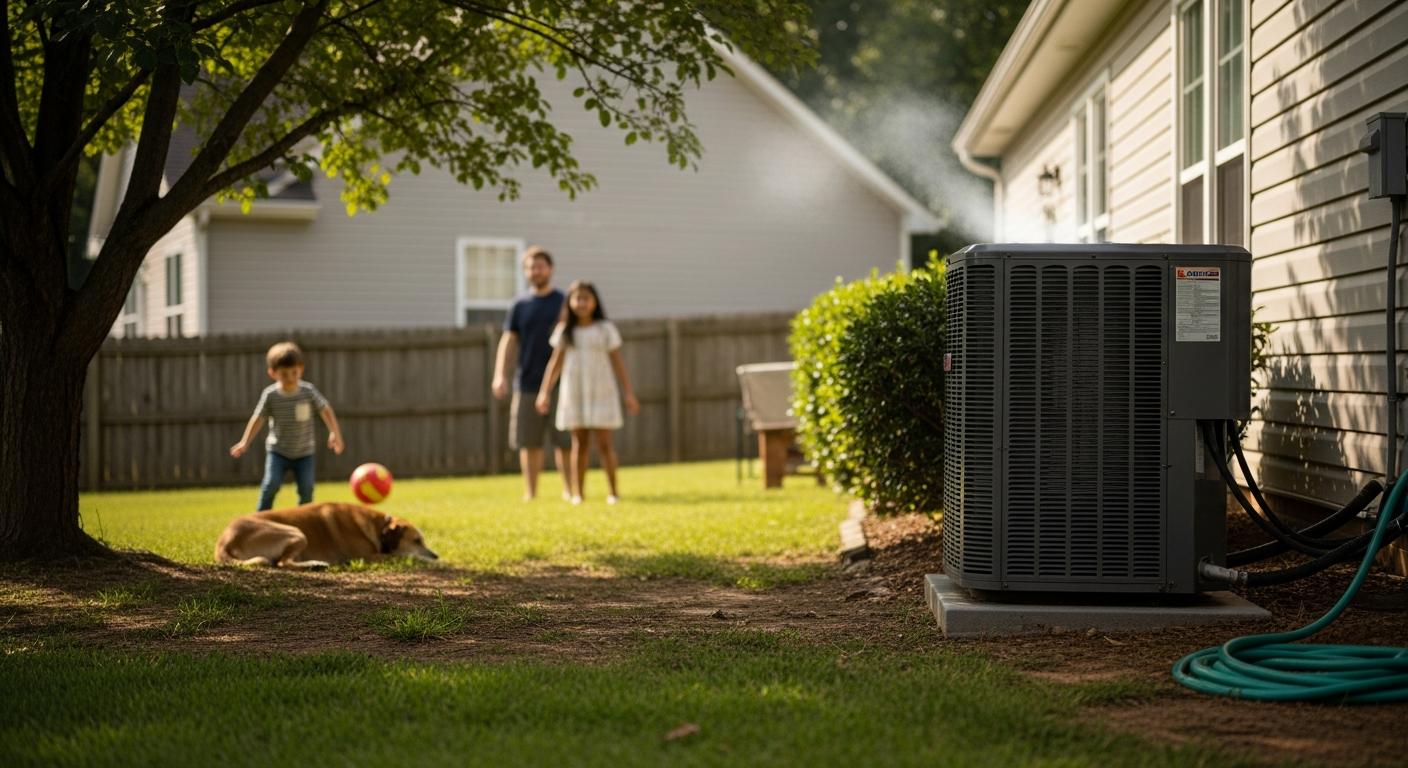
When your AC runs but doesn’t cool, you’re dealing with a breakdown in the refrigeration cycle. Your system has four main components: the evaporator coil (inside), condenser coil (outside), compressor, and refrigerant lines connecting them. Think of it like your car’s engine running but the transmission not engaging – the motor works, but power isn’t getting where it needs to go.
According to the EPA’s refrigerant regulations, residential AC systems lose 5-10% of their refrigerant annually through normal operation. In Gastonia’s climate, where systems run 6-8 months per year, this loss accelerates. Low refrigerant is the most common cause of AC running but not cooling, followed by dirty evaporator coils and failed compressors.
The humid conditions around Lake Wylie and the Catawba River basin create additional challenges. Moisture promotes mold growth on evaporator coils, reducing heat transfer efficiency. When coils can’t absorb heat from your indoor air, the system blows warm air even though all components appear to function normally.
Local Climate Factors Affecting AC Performance
Gastonia’s subtropical climate creates specific AC challenges that don’t affect homeowners in drier regions. NOAA weather data for Charlotte Douglas International Airport shows average summer humidity levels of 70-85%, forcing AC systems to work harder removing moisture while cooling air.
Homes in established neighborhoods like Brookwood, Robinwood, and areas near Crowders Mountain face unique issues. Many houses built in the 1970s-1990s have undersized ductwork and aging insulation. The red clay soil common throughout Gaston County retains moisture, increasing basement and crawl space humidity that AC systems must combat.
The City of Gastonia’s building codes require specific AC sizing calculations, but older homes often have systems installed before current efficiency standards.
Gastonia’s elevation changes from 650 feet near the Catawba River to over 1,000 feet approaching Crowders Mountain affect AC performance. Higher elevation homes experience greater temperature swings, while river-adjacent properties in areas like Riverbend and Highland deal with increased humidity from water proximity.
Warning Signs of System Problems
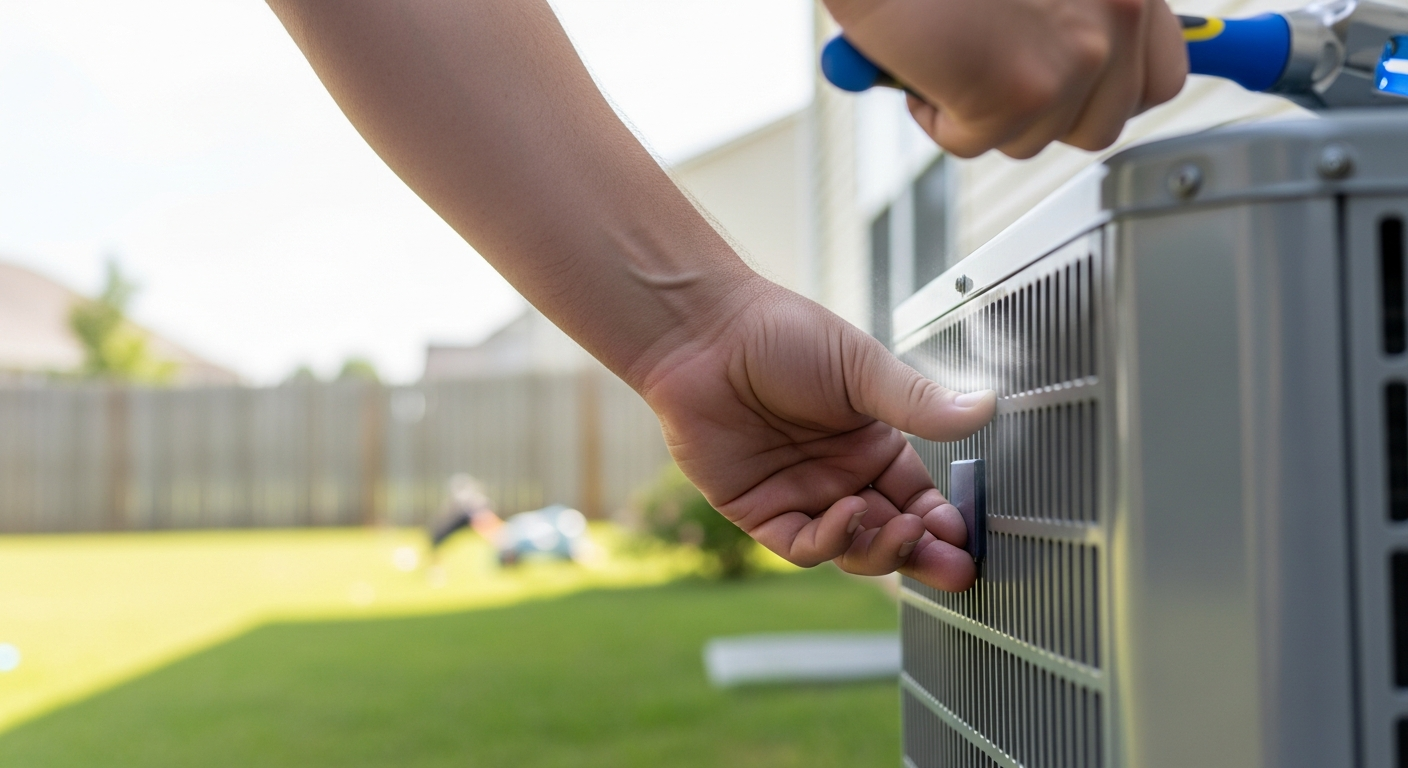
Watch for specific indicators that separate minor issues from major repairs. If your AC runs constantly but indoor temperatures climb above 78-80 degrees during peak afternoon hours, you likely have refrigerant loss or compressor problems. Normal systems should maintain 68-72 degree settings even on 95-degree days.
Ice formation anywhere on your system signals immediate problems. Atlas Heating & Cooling’s Ice on indoor coils usually means restricted airflow from dirty filters or blocked ducts, while outdoor coil ice indicates refrigerant issues. Either situation requires professional attention – running an iced system damages compressors and costs thousands more than fixing the underlying problem.
How Atlas Heating & Cooling Diagnoses AC Problems
Our diagnostic process starts with digital manifold gauges that measure refrigerant pressures at multiple system points. Unlike basic pressure readings, we test superheat and subcooling values that reveal whether your system has the right refrigerant charge and proper heat transfer.
We use thermal imaging cameras to identify hot spots in electrical connections and temperature variations across coils. This technology shows problems invisible to standard inspection – a partially blocked coil section or failing compressor valve appears clearly on thermal images.
Our approach includes testing duct pressures and airflow volumes throughout your home. Many Gastonia houses have ductwork in unconditioned crawl spaces where summer temperatures reach 120+ degrees. We measure actual CFM delivery at each vent and compare it to system design specifications.
Heat Pumps vs Traditional AC in Gastonia
Gastonia homeowners choose between traditional split systems and heat pump configurations, each with distinct failure patterns when running but not cooling. Understanding these differences helps identify problems faster and avoid unnecessary repairs.
Traditional Split System AC:
- Separate outdoor condenser and indoor air handler
- Uses electric resistance or gas furnace for heating
- Refrigerant pressures: 65-75 PSI low side, 250-300 PSI high side
- Common cooling failures: refrigerant leaks, compressor problems, dirty coils
- Average repair costs: $300-800 for refrigerant issues, $1,500-3,000 for compressor replacement
- Lifespan: 12-15 years with proper maintenance
Heat Pump Systems:
- Single outdoor unit handles both heating and cooling
- Reverses refrigerant flow between seasons
- More complex controls and reversing valves
- Refrigerant pressures vary by mode: similar cooling pressures, different heating ranges
- Common cooling failures: reversing valve stuck in heat mode, failed defrost controls
- Average repair costs: $200-600 for valve issues, $400-1,200 for control board problems
- Lifespan: 10-12 years due to year-round operation
Ductless Mini-Split Systems:
- Individual indoor units connected to outdoor condensers
- No ductwork reduces energy loss
- Refrigerant line sets up to 50 feet long
- Common cooling failures: clogged drain lines, dirty filters, communication errors
- Average repair costs: $150-400 for maintenance issues, $800-1,500 for refrigerant leaks
- Lifespan: 15-20 years with proper care
Performance Comparison Table
| System Type | Cooling Efficiency | Humidity Control | Maintenance Frequency | Gastonia Climate Suitability |
|————-|——————-|——————|———————-|—————————-|
| Traditional Split | 14-20 SEER | Good with proper sizing | Twice yearly | Excellent |
| Heat Pump | 14-18 SEER | Very good | Three times yearly | Good |
| Ductless Mini-Split | 16-25 SEER | Excellent | Monthly filter cleaning | Excellent |
Heat pumps work harder in Gastonia’s climate because they operate year-round. During summer cooling mode, they function identically to traditional AC systems, but the reversing valve and additional controls create more failure points. We see reversing valves stick in heating position about 20% more often in systems over 8 years old.
Ductless systems excel in Gastonia’s humidity because each indoor unit has individual condensate drainage and precise temperature control. However, refrigerant line sets running through unconditioned spaces face greater temperature stress, leading to earlier joint failures compared to traditional systems with shorter refrigerant lines.
Repair vs Replacement Cost Analysis

Understanding repair costs versus replacement investment helps Gastonia homeowners make informed decisions when their AC runs but won’t cool. According to the Bureau of Labor Statistics, HVAC repair costs in the Southeast increased 12% in 2023, making timing decisions more critical.
Minor Repairs ($150-500):
- Refrigerant recharge (no leaks): $200-350
- Thermostat replacement: $150-300
- Capacitor replacement: $180-280
- Contactor replacement: $200-350
- Filter and coil cleaning: $150-250
Moderate Repairs ($500-1,500):
- Evaporator coil replacement: $800-1,200
- Condenser fan motor: $400-600
- Compressor start components: $500-800
- Refrigerant leak repair and recharge: $600-1,200
- Control board replacement: $400-800
Major Repairs ($1,500-4,000):
- Compressor replacement: $2,000-3,500
- Complete coil replacement (both units): $1,800-2,800
- Refrigerant line replacement: $1,500-2,500
- Complete electrical rebuild: $1,200-2,000
Atlas Heating & Cooling recommends replacement when repair costs exceed 50% of a new system’s price and your current unit is over 10 years old. A 12-year-old system needing a $2,500 compressor replacement makes little financial sense when a new 16 SEER unit costs $4,500-6,000 installed.
The Database of State Incentives for Renewables & Efficiency shows available rebates for high-efficiency replacements. Duke Energy customers in Gaston County qualify for rebates up to $600 for 16+ SEER installations, effectively reducing the cost gap between major repairs and replacement.
Atlas Heating & Cooling’s Diagnostic Process
Our comprehensive diagnostic approach goes beyond checking obvious problems to identify root causes of cooling failures. We start with a 47-point inspection that includes electrical testing, refrigerant analysis, and airflow measurement throughout your ductwork system.
Digital manifold testing reveals precise refrigerant conditions. Normal systems show 65-75 PSI on the low side and 250-300 PSI on the high side during 85-degree weather. Low-side pressures below 60 PSI indicate refrigerant loss, while high-side readings over 350 PSI suggest restricted airflow or overcharged systems.
We measure superheat and subcooling values that most technicians skip. Superheat should read 8-12 degrees on properly charged systems, while subcooling ranges from 10-15 degrees. These measurements identify problems before they cause complete cooling failure.
Last week, we diagnosed a Crowders Creek home where the AC ran constantly but couldn’t cool below 80 degrees. Surface inspection showed clean coils and proper refrigerant pressures, but our thermal imaging revealed a 15-degree temperature difference across the evaporator coil sections. Internal coil blockage was restricting refrigerant flow, requiring coil replacement rather than simple cleaning.
Our ductwork analysis includes static pressure testing and CFM measurement at each vent. Gastonia homes with crawl space ductwork often have 30-40% air loss through loose connections and inadequate insulation. We provide detailed reports showing actual vs. designed airflow for each room.
We offer transparent pricing with detailed estimates before starting work. Our standard diagnostic fee of $89 applies toward any repair over $200. We provide written warranties on all parts and labor: 1 year on repairs under $500, 2 years on major component replacement, and 5 years on complete system installation.
For Gastonia homeowners dealing with AC systems that run but won’t cool, the combination of local climate challenges and aging equipment creates complex problems requiring professional diagnosis. Atlas Heating & Cooling’s experience serving York County and surrounding areas means we understand the specific issues affecting your neighborhood. Whether you need immediate repairs or system replacement guidance, our factory-trained technicians provide honest assessments and reliable solutions. Contact us at (803) 628-5253 for same-day service, or visit our AC repair services page to learn more about our comprehensive cooling system solutions.
Frequently Asked Questions
Why does my AC blow warm air only in certain rooms of my Gastonia home?
Uneven cooling typically results from ductwork problems common in Gastonia’s crawl space installations. Loose duct connections, inadequate insulation, or blocked vents create pressure imbalances that reduce airflow to specific areas. Rooms farthest from your air handler or on upper floors of two-story homes are most affected. We measure actual CFM delivery to each room and compare it to design specifications to identify restrictions.
How long should I wait before calling for professional help when my AC runs but doesn’t cool?
Call within 4-6 hours if your system can’t maintain temperature during peak afternoon heat. Continuing to run a malfunctioning AC system often causes additional damage – compressors can overheat, and low refrigerant conditions damage internal components. Turn off your system immediately if you see ice formation anywhere, and contact Atlas Heating & Cooling for emergency service to prevent costly secondary problems.
What’s the difference between low refrigerant and a failed compressor when my AC won’t cool?
Low refrigerant causes gradually declining performance over weeks or months, with the system struggling more during hottest weather. Failed compressors usually create sudden cooling loss – the outdoor unit may run quietly or not start at all. We test discharge and suction pressures to differentiate between refrigerant loss (both pressures low) and compressor failure (abnormal pressure relationships). Professional diagnosis using EPA-certified equipment is essential because adding refrigerant to a failed compressor causes expensive damage.