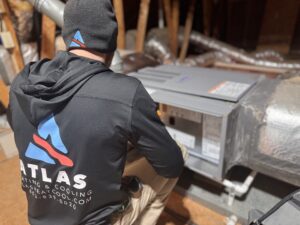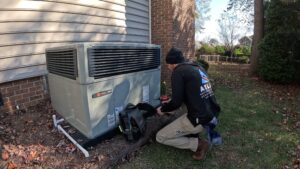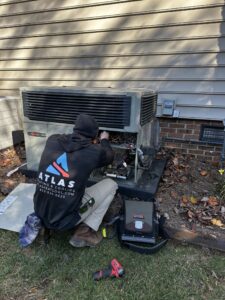
When your AC condenser fan stops spinning in McConnells this July, your house turns into a furnace within hours. Atlas Heating & Cooling’s factory-trained technicians like John and Ross have diagnosed this exact problem across Rock Hill neighborhoods from downtown McConnells to the newer developments near Highway 72, often tracing failures back to three specific electrical components that struggle with South Carolina’s brutal summer heat.
What to Do When Your AC Outdoor Fan Not Spinning McConnells SC
- Turn off your AC system at the thermostat immediately to prevent compressor damage
- Check your electrical panel for tripped breakers labeled “AC” or “Air Handler”
- Look for visible damage around the outdoor unit – bent fan blades, debris, or burn marks
- Listen for unusual sounds like clicking, buzzing, or humming from the condenser
- Verify the indoor unit still has power and the thermostat display is functioning
- Document the problem and call Atlas Heating & Cooling at the first sign of failure
Why AC Condenser Fans Fail in McConnells Heat
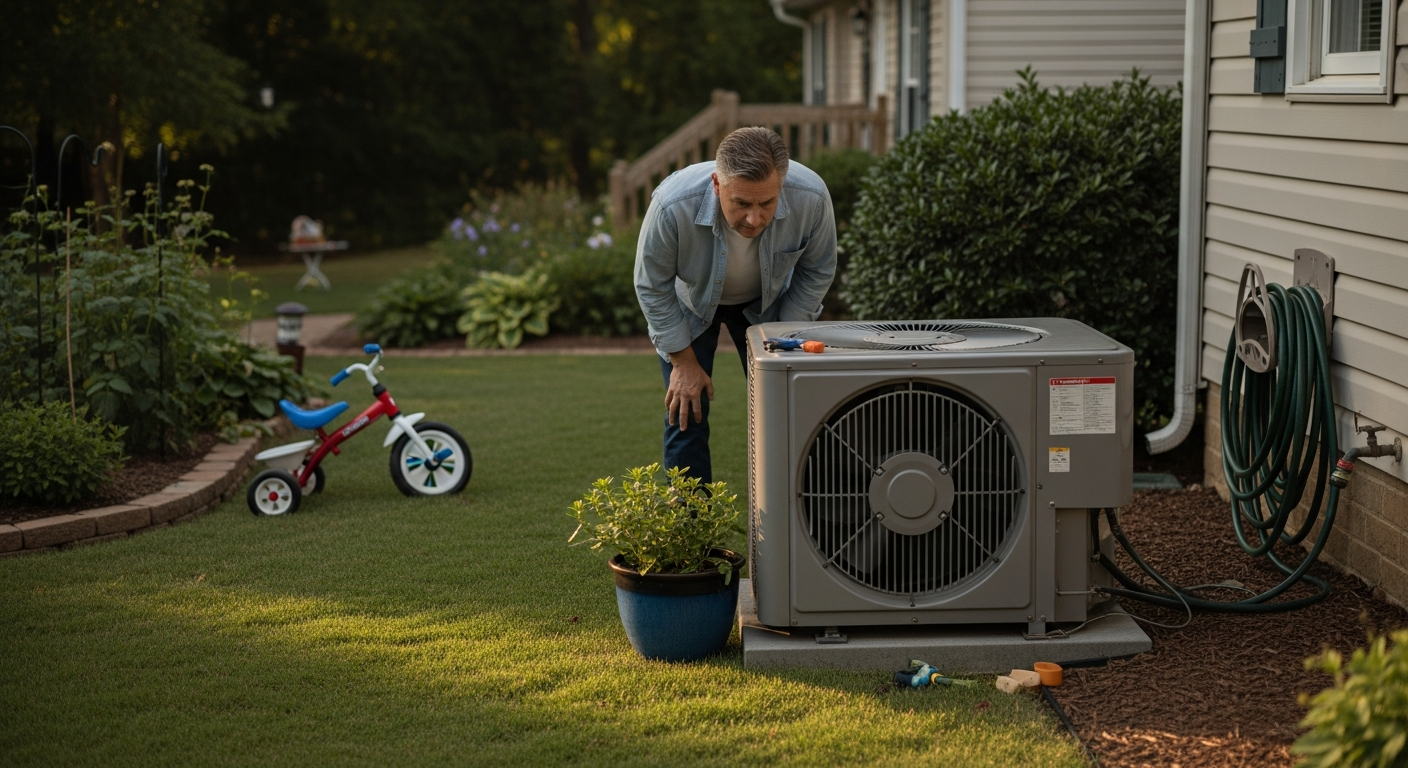
The outdoor fan in your AC system pulls air across the condenser coils, releasing heat absorbed from inside your home. When this fan stops, your compressor works harder to pump refrigerant through increasingly hot coils, creating a cascade of problems. According to Energy Star data, outdoor units operating in temperatures above 95°F without proper airflow can see efficiency drops of 30% or more.
McConnells experiences average July temperatures of 89°F, but heat island effects from pavement and roofing push actual condenser temperatures well above 100°F. The electrical components controlling your fan motor – capacitors, contactors, and motor windings – degrade faster under these conditions. Atlas technician Stephen regularly encounters failed capacitors in units just 3-4 years old, particularly in homes along busy corridors like Highway 322 where dust accumulation accelerates the breakdown.
Most AC condenser fan problems stem from three electrical failures: start capacitors losing their charge, fan motor contactors welding shut from repeated cycling, or motor windings burning out from overheating. Each creates different symptoms, but the result is the same – no spinning fan and rapidly rising system pressures.
McConnells Climate Puts Extra Stress on AC Fans
McConnells sits in York County’s agricultural belt, where cotton fields and livestock operations create unique challenges for outdoor AC units. The combination of agricultural dust, pollen from surrounding farmland, and South Carolina’s humidity creates problems for condenser fan operation.
Local weather data from the National Weather Service Columbia office shows McConnells averages 76% humidity during summer months, with frequent morning fog that deposits moisture on electrical components. This moisture, combined with dust from nearby farming operations, creates conductive paths that short out capacitors and contactors. Atlas technicians see this pattern repeatedly in rural properties along Old York Road and the farming areas near Bullock Creek.
The red clay soil common throughout York County also affects AC performance. During dry spells, clay dust becomes airborne and coats condenser coils, reducing airflow even when the fan operates correctly. Properties in established neighborhoods like those near McConnells Elementary see less agricultural dust but deal with pollen from mature oak and pine trees that clogs coils and puts extra strain on fan motors.
Homes built in the 1980s and 1990s often have undersized electrical panels that can’t handle modern AC loads during peak demand. When Duke Energy’s grid voltage drops during high-demand periods, AC fans draw more current to maintain speed, overheating motor windings and burning out contactors.
Signs Your McConnells AC Fan Motor Problems
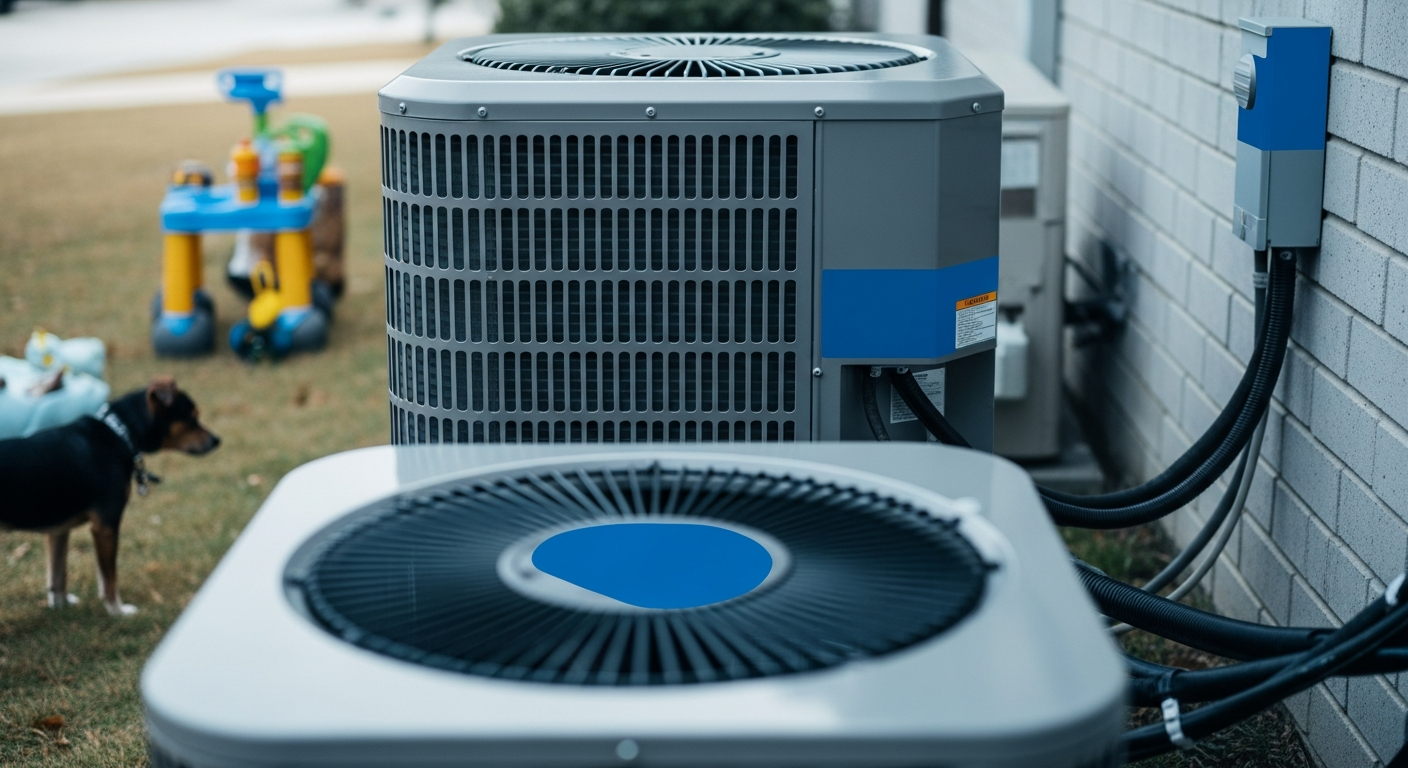
Watch for these warning signs that indicate developing fan motor issues before complete failure occurs. A fan that starts slowly or makes grinding noises during startup typically has worn bearings that will fail within weeks. Ross from Atlas regularly finds this problem in units that haven’t received annual maintenance, particularly in dusty rural locations around McConnells.
Listen for electrical buzzing or clicking sounds when your AC cycles on. These sounds indicate failing contactors or capacitors struggling to engage the fan motor. The problem worsens during peak afternoon hours when electrical demand peaks and voltage drops slightly. Units that work fine in the morning but struggle in the afternoon heat often have weak capacitors that need replacement before they fail completely.
Atlas Heating & Cooling’s Diagnostic Process
Atlas technicians arrive with calibrated multimeters and specialized HVAC diagnostic equipment to quickly identify the exact cause of fan failures. Their systematic approach starts with electrical testing – measuring voltage at the disconnect, checking capacitor microfarad ratings, and testing contactor operation under load. This process typically takes 15-20 minutes and identifies the failed component without guesswork.
John recently diagnosed a complete fan motor failure in a McConnells home where the homeowner heard loud grinding noises for several days before the fan stopped completely. The motor bearings had seized, requiring a full motor replacement rather than simple capacitor service. Atlas stocks common fan motors for major brands, allowing same-day repairs in most cases. The total repair cost was $485, significantly less than the $3,200 estimate for compressor replacement that would have been needed if the homeowner had continued running the system.
Atlas technicians also check for underlying issues that cause premature fan failures. They measure actual operating voltages, inspect electrical connections for corrosion, and evaluate condenser coil cleanliness. This comprehensive approach prevents repeat failures and extends equipment life. Their factory training on major brands like Carrier, Trane, and Goodman allows them to identify model-specific problems and recommend appropriate solutions.
Cost Factors for Fan Motor Repairs in Rock Hill
Capacitor replacement typically costs $150-$220 in the McConnells area, including the service call and labor. Fan motor replacement ranges from $380-$650 depending on the motor size and brand. Contactor replacement runs $180-$280. These prices reflect current market conditions and include Atlas’s standard warranty on parts and labor.
Emergency service calls outside normal business hours carry a $75 surcharge, but Atlas prioritizes no-cooling calls for same-day service during regular hours. They also offer financing options through approved credit for repairs exceeding $300, making major fan motor replacements manageable for McConnells homeowners facing unexpected repair costs.
Addressing problems early controls costs. A $180 capacitor replacement becomes a $650 motor replacement when homeowners ignore warning signs and continue operating failed equipment. Atlas’s preventative maintenance program catches these issues during routine service, typically saving homeowners 40-60% on major repair costs.
For McConnells residents dealing with outdoor AC unit problems this summer, Atlas provides transparent pricing before starting any work. Their licensed technicians explain the problem, show you the failed components, and provide written estimates for all recommended repairs. Call Atlas Heating & Cooling for reliable AC repair service in McConnells or explore their comprehensive AC maintenance programs to prevent future breakdowns.
Frequently Asked Questions
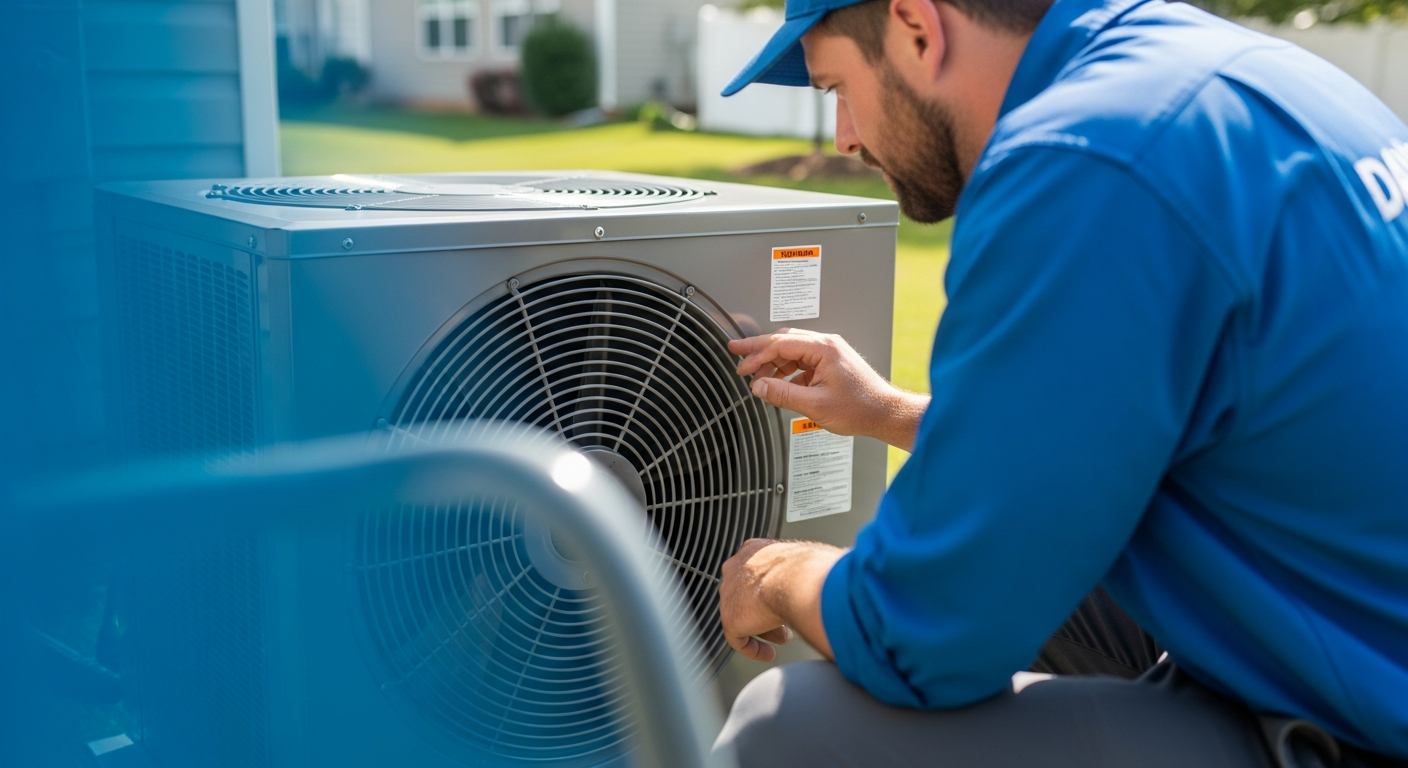
How long does it take to replace an AC outdoor fan motor in McConnells SC?
Most fan motor replacements take 1-2 hours once Atlas technicians arrive with the correct motor. Common motors are stocked on service trucks, but specialty or high-efficiency motors may require next-day delivery. The actual replacement involves disconnecting electrical connections, removing the fan blade, unbolting the old motor, and reversing the process with the new motor.
Can I run my AC if the outdoor fan is not spinning but the compressor still works?
Never run your AC system when the outdoor fan isn’t spinning. The compressor will overheat within 15-30 minutes, leading to expensive damage that can cost $2,000-$4,000 to repair. Atlas technicians see this mistake frequently in McConnells, where homeowners try to get “a little more cooling” before calling for service.
What causes AC fan motors to fail more often in rural McConnells compared to Rock Hill neighborhoods?
Agricultural dust, higher humidity from irrigation, and longer power lines that experience more voltage fluctuations all contribute to faster fan motor degradation in rural areas. Atlas data shows rural McConnells properties need fan motor service about 25% more frequently than urban Rock Hill locations, primarily due to environmental factors and electrical supply differences.