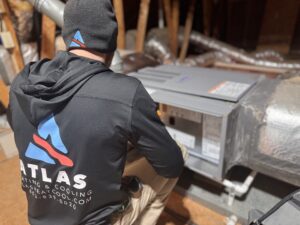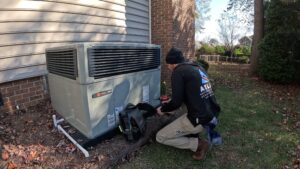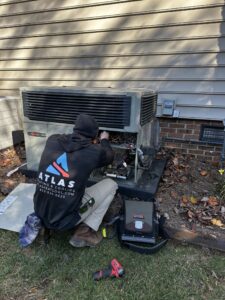
That musty, basement-like smell from your AC vents signals a humidity and mold problem that’s becoming common in Richburg homes this summer. South Carolina’s 80%+ humidity levels and aging HVAC systems in neighborhoods like Ebinport and Fort Mill create conditions for hidden mold growth that standard maintenance often misses. Atlas Heating & Cooling has responded to 40% more musty AC calls this season compared to last summer, with technician Stephen discovering extensive mold colonies behind evaporator coils that homeowners never suspected were there.
What to Do About Musty AC Smells in Richburg
- Turn off your AC system immediately if the smell is overwhelming or accompanied by visible mold
- Check your air filter and replace it if it’s damp, discolored, or hasn’t been changed in 90 days
- Inspect accessible ductwork with a flashlight for visible moisture, dark stains, or fuzzy growth
- Document the smell’s intensity and timing — does it worsen when humidity spikes or after rain
- Contact a licensed HVAC professional for thermal imaging inspection of hidden moisture pockets
- Run exhaust fans in bathrooms and kitchen to reduce overall home humidity while waiting for service
Why Richburg’s Climate Creates Perfect Mold Conditions
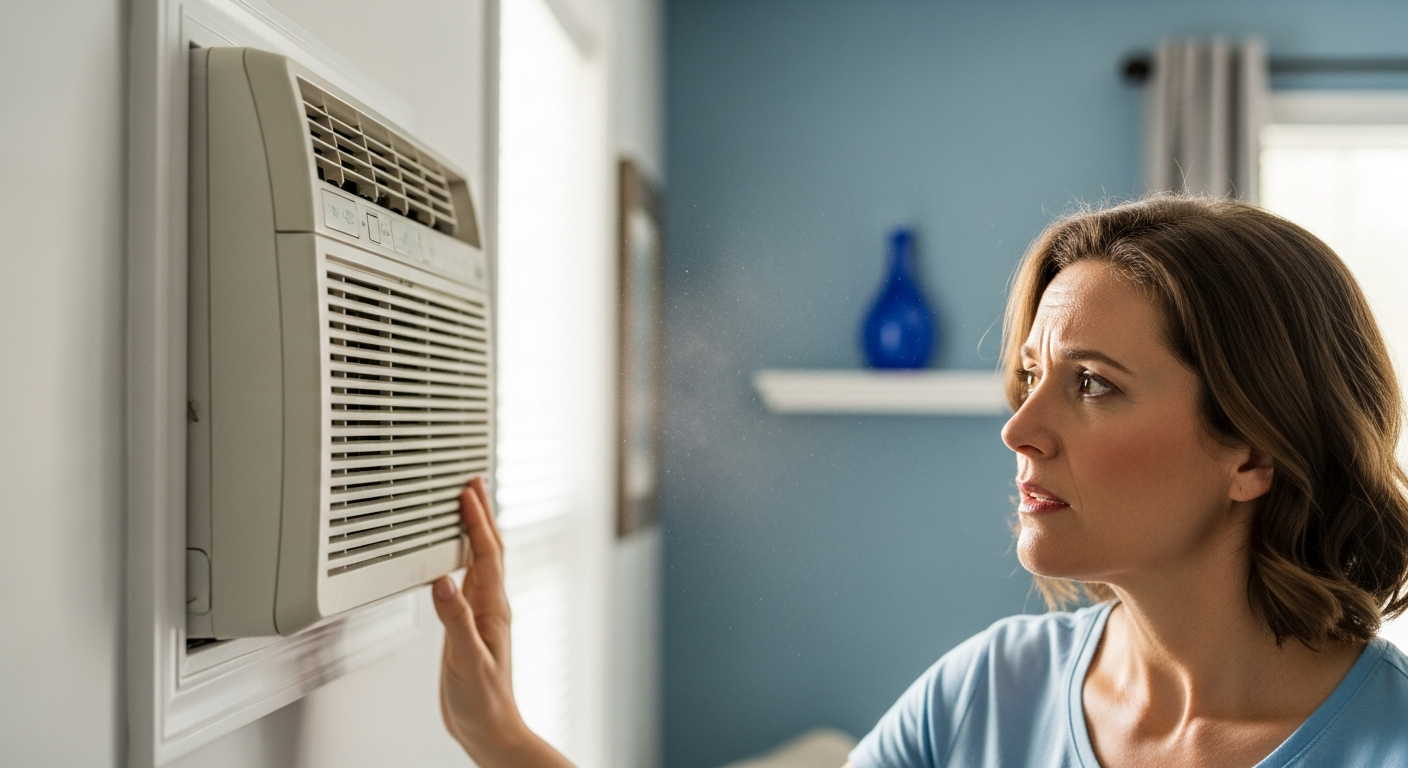
The musty smell from AC vents typically indicates microbial growth — mold, mildew, or bacteria colonies feeding on moisture and organic debris within your HVAC system. Unlike simple dust or pet odors, these biological contaminants produce volatile organic compounds (VOCs) that create that distinctive earthy, basement-like odor. According to the Environmental Protection Agency, mold spores begin reproducing within 24-48 hours when moisture levels exceed 60% — a threshold Richburg homes regularly surpass during summer months.
Richburg’s location in the South Carolina Piedmont creates a humidity trap that standard HVAC systems struggle to manage. The area’s average summer humidity hovers between 70-85%, well above the 50-55% range needed to prevent mold growth. When your AC system cycles off, warm, humid air infiltrates ductwork through small leaks, condensing on cooler metal surfaces and creating moisture pockets that never fully dry.
The problem compounds in homes built before 1990, common throughout Richburg’s established neighborhoods. These older systems often lack proper vapor barriers in ductwork and may have undersized return air systems that create negative pressure, pulling humid outdoor air through building envelope gaps.
Rock Hill Area’s Hidden Moisture Problems

York County’s specific geological and climate factors make musty AC smells particularly problematic compared to other South Carolina regions. The area’s granite bedrock creates poor drainage around foundations, leading to elevated basement and crawl space humidity that infiltrates HVAC systems. NOAA climate data shows Rock Hill averages 43 inches of annual precipitation, with June through August delivering intense afternoon thunderstorms that spike outdoor humidity to near 100%.
Neighborhoods like Sunset Park and Cherry Park face additional challenges due to mature tree canopy that limits air circulation and keeps humidity trapped around homes. The dense vegetation, while beautiful, creates microclimates where moisture lingers hours longer than in open subdivisions. Atlas Heating & Cooling technician John has documented indoor humidity levels exceeding 70% in these tree-lined neighborhoods, even with AC systems running continuously.
Indian Land and Tega Cay homes built in former wetland areas show the highest rates of persistent musty odors. The clay-heavy soil common in these developments retains moisture and creates hydrostatic pressure against foundation walls. This ground moisture migrates upward through concrete slabs and into ductwork installed in crawl spaces, creating year-round humidity problems that worsen dramatically during summer months.
Fort Mill’s newer subdivisions face different but equally challenging issues. Rapid construction often means inadequate duct sealing and improper HVAC sizing calculations. South Carolina’s building code requires duct leakage testing, but enforcement varies, leaving many homes with 20-30% conditioned air loss that forces systems to run longer cycles and creates pressure imbalances that draw humid air into the system.
Warning Signs Beyond the Obvious Smell
AC smells like mildew in Richburg homes often develop gradually, making them easy to dismiss until they become overwhelming. The first indicator isn’t always odor — many homeowners notice increased allergy symptoms or respiratory irritation weeks before detecting actual smells. Watch for family members experiencing morning congestion, headaches, or asthma flare-ups that improve when spending time outside.
Visual cues around your HVAC system tell the real story. Check supply registers for dark staining around edges, which indicates moisture-laden air carrying particles. Basement or crawl space ductwork showing rust spots, especially at joints and connections, reveals condensation problems that create ideal mold habitat.
Professional Diagnosis Goes Beyond Basic Inspection

Atlas Heating & Cooling’s approach to humid house smell in Richburg SC starts with comprehensive moisture mapping using thermal imaging cameras that detect hidden condensation patterns invisible to standard visual inspection. Unlike basic tune-ups that focus on mechanical components, their technicians perform complete panel removal to examine evaporator coil cleanliness and inspect the often-overlooked condensate drain system where most biological growth originates.
The company’s diagnostic process includes measuring humidity levels throughout the home’s duct system, not just at the main unit.
Atlas’s flat-rate pricing model means homeowners receive written estimates for comprehensive solutions — duct sealing, humidity control upgrades, and system modifications — before any work begins. This transparency helps customers understand the full scope of addressing moisture problems rather than just masking odors temporarily.
Addressing musty AC odors in Richburg requires understanding the specific humidity challenges created by South Carolina’s climate and your home’s unique construction characteristics. The problem extends beyond simple cleaning to comprehensive moisture control that prevents future biological growth. Professional duct cleaning in Richburg, combined with proper system sealing and humidity management, provides the only reliable long-term solution.
Atlas Heating & Cooling’s comprehensive HVAC services include specialized indoor air quality solutions designed for York County’s challenging climate conditions. Their preventive maintenance plans specifically address the moisture control needs of Richburg-area homes. For immediate assessment of musty AC odors, contact Atlas at their Rock Hill location for same-day diagnostic service.
Frequently Asked Questions

How long does professional duct cleaning take for mold-related odors in Richburg homes?
Complete professional duct cleaning for mold remediation typically requires 6-8 hours for average Richburg homes, significantly longer than standard cleaning due to the thorough sanitization process required. The process includes antimicrobial treatment, UV light installation consideration, and comprehensive sealing of moisture entry points. Atlas technicians often discover additional issues during mold-related cleaning that extend the timeline but prevent future recurrence.
What’s the average cost for addressing persistent musty smells from AC systems in the Rock Hill area?
Indoor air quality solutions for mold-related odors in Rock Hill typically range from $800-2,400 depending on system size and contamination extent. Basic duct cleaning with antimicrobial treatment starts around $800, while comprehensive solutions including duct sealing, UV light systems, and humidity control upgrades reach $2,000-2,400. Atlas provides written flat-rate pricing before work begins, eliminating surprise costs common with hourly billing.
Can musty AC smells indicate health risks for families in South Carolina’s humid climate?
Persistent mold growth in HVAC systems poses health risks, particularly for children, elderly residents, and those with respiratory conditions common in South Carolina’s high-humidity environment. Extended exposure to mold spores can trigger asthma attacks, allergic reactions, and respiratory infections. The CDC recommends immediate professional assessment when musty odors persist beyond filter replacement, as some mold species produce mycotoxins that cause health complications with prolonged exposure.