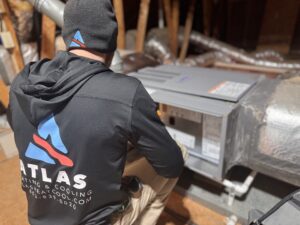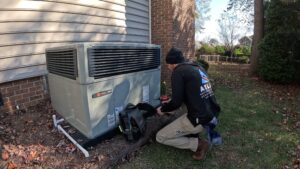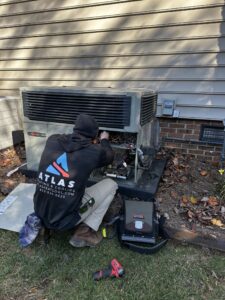
Homeowners in Rock Hill’s established neighborhoods like Oakland, Cherry Park, and India Hook know that May brings more than just blooming azaleas—it marks the start of AC condensate drain problems that can flood utility rooms and create musty odors throughout the house. Atlas Heating & Cooling’s certified technicians have cleared hundreds of clogged drain lines across York County, and the pattern is always the same: Rock Hill’s unique combination of red clay soil, high humidity, and sudden temperature swings creates the perfect storm for drain blockages. What most residents don’t realize is that this isn’t just a maintenance issue—it’s a predictable consequence of our local climate that requires specific prevention strategies.
What to Do About AC Condensate Drain Clogs in Rock Hill
- Turn off your AC system immediately if you see water pooling around the indoor unit
- Check the condensate drain pan under your air handler for overflow or standing water
- Locate your drain line exit point (usually near the outdoor unit or foundation) and look for algae buildup
- Pour a cup of white vinegar down the drain line at the air handler to dissolve minor clogs
- Use a wet/dry vacuum to suction debris from the outdoor drain exit if accessible
- Call Atlas Heating & Cooling at (803) 389-5713 if water continues backing up after these steps
Why AC Drain Line Overflowing Happens in Rock Hill’s Climate

Rock Hill’s humid subtropical climate creates an ideal environment for AC condensate drain clogs, particularly during the transition from spring to summer. According to NOAA climate data, Rock Hill averages 76% relative humidity during May and June, with outdoor temperatures jumping from 75°F to 89°F in just weeks. This dramatic shift forces air conditioning systems to remove significantly more moisture from indoor air—often 2-3 gallons per day for a typical 3-ton system.
The condensate drain system works like a miniature plumbing network. As warm, humid air passes over the evaporator coil, moisture condenses and drips into a collection pan, then flows through a PVC drain line to the outdoors. Rock Hill’s water quality compounds this challenge—the City of Rock Hill’s water treatment adds minerals that, combined with airborne dust and organic matter, create a sticky residue inside drain lines.
Atlas Heating & Cooling technician Spiros notes that Rock Hill homes built between 1980-2000 face particular challenges because their drain lines often run through crawl spaces where temperature fluctuations cause condensation buildup. This creates a breeding ground for algae and bacteria that gradually restrict water flow until complete blockage occurs.
Rock Hill Neighborhoods Most Affected by AC Water Leak Issues

Certain Rock Hill areas experience more frequent AC condensate drain problems due to specific environmental factors. The historic downtown district around White Street and Main Street sees regular drain clogs because older homes lack proper drain line slopes—many were retrofitted with central air conditioning years after construction. Oakland and Cherry Park neighborhoods, built on Rock Hill’s characteristic red clay soil, face drainage challenges when clay particles enter outdoor drain exits during heavy spring rains.
Winthrop University area homes in neighborhoods like Ebenezer and India Hook deal with additional complications from mature oak trees. According to York County soil surveys, these areas have Cecil clay loam soil that retains moisture and supports dense organic growth around AC units. This creates more debris that can block drain line exits.
The newer developments in Fountain Park and Rock Hill’s eastside near Riverwalk have their own issues. These homes often feature complex HVAC duct systems with multiple air handlers, meaning more condensate drain lines that require maintenance. Additionally, Rock Hill’s average annual precipitation of 43.65 inches, with peak rainfall in June, coincides perfectly with peak AC usage—creating maximum stress on drainage systems just as they’re working hardest.
Fort Mill Road corridor homes face unique challenges because they’re built on sloped lots. Gravity-fed drain lines that work perfectly in winter can back up during summer when increased condensate volume overwhelms undersized drain pipes. Atlas Heating & Cooling has documented this pattern in over 200 service calls across these neighborhoods since 2020.
Warning Signs of AC Smells Moldy Rock Hill Humidity Problems
Rock Hill homeowners should watch for specific indicators that suggest condensate drain issues are developing. The first sign is often a musty odor that intensifies during humid weather—this smell indicates standing water in the drain pan where bacteria and mold are growing. Unlike other household odors, AC-related mustiness gets stronger when the system runs because the blower fan circulates contaminated air throughout the house.
Water stains around the indoor air handler unit signal drain pan overflow, which happens when the primary drain line becomes restricted. In Rock Hill’s high-humidity environment, even partial blockages can cause problems because the sheer volume of condensate overwhelms a compromised drainage system. Homeowners might also notice wet spots on ceilings below attic-mounted air handlers, particularly in two-story homes common throughout Cherry Park and Ebenezer neighborhoods.
How Atlas Heating & Cooling Clears AC Drain Lines Rock Hill

Atlas Heating & Cooling uses a systematic approach to address condensate drain problems specific to Rock Hill’s environmental conditions. Their technicians start with high-pressure nitrogen clearing—a technique that removes algae buildup more effectively than traditional water flushing methods. This is particularly important for Rock Hill homes because the combination of mineral-rich city water and organic debris creates stubborn blockages that resist simple cleaning methods.
Team member Nathan explains their process includes installing drain line traps where needed, since many Rock Hill homes lack proper P-traps that prevent outdoor air from entering the system. This outdoor air carries additional moisture and contaminants that accelerate clog formation. They also apply biocide tablets specifically formulated for South Carolina’s humid climate, providing 3-6 months of protection against algae regrowth.
One recent case involved a Fountain Park homeowner whose AC system repeatedly flooded their utility room every June. Atlas Heating & Cooling discovered that the original drain line installation lacked proper slope and included sharp 90-degree turns where debris accumulated. After rerouting the drain with gradual bends and proper pitch, the system has operated problem-free for two consecutive summers. Their approach goes beyond quick fixes to address the root causes that make Rock Hill systems particularly vulnerable to condensate drainage issues.
Rock Hill’s red clay soil and humid climate create unique challenges for AC condensate drainage that require proactive maintenance rather than reactive repairs. Understanding these local factors helps homeowners recognize early warning signs and take preventive action before minor issues become expensive problems. Regular AC maintenance in Rock Hill should always include drain line inspection and cleaning, particularly before the high-humidity summer months when systems work hardest.
If you’re experiencing AC drainage issues or want to prevent future problems, contact Atlas Heating & Cooling for a comprehensive HVAC system evaluation. Their local expertise and proven methods can keep your system running efficiently throughout Rock Hill’s challenging summer season.
Frequently Asked Questions

How often should I clean my AC condensate drain line in Rock Hill?
Rock Hill homeowners should have condensate drain lines professionally cleaned twice yearly—once in early spring before humidity rises and again in late summer after peak usage. Rock Hill’s 76% average summer humidity and mineral-rich city water create faster algae buildup than drier climates. Monthly DIY maintenance with white vinegar can help between professional cleanings, but Atlas Heating & Cooling’s biocide treatment provides longer-lasting protection against the specific bacteria strains common in York County’s humid environment.
Why does my AC drain keep clogging even after cleaning?
Recurring clogs in Rock Hill often indicate improper drain line installation rather than maintenance issues. Many homes built before 2000 have drain lines with inadequate slope or sharp turns where debris accumulates. Rock Hill’s red clay soil can also shift foundation settling that affects drain line pitch over time. Additionally, outdoor drain exits near ground level collect clay particles during heavy rains—Rock Hill averages 43.65 inches annually with intense June storms that can push soil into drain openings.
Can I prevent AC condensate drain clogs without professional service?
While homeowners can perform basic maintenance like monthly vinegar flushes and keeping outdoor drain exits clear, Rock Hill’s environmental conditions require professional intervention for effective prevention. The combination of mineral deposits from city water, organic growth from high humidity, and clay soil infiltration creates complex blockages that resist DIY methods. Atlas Heating & Cooling’s nitrogen clearing and biocide treatment specifically address these local challenges—simple water flushing often just pushes debris deeper into the line rather than removing it completely.