....
Rock Hill HVAC Experts | Local Team You Can Trust

The Silent AC Killer: What York, SC Homeowners Need to Know About Refrigerant Leaks This Spring

York County homeowners in neighborhoods like Riverwalk and Newport are discovering refrigerant leaks in their AC systems just as spring temperatures climb toward summer. Atlas Heating & Cooling’s NATE-certified technicians see these silent failures regularly across the greater Rock Hill area, often finding systems that have been slowly losing cooling capacity for months. What makes refrigerant leaks particularly troublesome is that they rarely announce themselves with obvious breakdowns — instead, they quietly drain your system’s efficiency while driving up energy bills.

What to Do About AC Refrigerant Leaks in York SC – Check for ice buildup on your outdoor unit’s copper lines, especially during afternoon heat

  • Monitor your electric bills for unexplained increases of 15-30% compared to last spring
  • Listen for hissing sounds near the outdoor condenser when the system starts up
  • Test cooling performance by comparing temperatures between rooms and outdoor readings
  • Schedule a professional leak detection service if your AC runs constantly but doesn’t reach set temperature
  • Document any oily residue or stains around the outdoor unit’s refrigerant connections
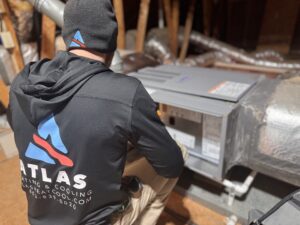
Low Refrigerant AC Symptoms York Homeowners Miss Refrigerant doesn’t get “used up” like gasoline — it circulates in a closed loop system. When levels drop, there’s always a leak somewhere in the copper lines, coils, or connections. Atlas Heating & Cooling technician Ross Armstrong explains that York County’s clay-heavy soil, which contains high levels of feldspar minerals, creates corrosive conditions that accelerate copper line deterioration underground. The EPA estimates that residential AC systems lose an average of 5-10% of their refrigerant annually through normal micro-leaks, but significant leaks can drain 50% or more of the charge within a single cooling season. Most homeowners don’t notice the gradual performance decline until the system struggles to cool during the first 90-degree days of late spring.

AC Not Cooling York: Climate Factors That Accelerate Leaks York’s humid subtropical climate creates specific challenges for AC refrigerant systems that don’t exist in drier regions. Summer humidity levels regularly exceed 80%, while temperatures climb into the mid-90s with heat indices reaching 105°F. This combination forces AC systems to run 12-16 hours daily during peak season, creating thermal stress that expands and contracts copper refrigerant lines. The National Weather Service reports that York County averages 45 days above 90°F annually, with most occurring between June and August. During these extended run cycles, even small refrigerant leaks become apparent as systems struggle to maintain indoor temperatures. Neighborhoods like Laurel Creek and Millwood Plantation, with homes built in the 1990s and early 2000s, often have original copper linesets that develop stress fractures after 15-20 years of thermal cycling. Underground refrigerant lines face additional challenges from York’s Piedmont geology. The region’s granite bedrock weathers into acidic soil conditions that corrode buried copper over time. Atlas Heating & Cooling’s service records show that homes in Baxter Village and The Woodlands, where underground utilities run through disturbed soil from construction, experience refrigerant line failures at twice the rate of homes with overhead connections. Rock Hill’s water quality report shows moderate hardness levels from the Catawba River system, with detected metals including chromium that can accelerate corrosion when condensate drains contact copper surfaces. The city’s C+ water quality rating reflects 8 contaminants exceeding health advocacy guidelines, though still meeting legal requirements.

HVAC Freon Leak Dangers and Warning Signs Refrigerant leaks create a cascade of problems beyond poor cooling. When refrigerant levels drop below manufacturer specifications, the remaining liquid expands too rapidly through the evaporator coil, causing ice formation on indoor and outdoor copper lines. This ice blocks airflow and forces the compressor to work harder, often leading to premature failure of the system’s most expensive component. Modern AC systems use R-410A refrigerant, which operates at pressures up to 400 PSI — nearly double the pressure of older R-22 systems. Atlas Heating & Cooling technician Stephen Estes notes that high-pressure refrigerant leaks often occur at brazed joints and valve connections, where thermal expansion creates micro-fractures that worsen over time. These leaks release refrigerant vapor that’s heavier than air and can displace oxygen in enclosed spaces like crawl spaces or mechanical rooms.

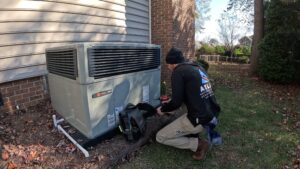
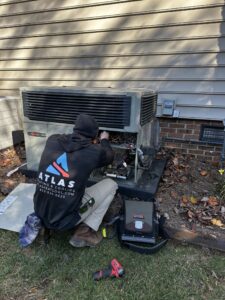
Refrigerant Leak Repair Cost York: Atlas Heating & Cooling’s Diagnostic Process Atlas Heating & Cooling uses electronic leak detectors that identify R-410A concentrations as low as 0.5 ounces per year — the EPA’s threshold for significant leaks requiring repair. The team’s approach starts with pressure testing the entire refrigerant circuit using nitrogen, which reveals leaks that might not show up during normal operation. Owner William Smith Jr. explains that their technicians perform leak detection systematically, checking indoor evaporator coils, outdoor condenser coils, and all refrigerant line connections. They use UV dye injection for persistent leaks that electronic detectors can’t pinpoint, allowing the dye to circulate for 24-48 hours before returning with UV lights to identify the exact leak location. A recent customer in Old Town Rock Hill called Atlas when their upstairs AC couldn’t maintain temperature during a spring heat wave. Technician Nathan discovered a pinhole leak in the evaporator coil that had been slowly draining refrigerant for months. After repairing the leak and recharging the system with the proper 8.5 pounds of R-410A, the customer reported immediate improvement in cooling performance and a 25% reduction in their next electric bill. Atlas Heating & Cooling maintains detailed records of refrigerant leak patterns across York County, noting that homes with original equipment from 2005-2010 show increased failure rates in evaporator coils, while systems installed after 2015 more commonly develop leaks at outdoor unit connections due to installation practices that have since improved. Most refrigerant leak repairs in York range from $300-800 depending on location and accessibility, with evaporator coil replacement running $1,200-2,000 for systems requiring indoor unit access. However, catching leaks early through regular maintenance often allows for simple repairs that cost a fraction of major component replacement. York homeowners should schedule professional AC inspections each spring before the cooling season begins, especially for systems over 10 years old or homes in neighborhoods with known soil corrosion issues. Atlas Heating & Cooling’s technicians can identify developing problems before they become expensive failures, and their preventative maintenance program includes refrigerant level checks and leak detection as standard services. For immediate concerns about AC cooling performance or suspected refrigerant issues, their team provides same-day service throughout York County and surrounding areas.

Frequently Asked Questions

How can I tell if my AC has a refrigerant leak without calling a technician? Check for ice formation on the copper lines connected to your outdoor unit, especially during hot afternoons when the system should be running normally. Monitor your thermostat — if your AC runs constantly but struggles to reach the set temperature, low refrigerant is often the cause. Also watch for unusual increases in your electric bill, as systems with refrigerant leaks consume 30-50% more energy while providing less cooling.

What causes refrigerant leaks in York County AC systems specifically? York’s clay-heavy soil and humid climate create corrosive conditions that accelerate copper line deterioration, particularly for underground refrigerant connections. The region’s thermal cycling between hot summers and cool winters causes copper lines to expand and contract, developing stress fractures over 15-20 years. Additionally, York’s moderately hard water from the Catawba River system contains minerals that can corrode copper surfaces where condensate drainage occurs.

Should I add refrigerant myself if my AC isn’t cooling properly? No — adding refrigerant without locating and repairing the leak wastes money and can damage your system. EPA regulations require certified technicians to handle refrigerant, and DIY refrigerant products sold to homeowners often contain incorrect pressures or incompatible chemicals. Atlas Heating & Cooling’s leak detection process identifies the root cause, ensuring proper repair rather than temporary fixes that fail within weeks.

Latest Posts