How to Choose a Reliable HVAC Contractor in Rock Hill, SC: A Homeowner’s Guide
Selecting a high-quality HVAC contractor in Rock Hill, SC, directly impacts your home’s efficiency, comfort, and long-term value. This guide breaks down exactly what separates an industry leader from the rest, ensuring you make a confident choice for your family’s climate control needs.
You need to confirm essential local compliance through proper licensing and insurance within York County, and then verify the technical proficiency of the technicians through recognized standards like NATE certification. The process involves understanding complex technical steps such as why accurate Manual J load calculations are crucial for sizing equipment, how to evaluate an estimate that follows the industry’s general $5000 rule for replacement versus repair, and how different unit specifications relate to our specific South Carolina weather. Furthermore, knowing the difference between labor and parts warranties, and establishing access to reliable, ongoing maintenance plans, solidifies your investment.
By mastering these selection criteria now, you guarantee superior system performance and lasting peace of mind throughout the demanding Rock Hill seasons.
Identifying a Qualified HVAC Contractor in Rock Hill
Licensing and Insurance Requirements in York County
In York County, every hvac contractor in Rock Hill, SC, must possess a valid South Carolina mechanical contractor’s license. This certification confirms they are properly bonded and insured to handle complex tasks like a new [furnace installation](/services/furnace-installation/). Working with licensed professionals also ensures that routine [HVAC tune-ups](/services/hvac-tune-up/) are performed according to rigorous state safety and environmental regulations.
Managing Local Permitting and Inspection Processes
Navigating local regulations is a hallmark of a professional contractor. To maintain compliance, your service provider should manage the following according to the [York County Building Codes and Inspections](https://www.yorkcountygov.com/209/Building-Codes-Inspections) office:
- Permit Filing: Securing necessary mechanical permits before beginning major system replacements or modifications.
- Code Adherence: Ensuring all ductwork and electrical connections meet the specific structural requirements of the Rock Hill jurisdiction.
- On-Site Inspections: Coordinating with county officials for final inspections to validate that the installation is safe and up to code.
- Documentation: Providing the homeowner with copies of signed permits and inspection reports for insurance and resale purposes.
Choosing a contractor who prioritizes legal compliance and professional accountability is non-negotiable for long-term home comfort. By verifying that your technician understands the specific local mandates of the Rock Hill area, you safeguard your investment and ensure your heating and cooling systems operate at peak performance for years to come.
Verifying Professional Expertise and Technician Certification
Choosing an HVAC contractor in Rock Hill, SC, requires looking beyond basic service offerings to verify the technical proficiency of the team entering your home. Industry-recognized credentials serve as a safeguard, ensuring that the technicians possess the rigorous training necessary to handle complex modern heating and cooling systems. By prioritizing certified professionals, homeowners can reduce the risk of improper installations and frequent breakdowns.
The Significance of NATE-Certified Technicians
When evaluating a contractor’s expertise, the North American Technician Excellence (NATE) certification is widely considered the industry gold standard. Unlike basic licensing, NATE certification is a voluntary, knowledge-based program that requires technicians to pass rigorous exams covering real-world installation and service procedures. For Rock Hill residents, hiring a NATE-certified professional means working with an expert who has demonstrated a superior understanding of energy efficiency, system specialized tools, and the latest HVAC technologies. These technicians stay updated on evolving industry standards, which translates to higher performance and a longer lifespan for your home’s air conditioning and heating units.
Experience and Local Reputation in the Rock Hill Community
A contractor’s standing within the local community is a strong indicator of their reliability and commitment to customer satisfaction. In addition to technical certifications, look for these markers of a reputable HVAC contractor in Rock Hill, SC:
- Physical Local Presence: Look for established offices in the area, such as those located near India Hook Rd or within the greater Rock Hill city limits.
- Service History: An established track record in York County ensures the contractor understands the specific climate demands and common housing configurations of the region.
- Verified Customer Feedback: High ratings (4.5 to 5 stars) on platforms like Google and Trustindex demonstrate a history of transparent pricing and dependable service.
- Comprehensive Licensing: Ensure the company holds all necessary South Carolina state licenses and insurance to protect your property during repairs or installations.
Diagnostic Speed and Accuracy
The true value of professional expertise is most evident during a system breakdown. Expert technicians utilize advanced diagnostic tools to pinpoint the root cause of a failure quickly, preventing the “trial and error” approach that often leads to unnecessary parts replacements and higher labor costs. High-level certification ensures that a technician can accurately calibrate your system for maximum airflow and efficiency on the first visit. This precision not only restores your home comfort faster but also prevents secondary issues that arise from poorly diagnosed mechanical problems, ultimately saving you money on long-term utility bills and future emergency repairs.
The HVAC Sizing and Estimation Process for South Carolina Homes
Why Manual J Load Calculations Matter
In Rock Hill, the humid subtropical climate demands precise cooling capacity and moisture removal. A Manual J Load Calculation is the professional industry standard used to determine exactly how much heating and cooling your home requires to stay comfortable year-round. Unlike outdated “rule of thumb” estimates that rely solely on square footage, a Manual J calculation accounts for your home’s insulation levels, window orientation, ceiling heights, and local weather patterns. Getting this right is essential; an oversized system will “short cycle,” leading to high humidity and increased wear, while an undersized system will fail to keep you cool during a South Carolina heatwave. For a system tailored perfectly to your home’s footprint, always choose Professional HVAC Installation Services.
The $5000 Rule: When to Repair vs. Replace
When a system fails, homeowners often struggle to decide whether to invest in a fix or start fresh. The $5000 Rule serves as a reliable decision-making framework to evaluate the financial logic of a repair:
- The Formula: Multiply the age of the unit (in years) by the total cost of the repair.
- The Threshold: If the result is less than $5,000, repairing the unit is typically the better financial move.
- The Threshold: If the result is greater than $5,000, the money is better spent on a replacement.
- Example: A 12-year-old system requiring a $500 repair equals $6,000. Under this rule, the age and cost justify upgrading to a new, more efficient model.
Professional HVAC Estimate Checklist
A comprehensive estimate protects you from hidden costs and ensures the system performs as expected. Ensure your Rock Hill HVAC contractor includes the following items in your written quote:
- Load Calculation Results: Evidence of a Manual J calculation to verify the unit size (tonnage).
- Equipment Efficiency Ratings: Specific SEER2 and HSPF2 ratings for the proposed units.
- Ductwork Assessment: A thorough inspection of existing ducts to ensure they can handle the airflow of a new system.
- Scope of Work: Itemized list of tasks, including the removal and disposal of the old unit.
- Permit Fees: Confirmation that the contractor is handling all local building permits and inspections.
- Warranty Details: Clear documentation of the manufacturer’s parts warranty and the contractor’s labor guarantee.
- Project Timeline: Estimated start and completion dates for the installation.
Understanding Your Detailed Estimate and Billing
A professional estimate should be transparent, providing a clear breakdown of equipment costs, labor, and materials. Avoid “lump sum” quotes that lack detail, as these often mask the use of inferior components or the omission of necessary code upgrades. Your estimate is also the best time to discuss financing options and available tax credits under the Inflation Reduction Act, which can significantly lower the net cost of high-efficiency systems. By understanding every line item, you can make an informed decision that balances immediate costs with long-term energy savings.
Navigating the technical specifications of a modern comfort system can be overwhelming. As a leading hvac contractor in Rock Hill, SC, we believe that informed homeowners make the best decisions for their long-term comfort and budget. Understanding how your system interacts with our local climate and what the industry metrics actually mean is the first step toward a successful AC installation.
Heat Pumps and the Rock Hill Climate
In Rock Hill, our climate is characterized by sweltering, humid summers and relatively mild winters. This makes the heat pump one of the most popular choices for local homeowners. Unlike a traditional furnace that generates heat by burning fuel, a heat pump moves heat from one place to another.
During the summer, it pulls heat out of your home to keep you cool. In the winter, it reverses the process, extracting ambient heat from the outside air to warm your interior. Because they move heat rather than create it, these systems are incredibly efficient. However, because they rely on the outdoor air, they work hardest when temperatures dip toward freezing, making professional heating repairs and sizing essential for peak performance.
Decoding HVAC Metrics: BTUs, TON, and Heat Units
When reviewing quotes for a new system, you will encounter several technical terms that define the capacity and power of the unit. Here are the most critical metrics defined:
- BTU (British Thermal Unit): This is a basic measure of thermal energy. One BTU is the amount of heat required to raise the temperature of one pound of water by one degree Fahrenheit.
- TON: In HVAC terms, a “ton” does not refer to the weight of the machine. Instead, it refers to its cooling capacity. One ton of cooling is equivalent to 12,000 BTUs per hour.
- SEER2 (Seasonal Energy Efficiency Ratio): This measures the cooling efficiency of your unit over an entire season. Higher SEER2 ratings indicate lower monthly energy bills.
- HSPF2 (Heating Seasonal Performance Factor): Similar to SEER, this measures the efficiency of the heating side of a heat pump.
HVAC Sizing vs. Square Footage
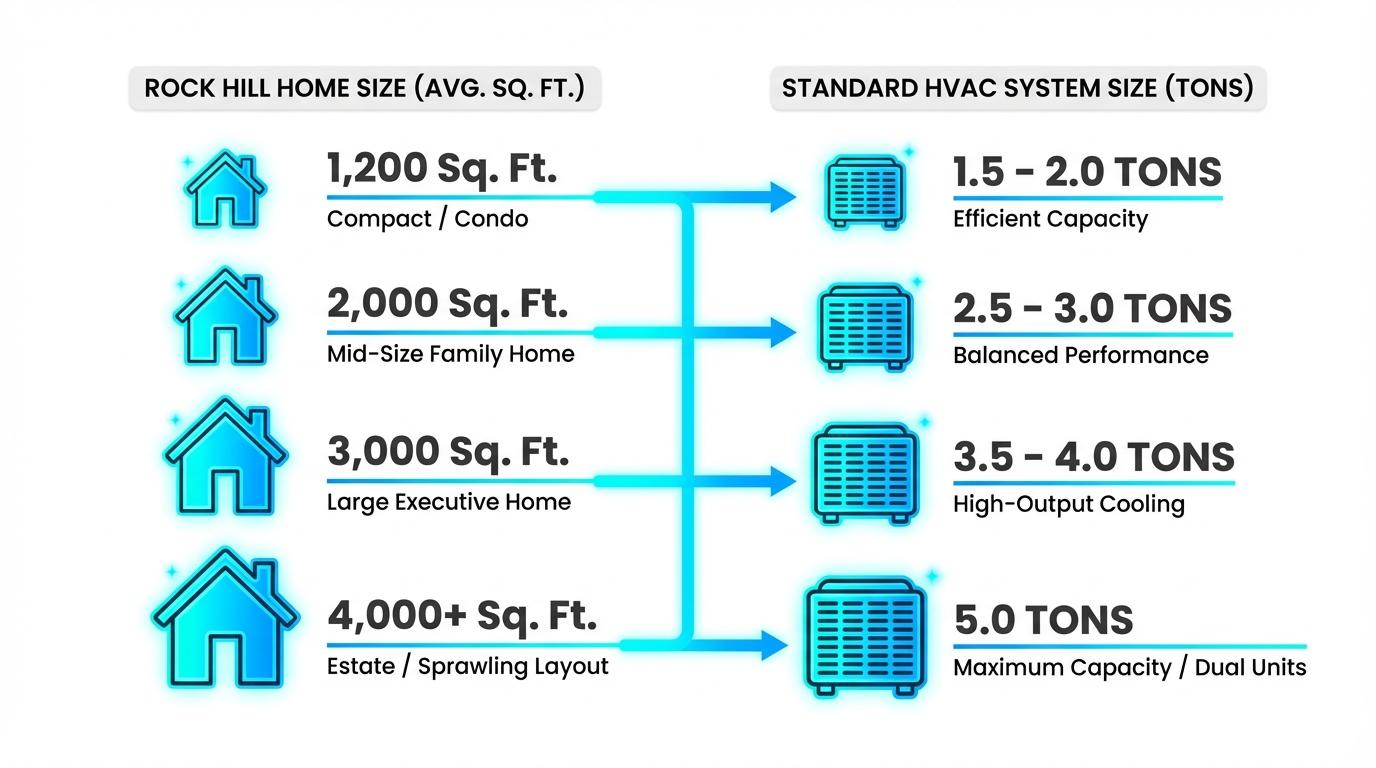
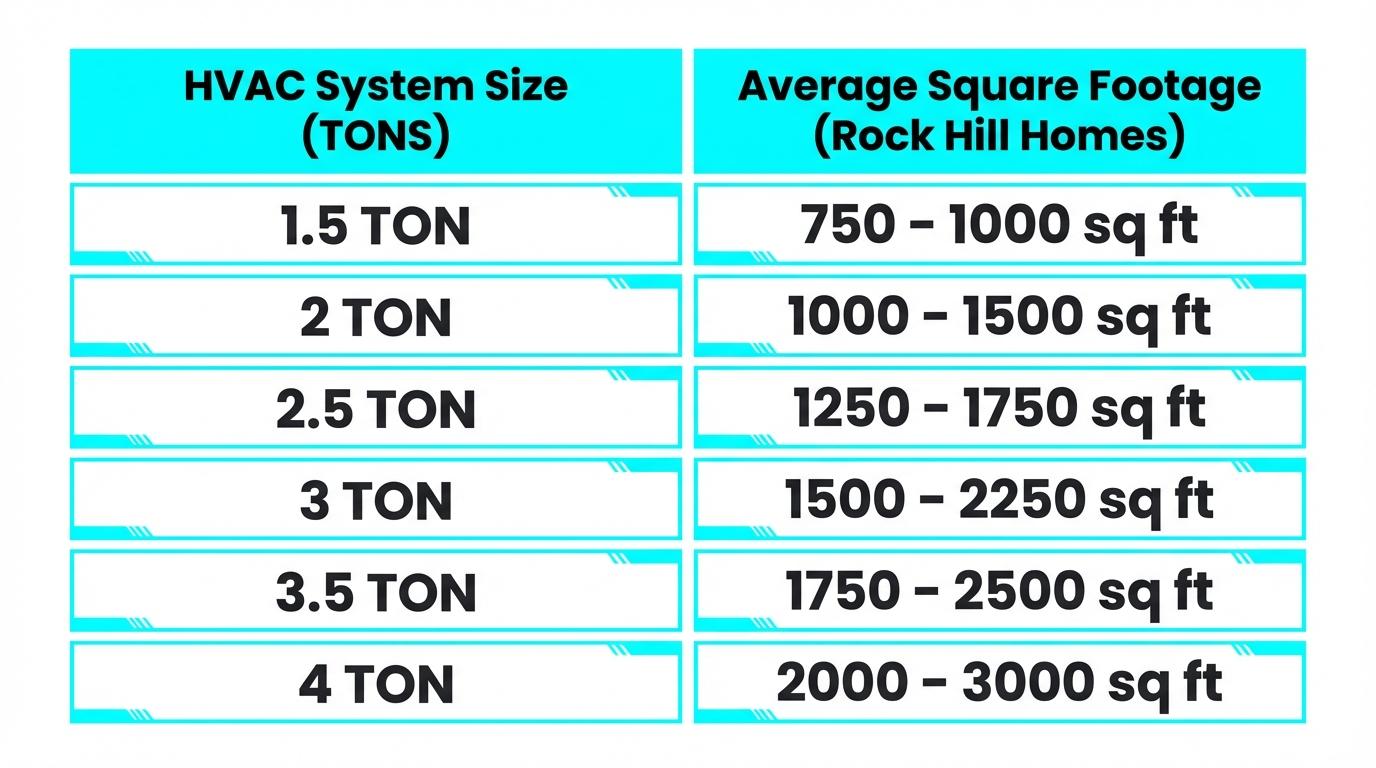
Choosing the right size is the most important factor in your system’s longevity. A system that is too small will run constantly, while an oversized system will “short cycle,” leading to high humidity and premature wear. While a professional Manual J Load Calculation is the only way to get an exact match, the following table provides a general guideline for Rock Hill homes.
| System Size (Tons) | Cooling Capacity (BTUs/hr) | Estimated Square Footage |
| :— | :— | :— |
| 1.5 Tons | 18,000 BTU | 600 – 1,000 sq. ft. |
| 2.0 Tons | 24,000 BTU | 1,001 – 1,500 sq. ft. |
| 2.5 Tons | 30,000 BTU | 1,501 – 2,000 sq. ft. |
| 3.0 Tons | 36,000 BTU | 2,001 – 2,500 sq. ft. |
| 3.5 Tons | 42,000 BTU | 2,501 – 3,300 sq. ft. |
| 4.0 Tons | 48,000 BTU | 3,301 – 4,000 sq. ft. |
| 5.0 Tons | 60,000 BTU | 4,001 – 5,000 sq. ft. |
Understanding your warranty is vital for protecting your investment. Most new HVAC systems come with two distinct types of coverage:
- Manufacturer’s Parts Warranty: This covers the physical components of the machine (like the compressor or coils) if they fail due to a factory defect. These typically last 5 to 10 years, provided the system was registered properly.
- Labor Warranty: Provided by your hvac contractor in Rock Hill, SC, this covers the cost of the technician’s time to diagnose and fix the issue.
Even if a part is covered by the manufacturer, the labor to replace it can be expensive. At Atlas Heating & Cooling, we emphasize the importance of regular AC maintenance to keep both your parts and labor warranties in good standing, as many manufacturers will void coverage if the system shows signs of neglect.
Essential HVAC Services and Maintenance Standards
Maintaining a comfortable home in Rock Hill, SC, requires more than just reactive fixes; it demands a proactive approach to system health. By prioritizing regular inspections and expert oversight, homeowners can avoid the stress of sudden equipment failure and ensure their systems operate at peak efficiency year-round.
24/7 Emergency Service Availability
HVAC emergencies rarely happen at a convenient time. Whether your furnace fails during a winter cold snap or your AC shuts down in the middle of a humid July afternoon, waiting days for a technician isn’t an option. We provide 24/7 emergency HVAC services to ensure your home remains a safe haven, regardless of the time or weather. Rapid response is critical—not just for your immediate comfort, but to prevent further mechanical damage that occurs when a struggling system continues to run.
Preventing the Top 5 Common HVAC Problems
Many of the calls we receive for air conditioning repair are for issues that could have been prevented with routine care. Addressing these common problems early can save you thousands in replacement costs:
- Clogged Air Filters: This is the leading cause of system strain. Dirt buildup restricts airflow, forcing the motor to work harder and eventually causing it to burn out.
- Thermostat Malfunctions: Issues with calibration or wiring can lead to inconsistent temperatures and “short cycling,” which puts unnecessary wear on your compressor.
- Frozen Evaporator Coils: Usually caused by restricted airflow or low refrigerant, frozen coils can cause your entire system to seize up during the hottest part of the year.
- Clogged Condensate Drain Lines: When dust and algae plug the drain line, water can back up into your home, leading to mold growth and significant water damage.
- Worn Capacitors and Electrical Components: Over time, electrical parts can degrade due to heat. Replacing a failing capacitor during a tune-up is a fraction of the cost of an emergency service call.
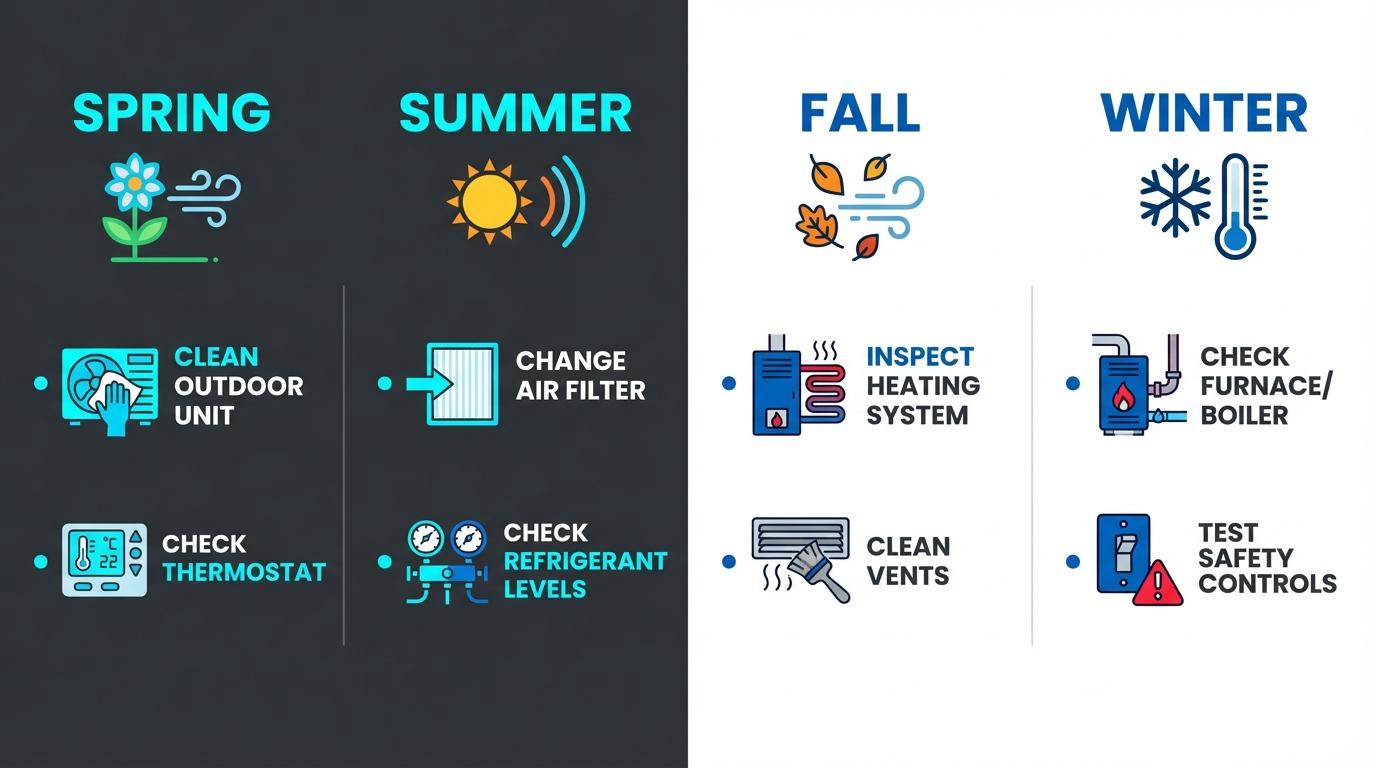
Infographic checklist detailing seasonal HVAC maintenance tasks for Spring, Summer, Fall, and Winter, using the Atlas Heating & Cooling brand colors and style.
The Benefits of Annual Service Plans
The most effective way to protect your investment is by enrolling in an annual HVAC maintenance plan. These programs are designed to catch minor wear and tear before they transform into “system-killing” catastrophes. Regular maintenance ensures that your heating and cooling equipment operates at its highest SEER (Seasonal Energy Efficiency Ratio) rating, keeping your monthly utility bills as low as possible.
Furthermore, most manufacturers require proof of professional maintenance to keep your equipment warranty valid. By scheduling bi-annual tune-ups, you aren’t just buying a service; you are securing long-term peace of mind, priority scheduling, and a longer lifespan for your home’s most expensive appliance.
The Role of Climate Control in Rock Hill Community Life
HVAC Systems as an Investment in Local Property Value
In the thriving Rock Hill, SC real estate market, a home’s mechanical health is a top priority for savvy buyers. High-efficiency HVAC systems are no longer a luxury—they are a core investment in property value. Replacing an outdated unit with a modern, high-SEER2 system can significantly boost appraisal values and reduce “days on market” when it comes time to sell.
Contributing to Neighborhood Energy Efficiency and Comfort
Your home’s energy use is a key part of the broader York County ecosystem. By prioritizing energy-efficient climate control, you help reduce the peak-load demand on local utilities, especially during South Carolina’s punishing summer heatwaves. Efficient systems contribute to a more sustainable community while ensuring your family enjoys consistent temperatures and superior indoor air quality.
Local Expertise Summary
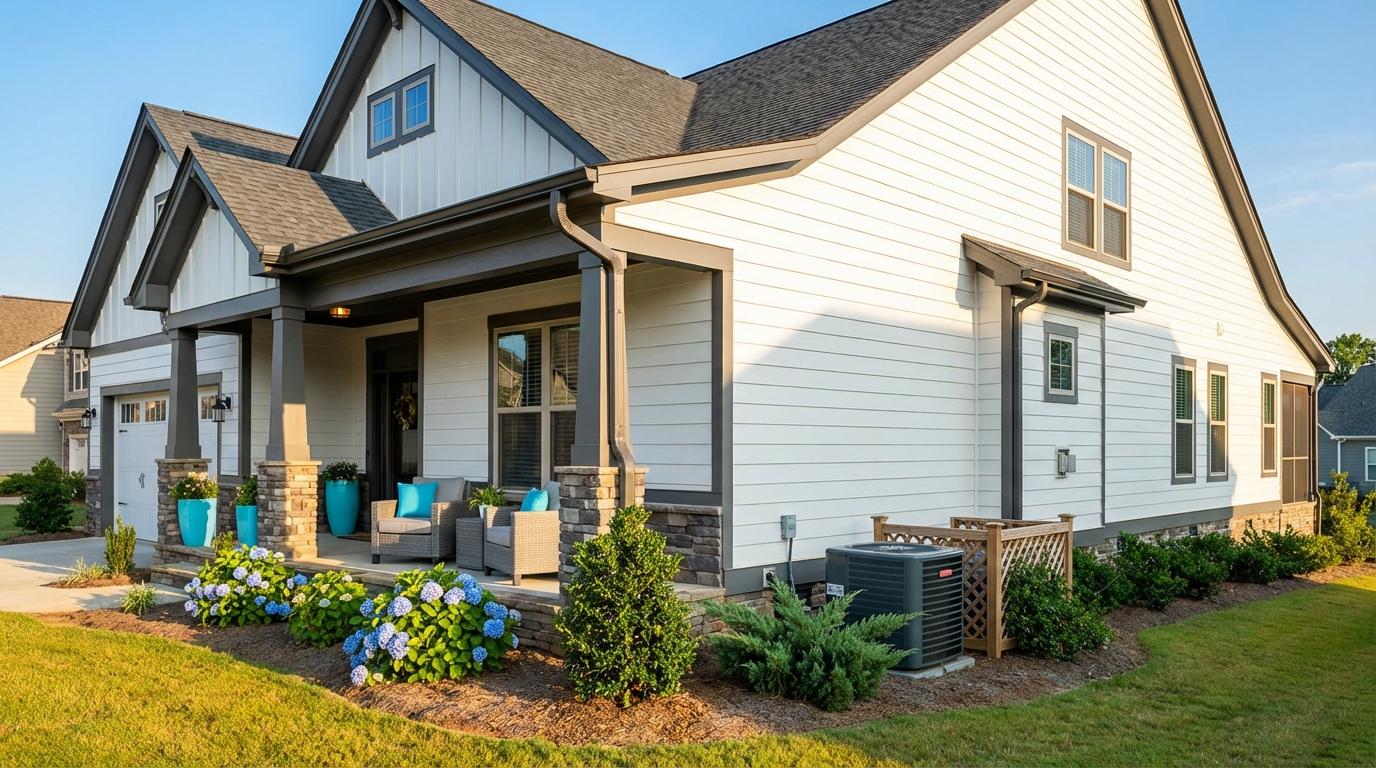
At Atlas Heating & Air Conditioning, we understand that we aren’t just fixing machines; we’re maintaining the comfort of our neighbors. Our deep roots in the Rock Hill community allow us to provide services tailored to the specific humidity and temperature challenges of the Piedmont. We take pride in helping our customers build healthier, more valuable, and more efficient homes.
Looking to enhance your home’s value and comfort?
Frequently Asked Questions About Rock Hill HVAC Services
What are the signs that my HVAC system is too large for my home?
An oversized unit often undergoes short cycling, where it turns on and off rapidly without completing a full cooling or heating cycle. This prevents the system from effectively removing humidity, leaving your Rock Hill home feeling clammy despite the air being cool. You might also notice significant temperature swings between rooms or unusually high energy bills caused by the constant starting of the compressor.
How often should I schedule maintenance for a heat pump in South Carolina?
In the South Carolina climate, heat pumps serve as both your primary heating and cooling source, meaning they operate during almost every month of the year. To maintain peak efficiency and prevent unexpected breakdowns, you should schedule professional maintenance twice annually. A spring tune up prepares the system for the summer humidity, while a fall visit ensures the auxiliary heat and defrost components are ready for cooler winter nights.
What documents should I receive after a professional HVAC installation?
Upon completion of a professional installation, you should receive a detailed invoice along with the manufacturer equipment registration and a written labor warranty from the contractor. A reputable team will also provide the AHRI certificate, which proves the indoor and outdoor units are a matched, efficient set. Ensure you also keep copies of the local York County building permit and the final inspection report for your records.
Are there local rebates available for energy-efficient HVAC upgrades in Rock Hill?
Residents of Rock Hill often qualify for various incentives, including the Duke Energy Smart Saver program and specific rebates offered by the City of Rock Hill Electric Department for high efficiency upgrades. Additionally, federal tax credits are available for systems that meet Energy Star criteria, potentially saving you thousands on the total cost of a new installation. Securing these financial benefits is much easier when you partner with a contractor who understands the local landscape and documentation requirements.
Optimize Your Home Comfort Today
Contact our Rock Hill HVAC experts today for a free estimate on new system installations or to schedule your NATE-certified maintenance visit. Ensure your home remains a sanctuary of comfort through every South Carolina season by scheduling Professional HVAC Installation Services that prioritize long-term performance and efficiency.