When the first heat wave hits Chester, SC in late May, AC capacitor failures spike across neighborhoods from Pine Lakes to Camelot. The timing isn’t coincidence — it’s physics.
What to Do About AC Capacitor Failure Chester SC Early Summer
- Check your thermostat display for error codes or blank screens
- Listen for clicking sounds from the outdoor unit without the fan starting
- Feel the top of your outdoor unit — if it’s not blowing warm air, the fan isn’t running
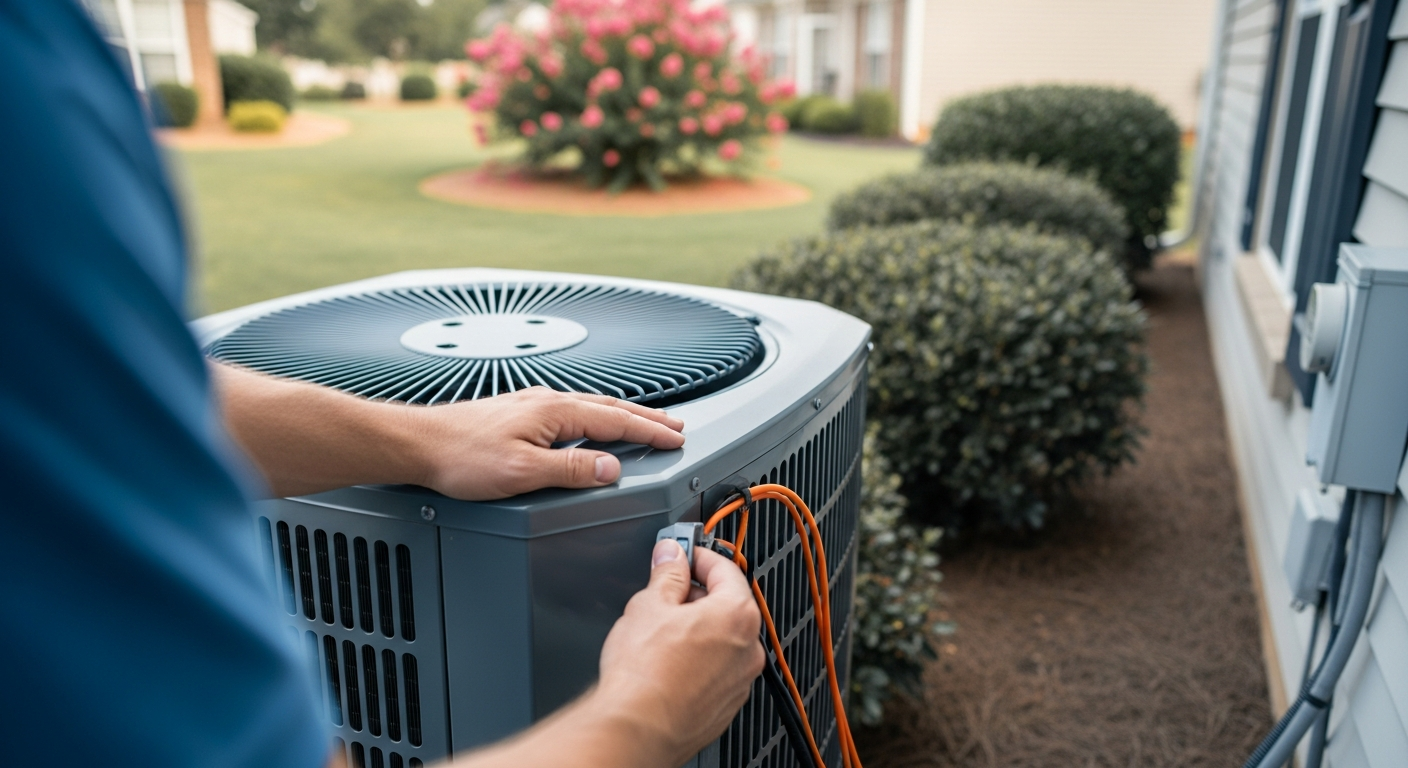
- Look for a swollen, leaking, or burned capacitor in the outdoor unit’s electrical panel
- Turn off power at the breaker before inspecting any electrical components
- Call a licensed Chester SC AC repair technician if you spot any of these warning signs
How AC Capacitors Work in Chester’s Climate
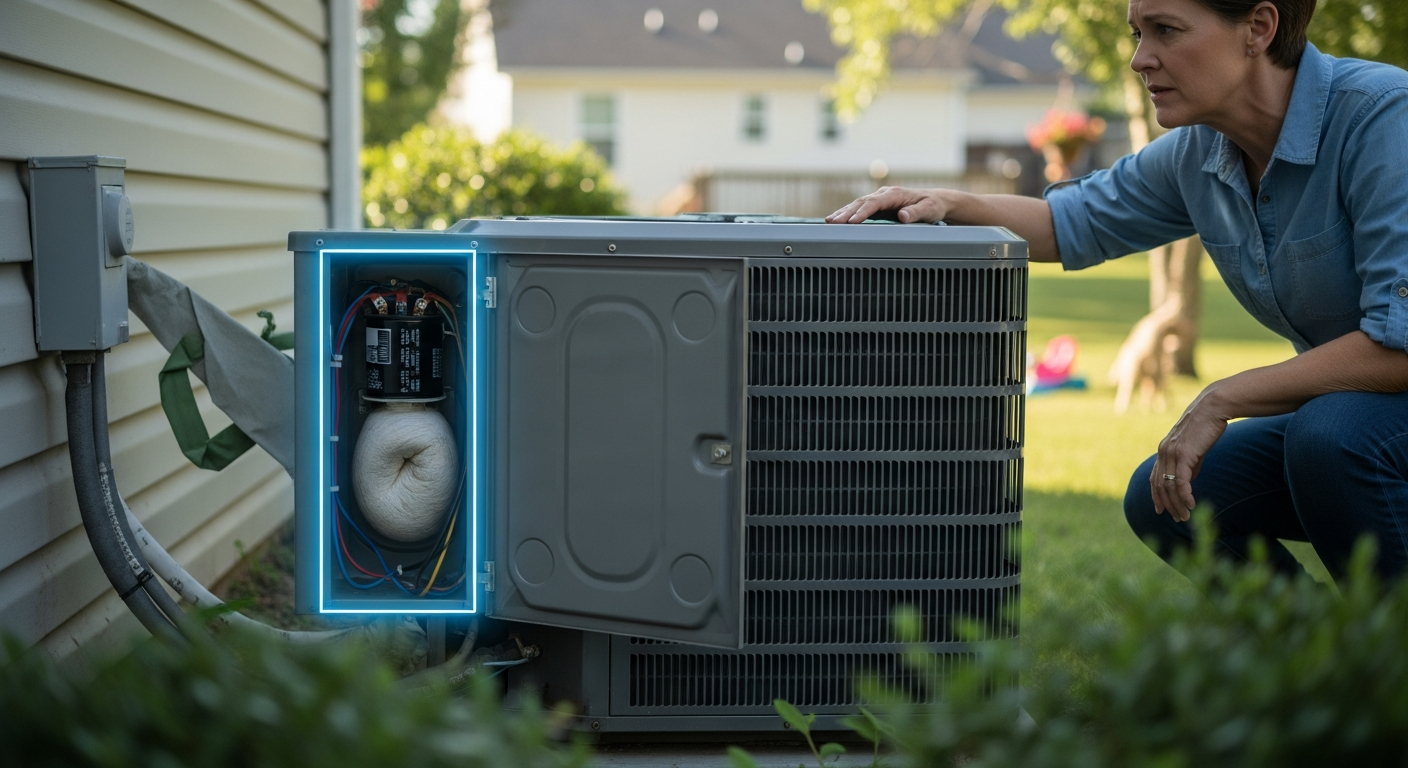
AC capacitors store electrical energy and release it in controlled bursts to start your system’s motors. Think of them like a car battery that gives your starter the extra juice it needs to turn over the engine. Your AC has two types: a start capacitor that kicks the compressor into motion, and a run capacitor that keeps both the compressor and fan motor running efficiently.
Chester’s humid subtropical climate creates perfect conditions for capacitor stress. According to NOAA weather data, Chester averages 43 inches of annual precipitation with humidity levels exceeding 80% during summer months. This combination of heat and moisture causes capacitor components to expand and contract repeatedly, weakening the internal dielectric material that stores electrical charge.
The electrical grid in Chester also contributes to early summer failures. Duke Energy’s system data shows voltage fluctuations increase during peak cooling season as transformers work harder to meet demand. These voltage spikes stress capacitors beyond their rated tolerance, leading to the characteristic bulging and leaking that signals imminent failure.
Why Early Summer Triggers AC Capacitor Failure Chester SC
Chester’s transition from mild spring weather to summer heat creates a perfect storm for capacitor failure. The first sustained hot spell typically occurs in late May when temperatures jump from comfortable 70s to muggy 90s within days. This sudden increase forces your AC to work harder than it has in months, demanding peak performance from components that have been coasting through moderate weather.
The Piedmont region’s granite bedrock affects local electrical systems in ways most homeowners don’t realize. Chester sits on the same geological foundation as Rock Hill, where feldspar minerals naturally conduct small amounts of electrical current through groundwater. This creates micro-voltage fluctuations in home electrical systems, particularly noticeable when AC units draw high startup amperage during the season’s first heat waves.
Chester’s housing stock compounds the problem. Many homes in established neighborhoods like Inglewood and Westbrook date to the 1980s and 1990s, when AC systems were sized smaller and ran longer cycles. These older units cycle on and off more frequently than modern systems, causing additional wear on start capacitors. New construction areas like Liberty Hill feature larger, more efficient systems, but even these aren’t immune to early summer capacitor stress.
Signs of Bad AC Capacitor in Chester Homes

A failing capacitor gives clear warning signs before it completely dies. The most common indicator is an AC unit that won’t start — you’ll hear clicking from the outdoor unit as the contactor tries to engage, but the compressor and fan remain silent. Sometimes the fan starts but runs slowly, creating inadequate airflow and poor cooling performance throughout your Chester home.
Physical inspection reveals obvious damage in many cases. A bulging or swollen capacitor top indicates internal pressure buildup from overheating. Brown or oily residue around the capacitor base means the internal electrolyte has leaked out, destroying the component’s ability to hold a charge. Burned or blackened terminals show electrical arcing has occurred, often accompanied by a distinct electrical burning smell near the outdoor unit.
Professional Chester SC AC Repair Process

Atlas Heating & Cooling’s factory-trained technicians follow a systematic approach when diagnosing AC not starting Chester SC calls during early summer. A capacitor rated at 45 microfarads that tests below 38 or above 52 microfarads needs replacement, even if it looks normal externally.
The team carries a full inventory of capacitors rated for South Carolina’s demanding climate conditions. Unlike generic parts from big box stores, professional-grade capacitors feature enhanced dielectric materials designed for high-humidity environments. Atlas Heating & Cooling’s AC repair services include comprehensive electrical system testing to identify underlying causes that contributed to the original failure.
AC Capacitor Replacement Cost SC
Capacitor replacement costs in South Carolina vary based on the component type and system accessibility. Start capacitors typically run $150-$250 including labor, while dual run capacitors that control both compressor and fan motor cost $180-$300 installed. Hard start kits that reduce startup stress on older systems add another $75-$125 to the total investment.
Chester homeowners should expect honest pricing without hidden fees from reputable contractors. Atlas Heating & Cooling provides detailed estimates before beginning work, explaining exactly what components need replacement and why. Emergency service calls during peak summer months may include premium rates, but preventive maintenance during spring can catch failing capacitors before they leave you without cooling.
The real cost calculation includes system efficiency impacts. A failing capacitor forces your compressor to work harder, increasing electricity consumption by 15-25% according to Department of Energy efficiency studies. For Chester homes averaging $180 monthly summer electric bills, a bad capacitor can add $40-$50 to monthly costs until it’s replaced.
Professional replacement prevents secondary damage that DIY repairs often cause. Incorrectly wired capacitors can damage compressor windings, turning a $200 capacitor job into a $1,500 compressor replacement. Understanding when to attempt repairs versus calling professionals can save Chester homeowners thousands in unnecessary equipment damage.
Protecting your Chester AC system from early summer capacitor failure requires proactive maintenance and professional expertise. Regular HVAC maintenance catches electrical component wear before it causes complete system shutdown. Atlas Heating & Cooling’s preventive service plans include capacitor testing and voltage monitoring to identify problems during mild weather when repairs are less urgent and costly.
Professional AC maintenance and timely repairs keep your system running efficiently through Chester’s demanding summer climate. Contact Atlas Heating & Cooling at the first sign of AC starting problems — catching capacitor issues early prevents emergency breakdowns when you need cooling most.
Frequently Asked Questions
How long do AC capacitors last in Chester SC’s climate?
AC capacitors in Chester typically last 8-12 years under normal conditions, but the region’s high humidity and temperature fluctuations can reduce lifespan to 6-8 years. Systems located in direct sun or poorly ventilated areas may need capacitor replacement every 5-6 years. Regular maintenance helps identify weakening capacitors before complete failure occurs.
Can I replace my own AC capacitor in Chester SC?
While capacitor replacement appears straightforward, Chester homeowners should hire licensed professionals for safety and warranty protection. AC capacitors store lethal electrical charges even when power is disconnected, and incorrect wiring can damage expensive compressor components. South Carolina requires permits for electrical HVAC work, and DIY repairs may void equipment warranties.
Why do AC capacitors fail more in early summer than other seasons?
Early summer creates maximum stress on AC capacitors through rapid temperature changes and increased electrical demand. Chester’s transition from mild spring weather to 90+ degree heat forces systems to work at peak capacity after months of light use. Voltage fluctuations from grid demand spikes during the first heat waves often push aging capacitors beyond their tolerance limits, causing sudden failure.