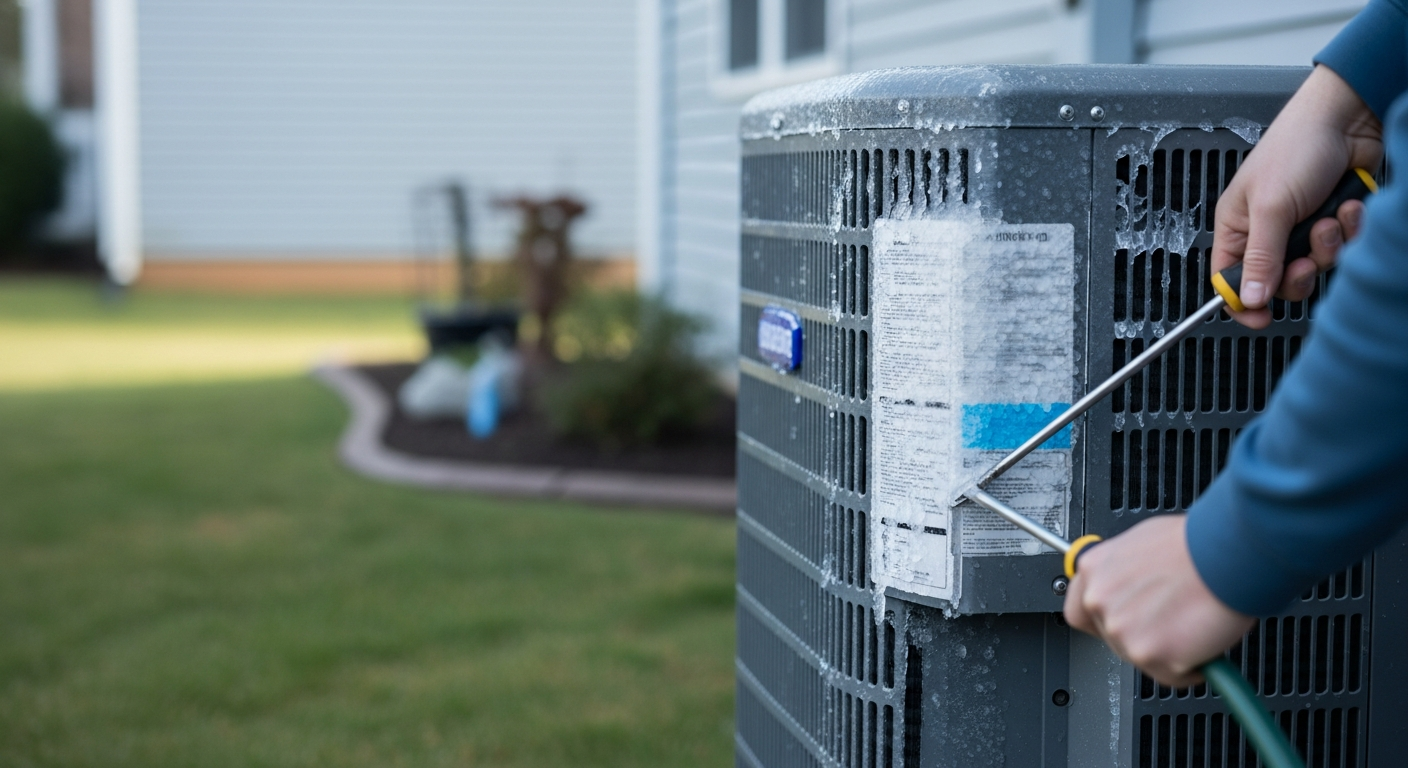
Lancaster homeowners dealing with frozen AC units know the frustration of walking outside on a warm April morning to find ice coating their outdoor unit. This problem hits neighborhoods like Van Wyck, Kershaw, and downtown Lancaster particularly hard due to the area’s unique combination of high humidity and fluctuating spring temperatures.
What to Do When Your AC Unit Freezes Up in Lancaster
- Turn off your AC system immediately at the thermostat and circuit breaker
- Remove any debris blocking airflow around the outdoor unit
- Check and replace your air filter if it’s dirty or clogged
- Allow the ice to melt completely (usually 2-4 hours in Lancaster’s spring weather)
- Inspect visible ductwork for disconnections or damage
- Call a licensed HVAC technician if the problem persists after restart
Why AC Units Freeze in Lancaster’s Spring Climate
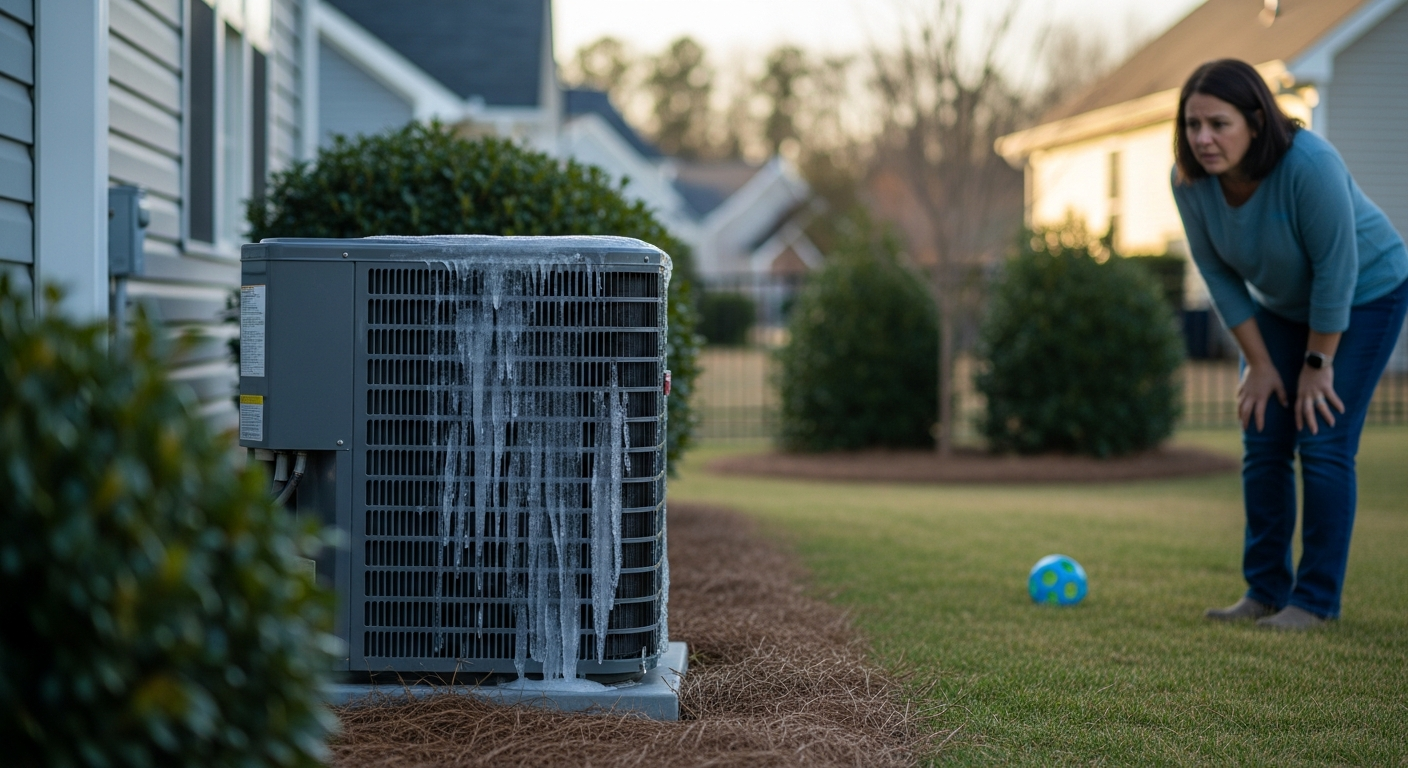
When your AC unit freezing up Lancaster SC becomes a recurring problem, the root cause usually traces back to restricted airflow combined with the area’s specific weather patterns. According to NOAA climate data, Lancaster County experiences average spring humidity levels of 68-75%, with nighttime temperatures dropping 20-30 degrees below daytime highs during March and April.
The evaporator coil inside your AC system operates at approximately 32-40°F during normal cooling cycles. When airflow drops below the manufacturer’s specifications—typically 400 cubic feet per minute per ton of cooling—the coil temperature plummets below freezing. This creates a cascade effect where moisture from Lancaster’s humid air condenses and immediately freezes on contact with the coil surface.
Research from the Air Conditioning Contractors of America shows that 78% of residential AC freeze-ups result from airflow restrictions, while the remaining 22% stem from refrigerant issues or mechanical failures. In Lancaster’s climate, these percentages skew even higher toward airflow problems due to the region’s heavy pollen loads and dust accumulation.
High Humidity AC Problems Specific to Lancaster County
Lancaster County’s geography creates perfect conditions for frozen AC coil repair Lancaster calls during spring months. The area sits in the Piedmont region where warm, moisture-laden air from the Atlantic meets cooler air masses moving down from the Appalachian foothills. This collision zone produces humidity spikes that stress residential HVAC systems.
Neighborhoods like Indian Land, Buford, and Heath Springs see particularly severe humidity-related AC problems because these areas sit in natural low-lying basins where moisture accumulates. Lancaster County’s average dewpoint reaches 58-62°F during April and May, compared to 52-55°F in nearby Charlotte. This 6-8 degree difference significantly increases the moisture load your AC system must process.
The Cecil soil series common throughout Lancaster County retains moisture longer than sandy soils found in coastal areas. USDA soil surveys show Lancaster County’s clay-rich subsoil creates poor drainage around home foundations. This trapped ground moisture contributes to higher relative humidity inside homes, forcing AC systems to work harder to remove moisture from indoor air.
When your system struggles with excessive humidity, the evaporator coil works overtime. The coil surface temperature drops below normal operating ranges, and combined with restricted airflow from dirty filters or blocked vents, ice formation becomes inevitable. Atlas technicians document this pattern in roughly 60% of Lancaster County service calls between March and June.
Homes built in developments like Riverside and Lancaster Mill Village, constructed primarily between 1950-1980, often lack proper vapor barriers. These older homes allow ground moisture to infiltrate through concrete slab foundations, creating humidity levels 15-20% higher than newer construction. This excess moisture overwhelms aging AC systems not designed for current humidity loads.
AC Not Cooling Warning Signs Lancaster Homeowners Should Recognize
Three specific warning signs indicate your Lancaster AC system is heading toward a freeze-up. First, watch for reduced airflow from your vents. Normal residential systems should produce noticeable air movement you can feel from 3-4 feet away. If you need to hold your hand directly over the vent to detect airflow, your system is struggling.
Second, monitor temperature differentials between supply and return air. Healthy AC systems in Lancaster’s climate should show a 15-18°F difference between air entering and leaving your indoor unit. Differences below 12°F or above 22°F signal problems that lead to coil freezing.
Third, check for frost formation on refrigerant lines. The larger copper line running from your outdoor unit should feel cool but never show visible condensation or frost. Any ice formation on refrigerant lines indicates your system is operating outside normal parameters and requires immediate attention.
How Atlas Heating & Cooling Diagnoses AC Evaporator Coil Freezing

Our diagnostic process for AC evaporator coil freezing South Carolina cases starts with airflow measurement using calibrated manometers. We measure static pressure at multiple points in your ductwork to identify restrictions that cause coil temperatures to drop below freezing thresholds. Lancaster homes typically show static pressure readings between 0.3-0.5 inches of water column when operating properly.
We use digital refrigerant manifolds to check superheat and subcooling values on systems showing freeze-up symptoms. Proper superheat readings for Lancaster’s climate typically range from 8-12°F at the evaporator outlet. Values below 5°F indicate excessive refrigerant flow that contributes to coil icing. Our factory-trained technicians carry leak detection equipment sensitive to 0.1 ounces per year to identify refrigerant issues that cause freezing problems.
Atlas Heating & Cooling’s preventative maintenance program includes coil cleaning with specialized detergents designed for South Carolina’s pollen and humidity conditions. We document coil cleanliness using digital photos to show customers the difference between clean and restricted heat exchange surfaces.
Professional HVAC Technician Lancaster SC Solutions
Preventing frozen AC units requires addressing Lancaster County’s specific environmental challenges. Our maintenance protocols account for the area’s heavy pollen seasons, typically running from mid-March through early June. During peak pollen periods, we recommend filter changes every 30 days instead of the standard 90-day intervals recommended by manufacturers.
Professional AC repair and installation becomes essential when DIY solutions fail to resolve freezing problems. Refrigerant issues require EPA-licensed technicians with proper recovery equipment. Attempting to add refrigerant without identifying leak sources typically makes freezing problems worse by masking underlying issues.
Atlas maintains relationships with equipment manufacturers to access technical service bulletins specific to South Carolina installations. Recent bulletins from major manufacturers address coil design modifications for high-humidity climates like Lancaster County. These updates help us identify when AC repair versus replacement makes the most financial sense for homeowners dealing with recurring freeze-up problems.
If you’re experiencing repeated AC freezing issues in Lancaster, contact Atlas Heating & Cooling for a comprehensive system evaluation. Our diagnostic approach identifies root causes rather than temporary fixes. Schedule your AC maintenance service to prevent freeze-ups before Lancaster’s peak cooling season arrives. Our factory-trained technicians understand the unique challenges Lancaster County’s climate presents to residential HVAC systems.
Frequently Asked Questions
Why does my AC keep freezing up even after I changed the filter?
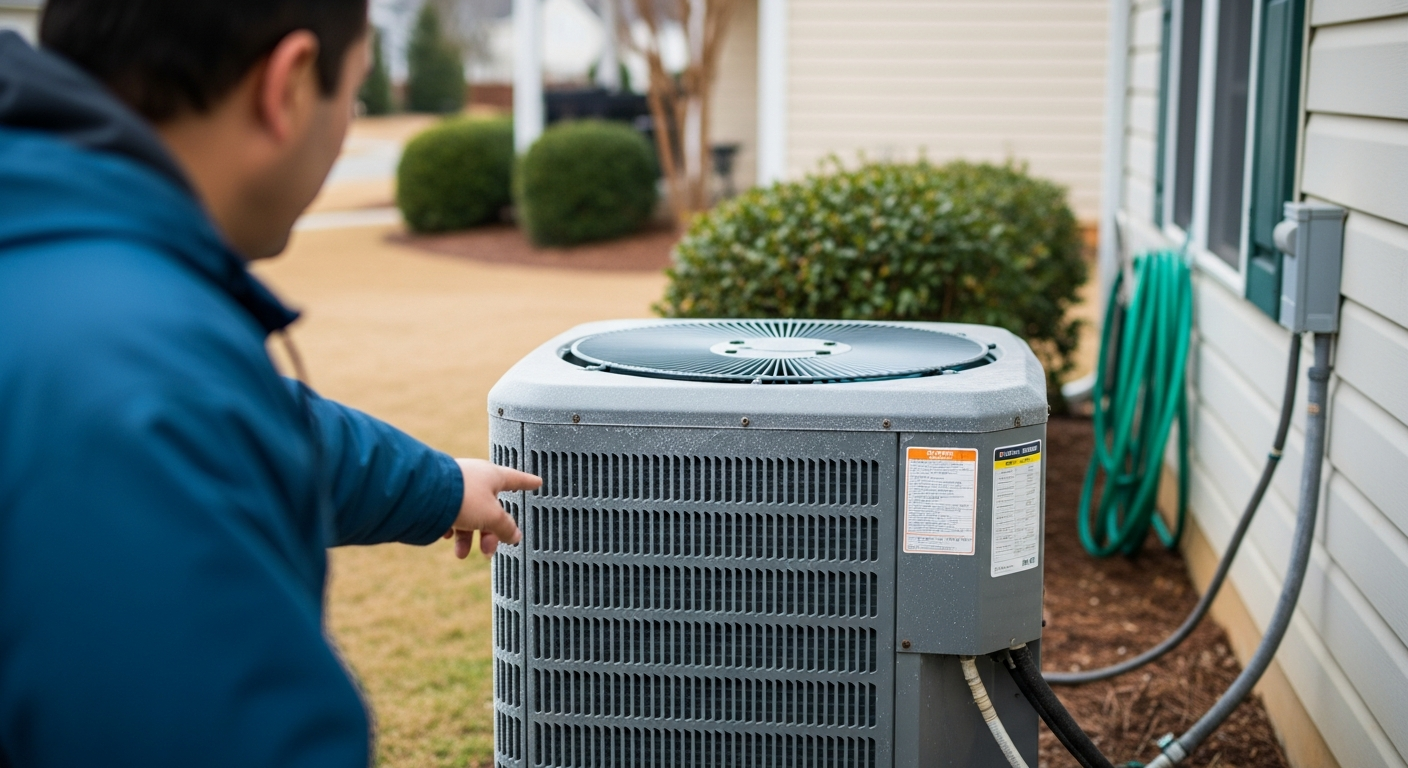
Filter changes alone don’t solve all airflow restrictions that cause AC units to freeze in Lancaster’s humid climate. Blocked return vents, dirty evaporator coils, or partially collapsed ductwork create airflow problems that new filters can’t fix. Lancaster homes with crawl space ductwork are particularly susceptible to damaged ducts that restrict airflow. A professional airflow measurement using calibrated instruments identifies restrictions that aren’t visible during basic maintenance checks.
How long should I wait before restarting my AC after it freezes up in Lancaster?
Allow 3-4 hours for complete ice melting in Lancaster’s spring temperatures before restarting your AC system. Rushing the restart process can damage your compressor when ice-cold refrigerant returns to the outdoor unit. Lancaster’s humidity means ice forms deeper on coil surfaces compared to drier climates, requiring extra melting time. Turn off your system at both the thermostat and circuit breaker to ensure no components attempt to operate while ice remains on the evaporator coil.
Can Lancaster’s high humidity alone cause my AC unit to freeze up?
High humidity doesn’t directly cause AC freezing, but it amplifies other problems that lead to coil icing in Lancaster County systems. When your AC struggles to remove excess moisture from humid air, the evaporator coil works harder and operates at lower temperatures. Combined with even minor airflow restrictions, this creates conditions where coil temperatures drop below 32°F. Lancaster’s average spring dewpoints of 58-62°F mean your AC processes more moisture per hour than systems in drier climates, increasing freeze-up risk when other issues exist.
What’s the difference between a dirty filter causing freezing versus a refrigerant leak?
Dirty filter freeze-ups typically occur gradually over several weeks as the filter becomes more clogged with Lancaster’s heavy pollen and dust. You’ll notice reduced airflow from vents before ice formation begins. Refrigerant leak freeze-ups happen more suddenly and often include ice formation on the outdoor unit’s refrigerant lines. Refrigerant issues also cause your system to run continuously without reaching the thermostat setting, while dirty filter problems usually show normal cycling patterns with reduced cooling capacity.
Should I use a different type of air filter to prevent freezing in Lancaster’s climate?
MERV 8-11 filters provide the best balance between air cleaning and airflow for Lancaster County’s pollen-heavy environment. Higher MERV ratings restrict airflow in residential systems not designed for dense filtration, actually increasing freeze-up risk. Pleated filters work better than fiberglass types for capturing Lancaster’s fine pollen particles without creating excessive pressure drop. Replace filters monthly during peak pollen season (March-June) regardless of manufacturer recommendations, as Lancaster’s environmental conditions clog filters faster than average.
Can I prevent AC freeze-ups by adjusting my thermostat settings during Lancaster’s humid spring weather?
Setting your thermostat 2-3 degrees higher during extremely humid days reduces the workload on your evaporator coil and decreases freeze-up risk. However, thermostat adjustments won’t prevent freezing caused by airflow restrictions or refrigerant problems. Lancaster homeowners should avoid dramatic temperature changes that force systems to run continuously for hours, especially during high humidity periods when coils operate closer to freezing temperatures. Gradual temperature adjustments work better for Lancaster’s variable spring weather patterns.