Choosing between a heat pump and a gas furnace is one of the biggest decisions Carolinas homeowners face when upgrading their HVAC system. Both have their strengths, but which one is truly cheaper to run in our mild winters and humid summers? This guide breaks down the efficiency, costs, climate fit, and long‑term value so you can make an informed choice.
How Heat Pumps and Gas Furnaces Work
A heat pump doesn’t generate heat—it moves it. In winter, it extracts warmth from the outdoor air (even when it’s cold) and transfers it inside. In summer, the process reverses, acting as an air conditioner. Because it’s moving energy rather than creating it, a heat pump can deliver three to four times more heating energy than the electricity it consumes, measured as its Coefficient of Performance (COP).
A gas furnace burns natural gas (or propane) to create heat, which is then distributed through your ductwork. Its efficiency is rated by Annual Fuel Utilization Efficiency (AFUE)—the percentage of fuel converted to usable heat. Modern high‑efficiency furnaces reach AFUE ratings of 95‑98%, meaning almost all the fuel becomes heat for your home.
Efficiency Comparison: COP vs. AFUE
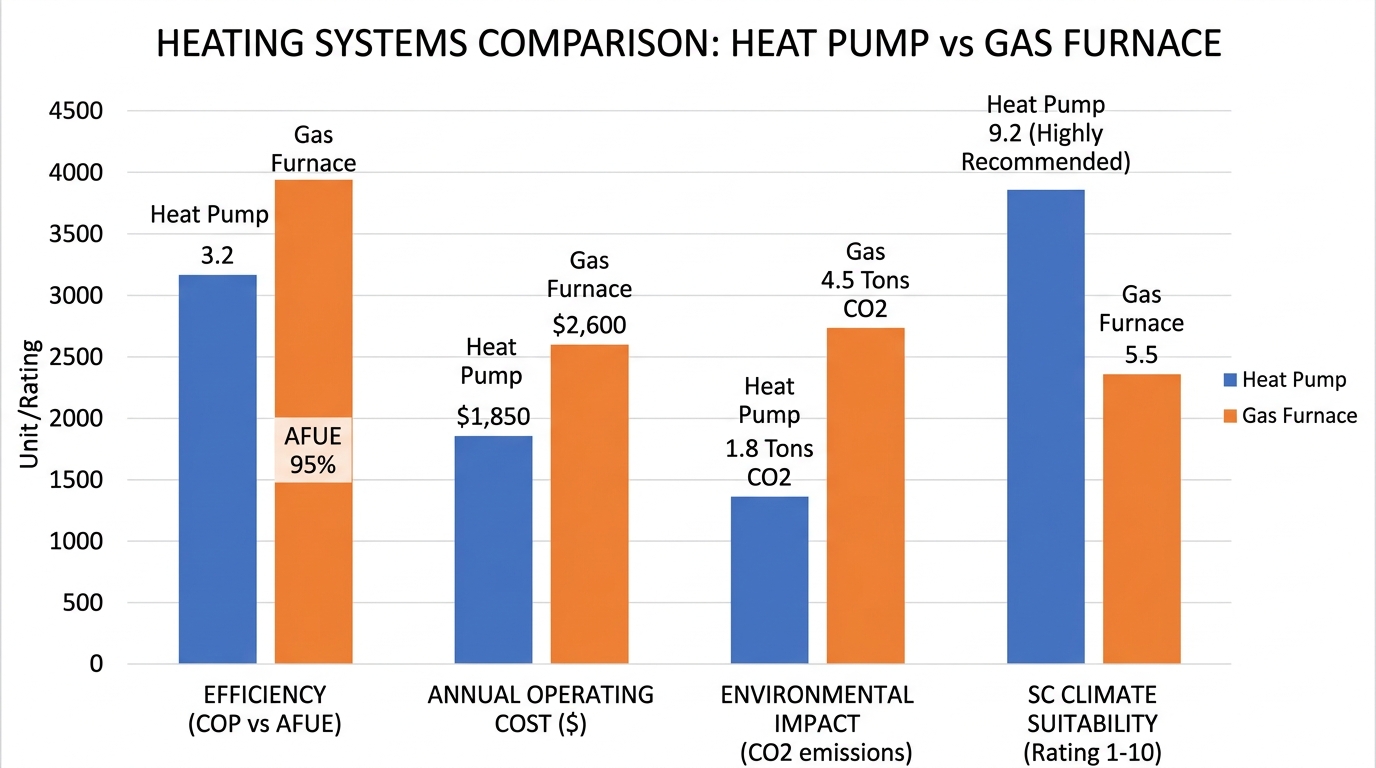
Heat pumps shine in our region’s moderate winters. With a typical COP of 3‑4, a heat pump delivers 3‑4 units of heat for every unit of electricity used. Gas furnaces, while highly efficient at converting fuel to heat (AFUE 95‑98%), are still limited by the energy content of natural gas, which is more expensive per BTU than electricity in many parts of the Carolinas.
Cost Comparison Over 10 Years
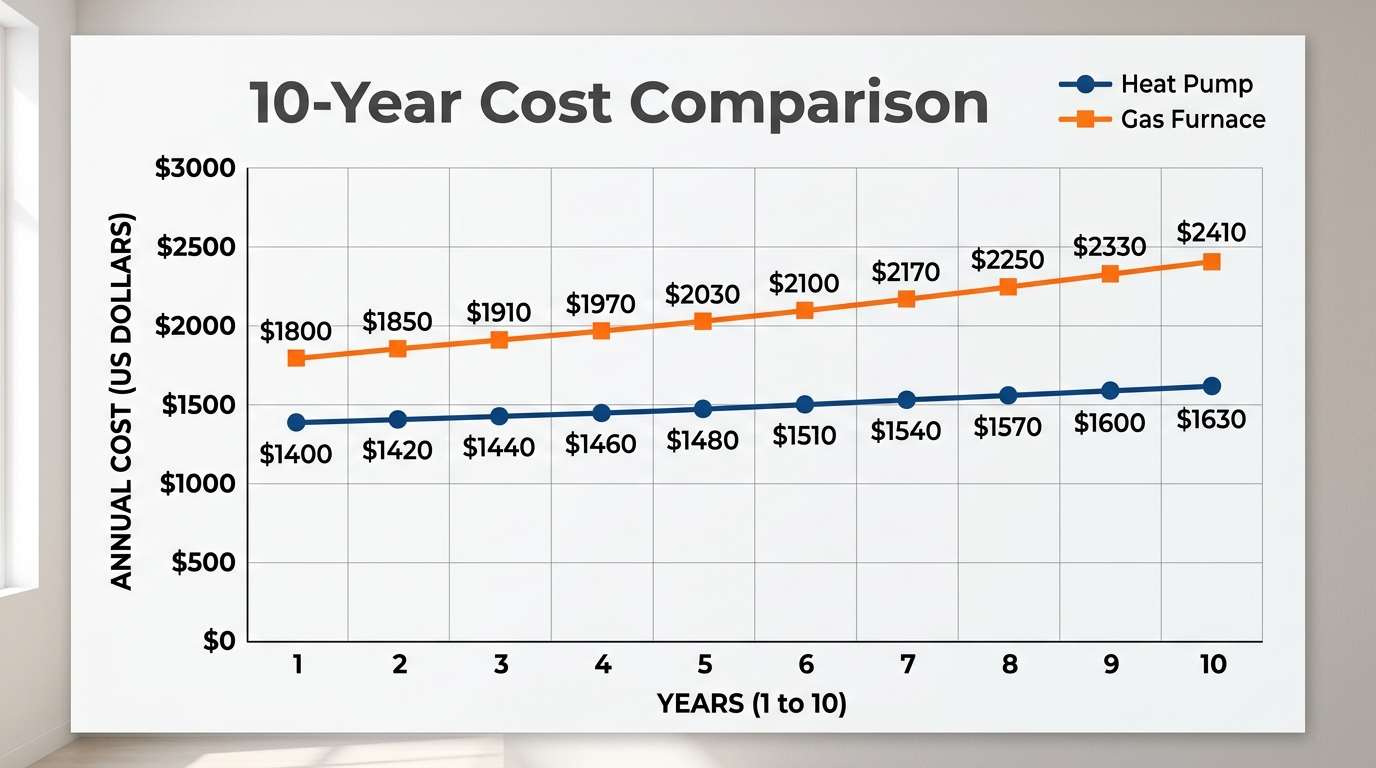
Upfront equipment and installation costs are similar for both systems, but operating costs diverge over time. Because a heat pump heats and cools, it can replace both a furnace and an air conditioner, reducing total equipment investment. Electricity prices in South Carolina are among the lowest in the nation, while natural gas prices have been volatile. Over a decade, a heat pump often comes out ahead—especially if you also use it for cooling.
Climate Suitability for South Carolina
Heat pumps work best in climates where winter temperatures rarely drop below freezing for extended periods—exactly the profile of Rock Hill, Fort Mill, Lake Wylie, and most of the Carolinas. Modern cold‑climate heat pumps maintain high efficiency down to 5°F, and our winters seldom stay that cold for long. Gas furnaces, by contrast, perform consistently regardless of outdoor temperature, making them a reliable choice if you prefer a single fuel source.
Installation and Maintenance Considerations
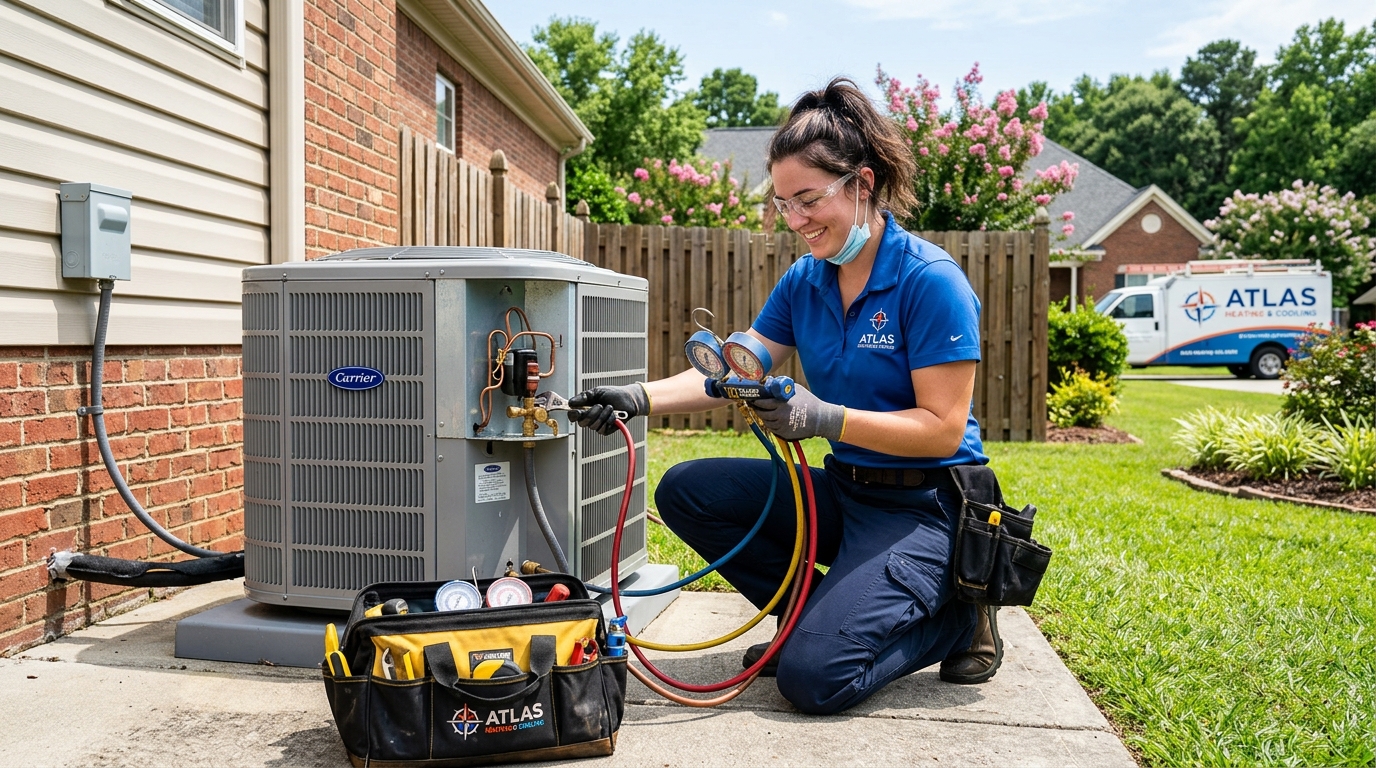
Both systems require professional installation and annual maintenance. Heat pumps have both indoor and outdoor units, so they need clear space outside and a compatible indoor air‑handler. Gas furnaces need a flue for exhaust and a gas line. Maintenance for a heat pump includes cleaning both coils, checking refrigerant levels, and inspecting the reversing valve. Furnace maintenance focuses on the heat exchanger, burner, and flue. Atlas Heating & Cooling offers comprehensive maintenance plans that cover either system.
Which Is Right for Your Home?
Consider a heat pump if:
- You want a single system that heats and cools.
- Your home is well‑insulated and in a moderate‑climate area like York County.
- You prefer lower operating costs and are comfortable with electricity as your primary fuel.
- You’re interested in reducing your carbon footprint.
Consider a gas furnace if:
- You already have a gas line and want to keep using it.
- You live in a neighborhood with frequent power outages (a furnace can run on a small generator).
- You want the fastest, hottest air on the coldest days (furnaces deliver air at 120‑140°F vs. a heat pump’s 90‑110°F).
- You have an existing central air conditioner that’s still in good shape.
Frequently Asked Questions
Can a heat pump work with my existing ductwork?
Yes. Most heat‑pump systems are designed to connect to standard ductwork. Our technicians will assess your ducts for leaks, sizing, and insulation to ensure they’re compatible.
What about backup heat for really cold nights?
Heat‑pump systems often include electric resistance heating strips that kick in when outdoor temperatures drop below the heat pump’s efficient range. In the Carolinas, this backup is rarely needed, but it’s there for peace of mind.
How long do heat pumps and furnaces last?
A well‑maintained heat pump typically lasts 12‑15 years. A gas furnace can last 15‑20 years. Both lifespans depend on usage, maintenance, and installation quality.
Will a heat pump save me money on cooling, too?
Absolutely. A heat pump is just as efficient as a standard air conditioner in cooling mode—often more efficient because modern units have high SEER ratings. You get two systems in one.
Let Atlas Help You Decide
Still unsure which system fits your home and budget? Atlas Heating & Cooling serves Rock Hill, York, Fort Mill, Lake Wylie, Clover, Tega Cay, Indian Land, Lancaster, Catawba, Chester, Waxhaw, and Pineville. Call (803) 839‑0020 to schedule a free, no‑obligation consultation. We’ll evaluate your home’s insulation, ductwork, fuel sources, and your comfort priorities, then give you an honest recommendation—no pressure, just the facts.
Related: Learn more about Hybrid Heat Pump Water Heaters in Rock Hill: Are They Worth It?.