The best water heater temperature setting for most homes is 120°F. The U.S. Department of Energy recommends 120°F for most residential applications because it reduces scald risk and energy use. A higher setting may suit specific health or appliance needs, but it requires anti-scald protection.
The right setting also depends on who lives in the home and how the hot-water system is designed. Here is how 120°F compares with 140°F, when a higher storage temperature may make sense, and how to adjust a gas or electric unit safely.
What Temperature Should a Water Heater Be Set To?
Most residential water heaters should be set to 120°F. This water heater temperature setting follows U.S. Department of Energy residential guidance and balances scald safety with lower energy use.
At 140°F, the tank uses more energy to maintain its setpoint and creates a much shorter reaction window before a serious burn. Higher temperatures may also accelerate mineral scale inside the tank and on electric heating elements.
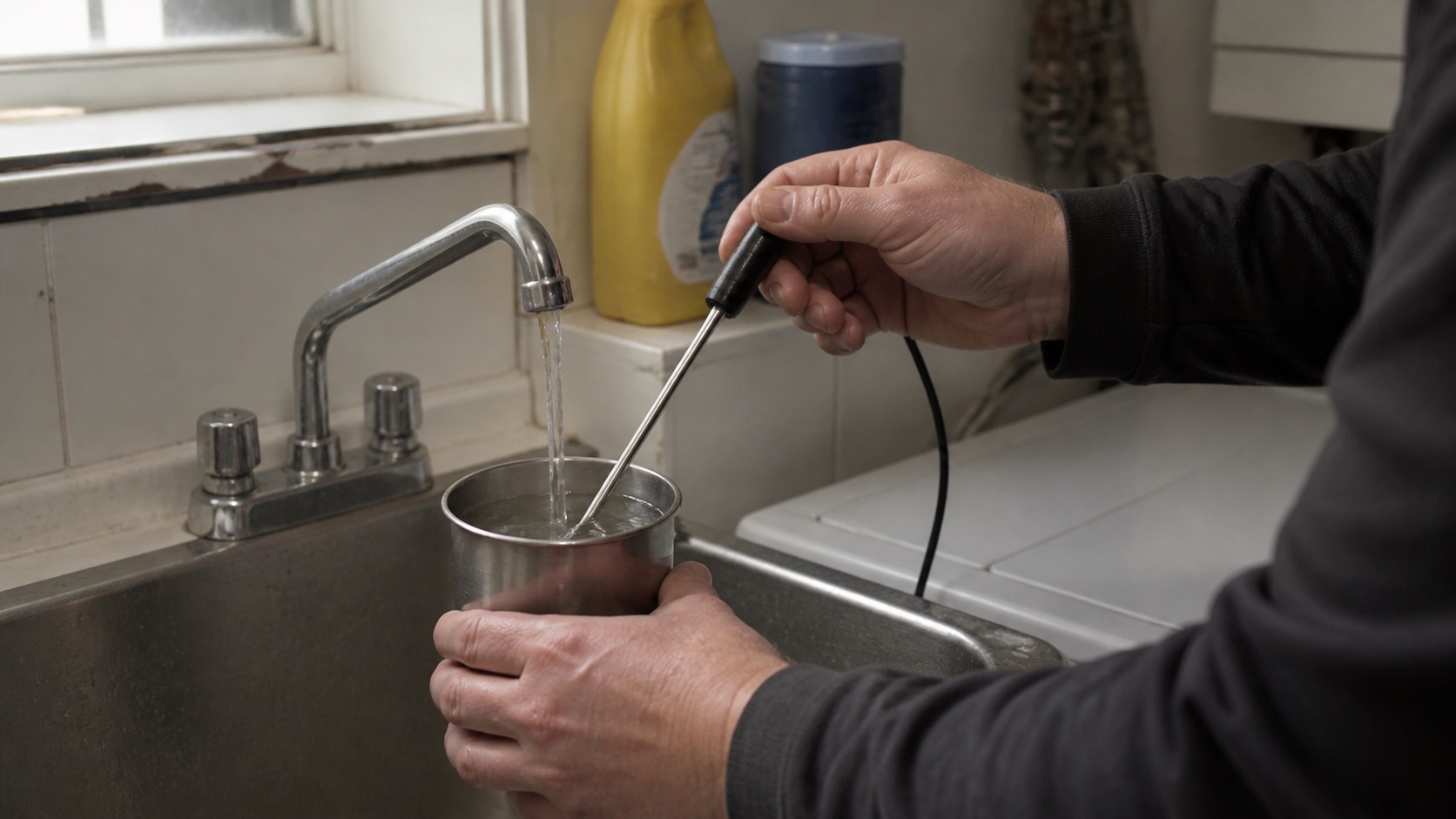
Do not trust the dial alone. Manufacturer controls can be approximate, so test the water at a faucet with a cooking thermometer after the tank has had time to reach the new setting.
Should a Water Heater Be Set to 120°F or 140°F?
For most homes, a 120°F water heater temperature setting is safer and more efficient than 140°F. The tradeoff is that hotter stored water can reduce germs such as Legionella, while lower tap temperatures reduce scald risk.
The Centers for Disease Control and Prevention says keeping a home water heater between 130°F and 140°F can kill germs such as Legionella, but it also increases burn risk. The CDC recommends thermostatic mixing valves when a heater is set above 120°F and advises people with elevated health risks to ask a healthcare provider whether a higher setting is appropriate.
The practical 120°F versus 140°F comparison is:
- 120°F: The default for most households because it lowers scald risk and reduces the energy needed to maintain the tank temperature.
- 130°F to 140°F: A possible choice for a household with a specific germ-control need or an appliance requirement, provided a qualified professional installs anti-scald protection.
- At the tap: A mixing valve can store water hotter while delivering tempered water to fixtures.
Most families should start at 120°F. Anyone considering a higher setting because of a medical concern should discuss the tradeoff with a healthcare provider and an experienced plumbing or water-heater professional.
Who Should Consider a Higher Water Heater Temperature Setting?
A higher temperature can make sense in specific cases when the right safeguards are installed:
- Someone in the home has a weakened immune system. People who are immunocompromised are more susceptible to Legionella, so a doctor may advise a hotter tank.
- You have a dishwasher without an internal booster heater. Some older dishwashers rely on incoming water being hot enough (around 140°F) to clean and sanitize properly. Newer models usually have their own booster and don’t need this.
If either applies, the safe move is to raise the temperature and add protection against scalding. An anti-scald mixing valve blends cold water into the hot line before it reaches your faucets, so the tank can store water hot while the water at the tap stays at a safe temperature. It’s the best of both worlds, and it’s a common upgrade. Reach out to confirm availability if you’d like one installed alongside a water heater check.
How Fast Can Hot Tap Water Cause a Burn?
The time it takes for hot water to cause a serious burn drops sharply as the temperature climbs. The U.S. Consumer Product Safety Commission provides these approximate exposure times for third-degree burns:
| Approx. water temperature | Approx. time to a serious burn | Note |
|---|---|---|
| 120°F | About 5 minutes | The recommended setting: leaves real time to react |
| 130°F | About 30 seconds | Noticeably riskier, especially for kids and seniors |
| 140°F | About 6 seconds | A serious burn can happen almost instantly |
Going from 120°F to 140°F cuts the safety margin from minutes to seconds. In a home with small children or older family members, that difference is exactly why the DOE lands on 120°F.
How to Adjust Your Water Heater Temperature
Changing the setting takes just a few minutes, but the steps differ between gas and electric units. Stop and call a professional if you see corrosion, water around the base, or scorching.
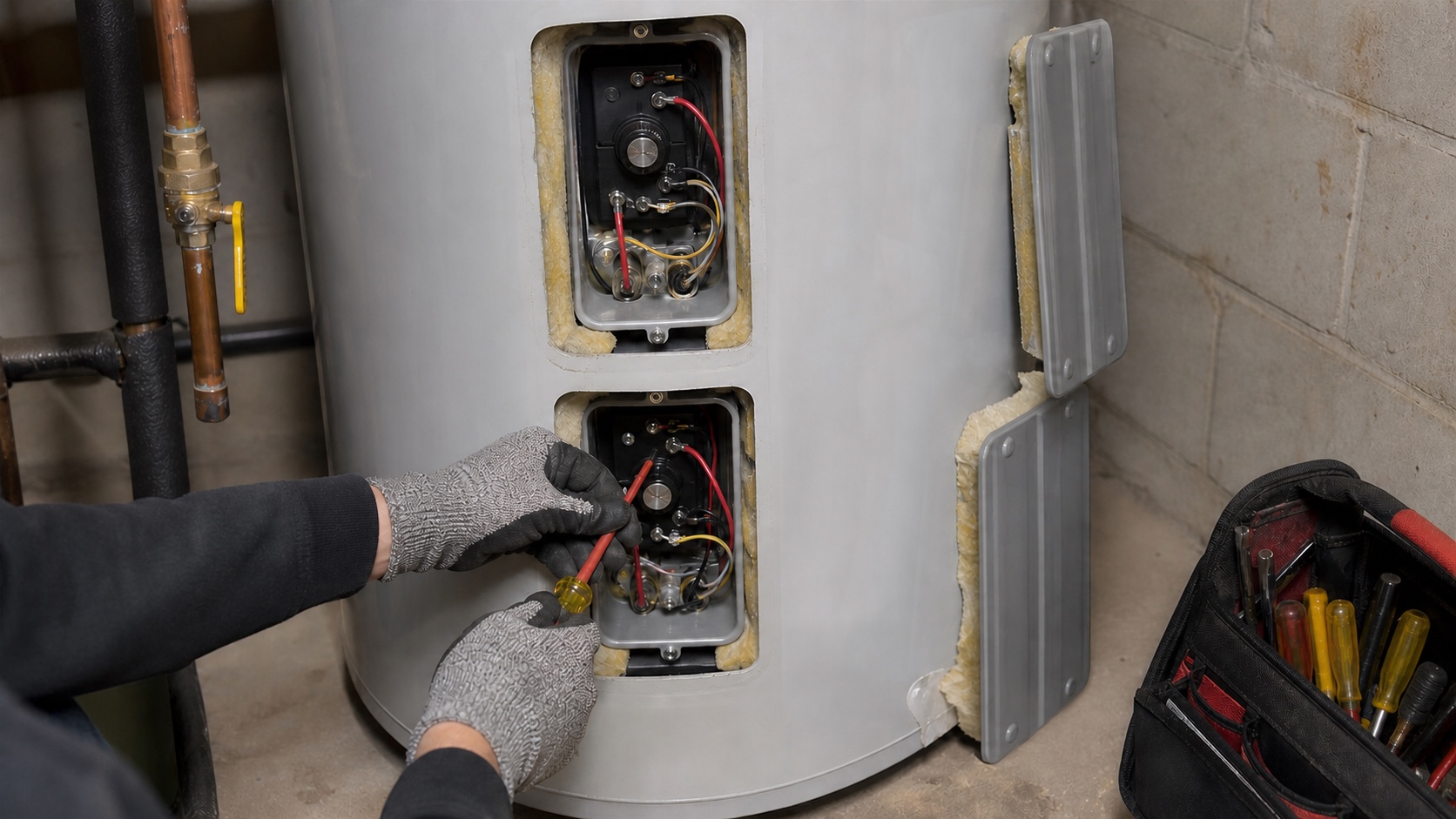
- Shut off power first (electric) or note your gas dial position. For an electric water heater, turn off the breaker that feeds it at your main electrical panel before you remove any panels. This is a critical safety step: never open an electric unit’s access panels with the power on. For a gas unit, you don’t need to cut power, but note where the dial sits now so you can compare.
- Find the thermostat.
– Gas unit: Look for a dial on the gas control valve near the bottom of the tank. It may show numbers, or just “Warm / Hot / Very Hot” markings.
– Electric unit: There are usually two thermostats: one behind an upper access panel and one behind a lower panel. Remove the panels and set the insulation aside to reach them. Both should be set to the same temperature. - Set the temperature.
– Gas: Turn the dial toward 120°F (or roughly the “Hot” position if it’s unlabeled).
– Electric: Use a flathead screwdriver to turn each thermostat to 120°F. Match the upper and lower settings. - Test the actual water temperature. Wait a few hours, then run the hot water at a faucet for a minute and measure it with a cooking thermometer. Tank dials aren’t always accurate, so the reading at the tap is what matters. Adjust as needed.
- Restore power and replace panels. On an electric unit, put the insulation and access panels back, then flip the breaker on. Confirm the water heats up over the next hour or two.
If you would rather not open the unit yourself, or the temperature will not hold after an adjustment, schedule a water heater repair.
How Does Hard Water Affect a Water Heater Temperature Setting?
Hard water can increase mineral scale inside a water heater. When calcium and magnesium leave the water, they can collect on the tank bottom and electric heating elements.
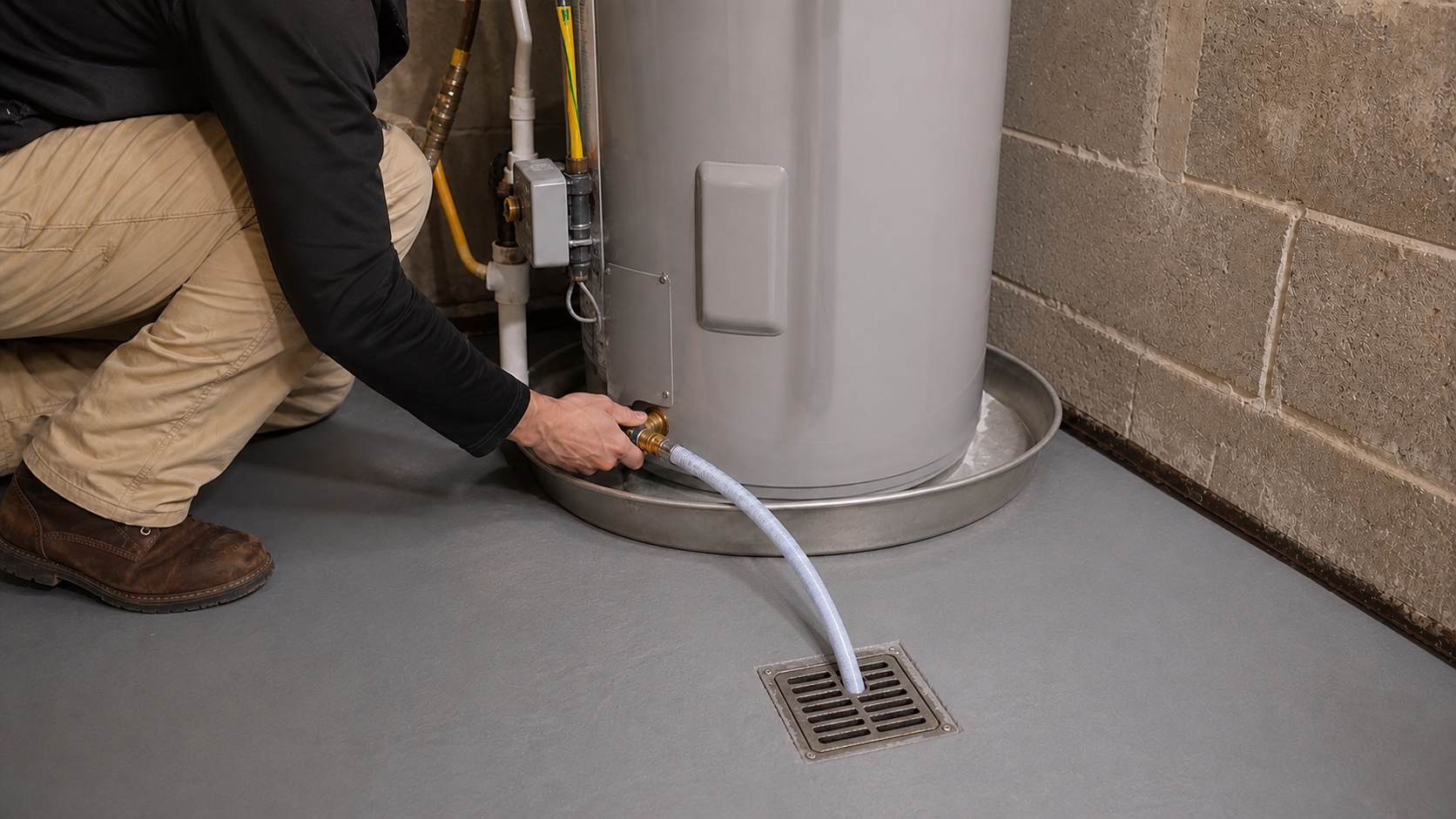
The water heater temperature setting matters because higher heat can accelerate scale formation. In a home with hard water, that buildup can:
- Insulates the burner or element from the water, so the unit works harder and costs more to run.
- Can cause popping or rumbling sounds as water gets trapped under the sediment layer.
- Shortens the useful life of the tank over time.
For a household with hard water, a 120°F setting may reduce scale compared with a hotter setting. Follow the manufacturer’s flushing instructions and use our water heater resource page to recognize sediment-related symptoms.
What Signs Show a Water Heater Temperature Setting Is Wrong?
Your water heater usually tells you when the temperature isn’t right. Watch for:
- Water is scalding hot at the tap even on a normal setting: the thermostat may be set too high or reading incorrectly.
- Water is never hot enough, even after a wait: the setting may be too low, or an element/thermostat may be failing.
- You run out of hot water fast. Sediment buildup or a bad heating element can shrink your usable hot water.
- Temperature swings: hot, then cold, then hot again. Fluctuating water temperature often points to a failing thermostat or heating element rather than a setting problem.
That last one is the key repair signal. A tank that can’t hold a steady temperature usually needs a part replaced, not just a dial turned. If you’re seeing swings, leaks, rust-colored water, or the unit is well past a decade old, it may be time to weigh repair versus replacement.
Frequently Asked Questions
What temperature should a water heater be set to for a family?
For most families, 120°F is the recommended setting. It provides hot water for normal household use while preserving a safer reaction window against burns. Consider going higher only for specific health or appliance reasons, and add an anti-scald mixing valve if you do.
Is 140°F ever the right choice?
Sometimes. A setting near 140°F can help in homes where someone has an elevated health risk or where an older dishwasher lacks its own booster heater. Because 140°F water can cause a serious burn in about six seconds, pair a higher setting with an anti-scald mixing valve and seek professional guidance.
Will lowering my water heater to 120°F save money?
Generally, yes. The Department of Energy notes that a lower setting reduces standby heat loss and the energy used to keep water hot, so many homes see savings by moving from 140°F to 120°F. In hard-water areas, the lower setting also slows scale buildup, which helps the unit run efficiently longer.
Why does my water temperature keep changing?
Fluctuating hot water that swings between hot and cold usually is not a setting issue. It more often points to a failing thermostat or heating element. If adjusting the dial does not steady the temperature, have the unit checked so the faulty part can be identified.
How do I know my tank’s real temperature?
Don’t trust the dial alone. Run hot water at a faucet for about a minute, then catch it in a cup and measure with a cooking thermometer. That tap reading is what actually reaches your skin and dishes, so use it to fine-tune the setting up or down toward 120°F.
When to Call Atlas Heating & Cooling
If your water runs dangerously hot, never gets warm enough, or the temperature won’t hold steady, it’s worth a professional look: a fluctuating tank often needs a thermostat or element replaced, not just a new setting. We can also add an anti-scald mixing valve if you need to store water hotter for health or appliance reasons.
Atlas Heating & Cooling is a family-owned team serving Rock Hill, York, Fort Mill, Lake Wylie, Clover, and Indian Land in South Carolina, plus Waxhaw and Pineville in North Carolina. Call (803) 839-0020 to schedule a water heater check or repair, and reach out to confirm availability. No pressure, just a straight answer on what your water heater needs.