South Carolina summers are humid in a way the rest of the country does not really understand. That same humidity is also what makes indoor air quality harder to manage here than almost anywhere else. Mold, dust mites, mildew, off-gassing materials, and the everyday particulates of normal life all behave differently when the air is carrying 65 to 80 percent relative humidity for months at a time.
Here is the practical indoor air quality playbook we walk Rock Hill homeowners through.
Target Humidity: 30 to 50 Percent
The single most important number for healthy indoor air is relative humidity. Health and comfort research is consistent on the range:
- Below 30 percent: Dry sinuses, static electricity, splintered wood floors, irritated skin.
- 30 to 50 percent: Comfort zone. Dust mites and mold cannot reproduce. Skin and respiratory system happy.
- 50 to 60 percent: Borderline. Sticky air, dust mites start thriving.
- Above 60 percent: Mold growth becomes likely on cool surfaces. Air feels heavy.
Most Rock Hill homes without dedicated dehumidification sit at 55 to 70 percent indoor RH from June through September. That is the zone where indoor air quality problems compound.
Get a Hygrometer ($15)
You cannot manage what you do not measure. A basic digital hygrometer costs $10 to $20 at any hardware store. Put one in your main living area and one in the most problem-prone room (usually a basement, master bedroom, or upstairs back of the house). Check them weekly during summer. Surprises are almost always bad.
Tip 1: Right-Sized AC Is Your Primary Dehumidifier
Your air conditioner is also a dehumidifier. Every cooling cycle pulls moisture out of the air through condensation on the cold evaporator coil. The catch: short cooling cycles do not pull enough moisture. Long cooling cycles do.
If your house feels sticky even when the thermostat is at 72, the most likely culprit is an oversized AC running short cycles. The cure is properly-sized equipment, ideally with variable-speed compressor that can run at low capacity for long stretches. See our guide on AC struggling in Carolina humidity for diagnosis.
Tip 2: Whole-Home Dehumidifier for Persistent Issues
If right-sized AC alone cannot keep you under 55 percent RH, a whole-home dehumidifier integrated into your HVAC system is the next step. These units (Aprilaire, Honeywell, Santa Fe) sit in your air handler space and pull moisture continuously, independent of the cooling cycle.
Cost: $1,500 to $2,800 installed. Real impact: most installs drop indoor RH 10 to 15 percentage points and dramatically reduce mold and dust mite issues. Worth it for older homes, finished basements, or anyone with respiratory sensitivity.
Tip 3: Filter Changes, More Often Than You Think
The filter package says “replace every 90 days.” That assumes a moderate climate with light pollen and no pets. In Rock Hill, with our pollen seasons and pine debris, change every 30 to 60 days during peak periods and every 60 to 90 days otherwise.
Filter MERV rating matters too:
- MERV 6 to 8: Basic, catches large particles. Acceptable for healthy households with no allergies.
- MERV 11 to 13: Better. Catches most pollen, dust mites, mold spores. Good for allergy sufferers.
- MERV 16+ or HEPA: Best, but most residential systems cannot handle the static pressure. Often requires a media filter cabinet.
Higher MERV is not always better. Going from MERV 8 to MERV 13 in a system not designed for it can starve airflow and cause frozen coils. Talk to a pro before jumping up MERV ratings.
Tip 4: Control Bathroom and Kitchen Moisture
Most indoor humidity in a Rock Hill home actually comes from inside the house, not from outside. Sources:
- Hot showers (1 to 2 pints of moisture per shower).
- Cooking, especially boiling and simmering.
- Laundry, especially clothes drying.
- Houseplants in large quantities.
- Crawl space moisture migrating up through floors (very common in older Rock Hill homes).
Practical fixes:
- Run bathroom exhaust fans during and 20 minutes after every shower.
- Run the kitchen range hood when boiling water or simmering.
- Vent the clothes dryer outside, not into the crawl space.
- For older homes, encapsulate the crawl space. Atlanta-area mold and moisture issues are 70 percent crawl space problems.
Tip 5: UV Lights for Coil and Indoor Air
UV-C lights mounted in the air handler kill mold spores and bacteria as air passes through. They do two useful things:
- Keep the evaporator coil clean (prevents biofilm buildup).
- Reduce airborne bacteria and viral particles in circulated air.
Cost: $400 to $800 installed. Bulb replacement annually. Most useful in humid climates like ours where coil mildew is a real problem on systems that run long humid cycles.
Tip 6: Maintain Your Outdoor Equipment
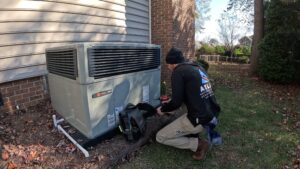
An outdoor condenser packed with grass clippings and pollen reduces system efficiency, lengthens cooling cycles, and contributes to poor dehumidification. Keep at least 18 inches of clearance around the unit. Hose it down gently in spring and fall.
Tip 7: Get Annual Tune-Ups
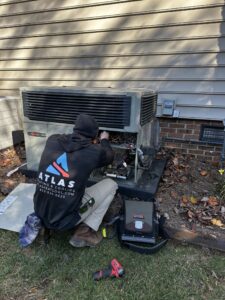
A clean coil, proper refrigerant charge, and validated airflow all directly affect how well your AC dehumidifies. A neglected system that struggles to cool also struggles to remove moisture. Our Atlas Assurance maintenance plan bundles spring AC and fall furnace tune-ups for exactly this reason.
What Atlas Offers Beyond Standard HVAC
For Rock Hill homeowners dealing with persistent indoor air quality issues, we install and service:
- Whole-home dehumidifiers integrated with the air handler.
- UV light air purification.
- Media filter cabinets for high-MERV filtration without airflow loss.
- Energy recovery ventilators (ERVs) for tight modern homes that need fresh air without humidity penalty.
- Crawl space dehumidifiers and assessments.
The right answer depends on your specific home and symptoms. We do an honest assessment before recommending anything.
Schedule an Air Quality Consultation
If you have persistent humidity, allergy, or mold issues, call (803) 839-0020 or request a consultation. Atlas Heating & Cooling serves Rock Hill, Fort Mill, Tega Cay, Lake Wylie, York, Clover, and Indian Land with honest assessments and no upsell pressure.
More from Maintenance & Home Comfort
- How Often Should Your AC Be Serviced in South Carolina?
- Fall Furnace Tune-Up Checklist for Rock Hill Homeowners
- Commercial HVAC Maintenance Schedule for Rock Hill Businesses
- Spring AC Tune-Up Checklist for Carolina Homeowners
- Rock Hill, SC Climate HVAC Considerations Every Homeowner Should Know
- How Often to Change Your AC Filter: A South Carolina Homeowner’s Guide
Explore Maintenance & Home Comfort
Related service: AC Maintenance in Rock Hill, SC