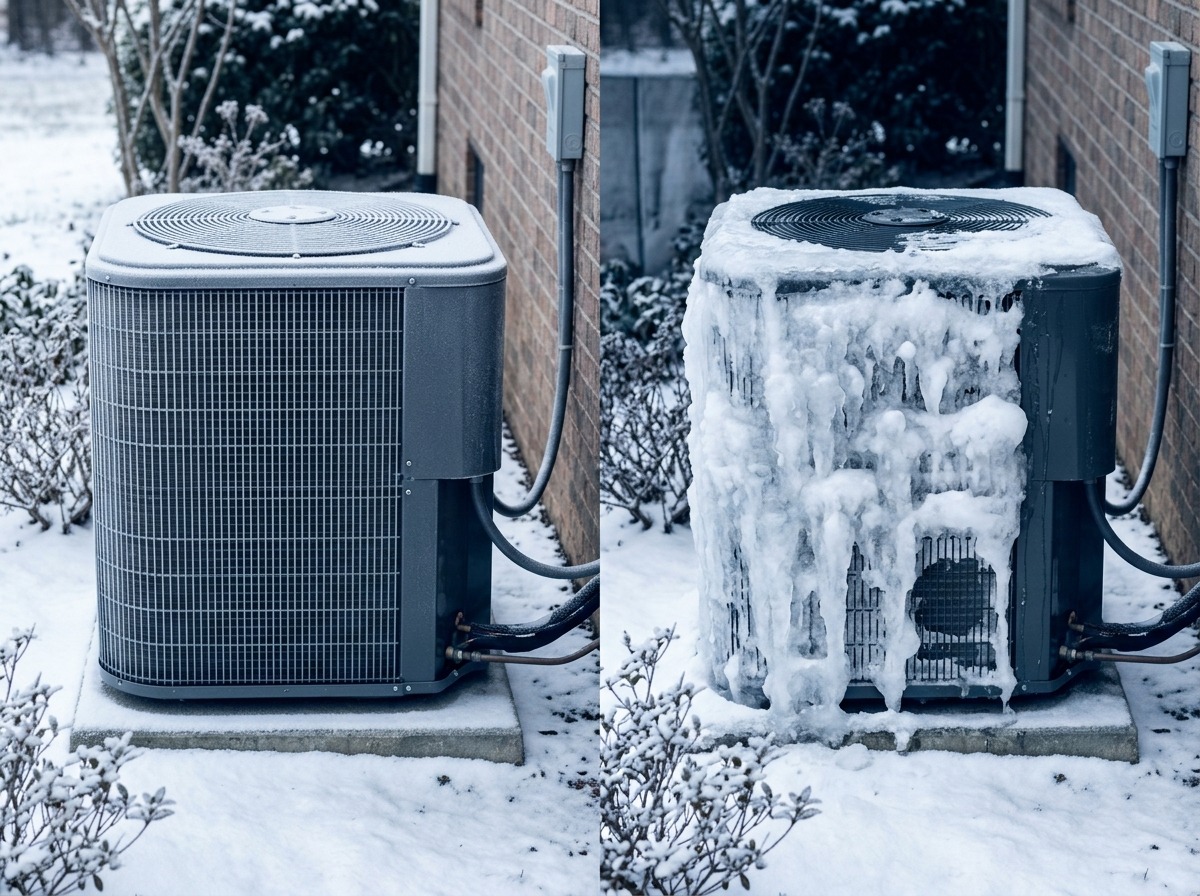
A heat pump frozen in winter may be operating normally if the outdoor coil has light, even frost that disappears during defrost. Thick ice that keeps growing, encases the coil, reaches the fan, or returns after thawing signals a problem. Do not chip or heat the ice. If ice obstructs moving parts or heating has failed, turn the thermostat off and arrange professional diagnosis.
This guide explains normal defrost, persistent icing causes, safe checks, shutdown choices, and prevention.
Is frost on a heat pump normal in winter?
Light frost on a heat pump is normal in cold, damp weather, but a solid shell of persistent ice is not. The outdoor coil absorbs heat from the air during heating mode, so its surface can be colder than the surrounding air. Trane explains that an outdoor coil may run 10 to 20 degrees colder than the outdoor temperature, which is why frost can form even when the air temperature is slightly above freezing.
Use the pattern and the system’s response to judge what you see:
| What you see | What it usually means | What to do |
|---|---|---|
| Thin, even frost on the coil | Normal cold-weather moisture freezing on the coil | Watch for the next automatic defrost cycle |
| Steam, a brief change in sound, and frost melting | Normal defrost operation | Let the cycle finish |
| Thick ice covering most of the coil or cabinet | Defrost cannot keep up or a fault is present | Stop troubleshooting and arrange service |
| Ice touching the fan or preventing movement | Risk of physical damage | Turn the system off at the thermostat |
| Ice that returns soon after thawing | An underlying cause remains | Schedule heat pump repair |
How does the heat pump defrost cycle look and sound?
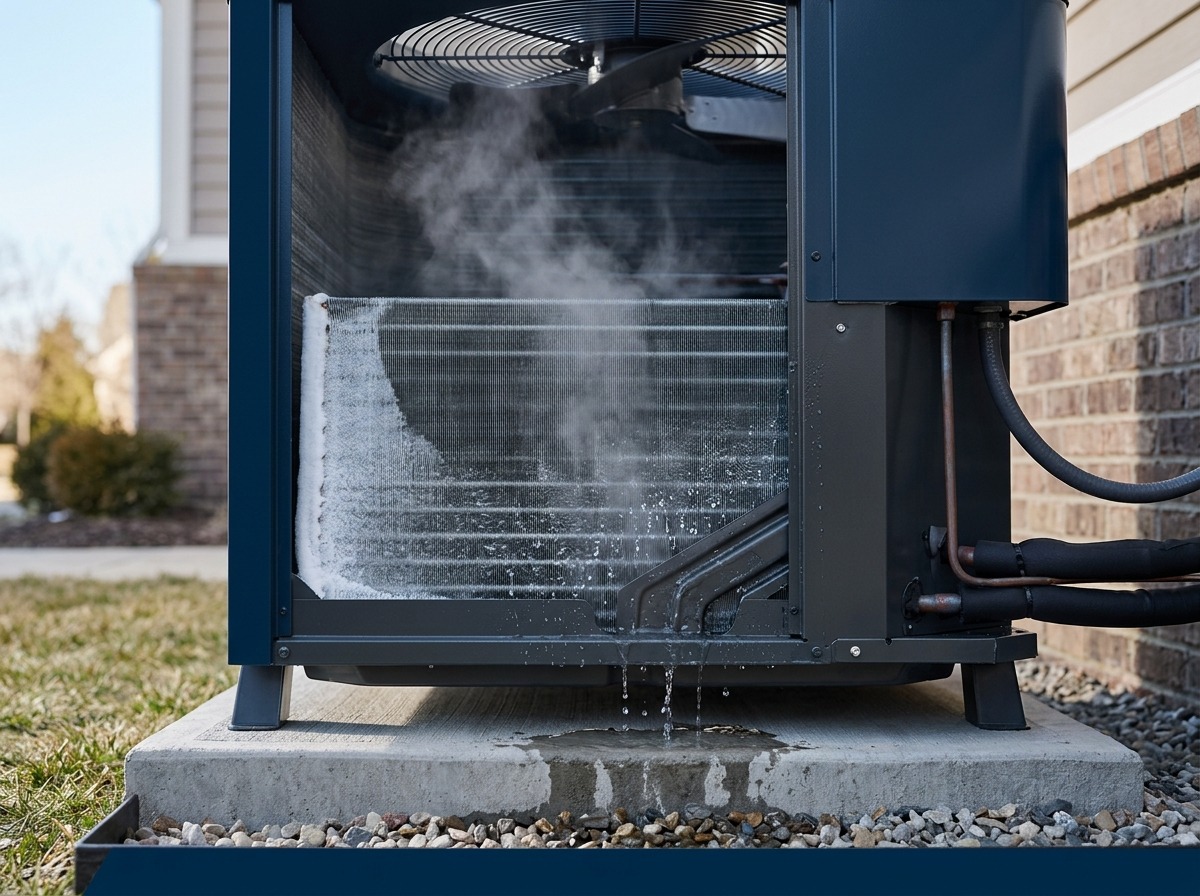
The heat pump defrost cycle briefly redirects heat to the outdoor coil so frost can melt. The reversing valve changes refrigerant flow, and many systems pause the outdoor fan. The unit returns to heating after defrost is complete.
Normal defrost may produce several noticeable signs:
- A cloud of water vapor that looks like smoke
- Water draining below the outdoor unit
- A whooshing sound when refrigerant flow changes
- The outdoor fan stopping while the compressor continues to run
- An AUX indicator on the thermostat
- A short change in the air temperature at indoor vents
These signs should form a brief sequence, not continue indefinitely. Steam during defrost is different from an electrical burning smell. If you smell burning insulation, see sparks, or hear grinding or repeated impact sounds, turn the system off and do not restart it.
Why does a heat pump stay frozen instead of defrosting?
A heat pump stays frozen when frost forms faster than the system can remove it or a component prevents defrost. Common causes involve controls, airflow, refrigerant, drainage, or outside water.
Defrost controls are not responding
A coil-temperature sensor, defrost thermostat, control board, wiring connection, or reversing valve can prevent proper defrost. A technician must test the sequence because different faults create similar ice patterns.
Air cannot move through the outdoor coil
Leaves, packed snow, dirty coil surfaces, or a failed outdoor fan can restrict airflow and accelerate frost. Remove only loose material around the cabinet without touching the coil, fan, wiring, or tubing.
Refrigerant conditions are wrong
Low refrigerant charge can change coil temperature and pressure enough to promote icing and reduce heating output. Refrigerant does not get “used up” in normal operation, so a low reading calls for leak diagnosis rather than an automatic refill.
Meltwater cannot drain away
Defrost water must leave the unit. A blocked base pan, poor drainage, uneven pad, or dripping gutter can cause melting and refreezing. Freezing rain and wet snow can also overwhelm a working unit temporarily.
What should you safely check before shutting down a frozen heat pump?
Start with observations that do not require opening the cabinet, touching ice, or reaching near the fan. Your notes can help separate weather-related frost from an equipment fault.
Observe the system without touching it
From a clear, stable spot, record:
- Where the ice starts and how much of the coil it covers
- Whether the fan turns during ordinary heating operation
- Whether steam and water appear during an apparent defrost cycle
- Thermostat messages such as AUX, EM HEAT, or an error code
- Indoor vent temperature and whether the home reaches its setting
- New sounds, odors, breaker trips, and when the icing began
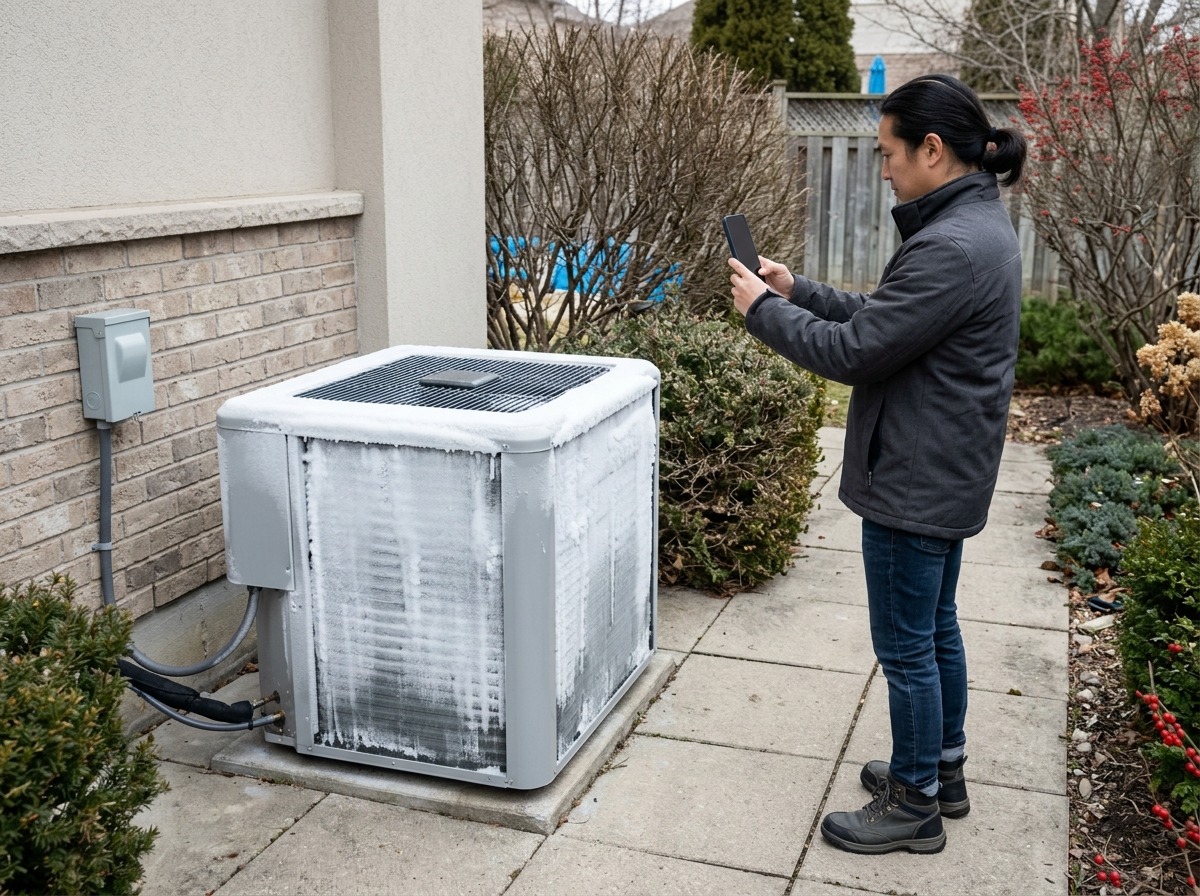
Take a photo or short video if conditions are safe. Do not remove a panel or reach through the grille. Keep children and pets away from the unit and slick meltwater.
Check only accessible airflow items
Inspect the indoor filter and replace it if visibly dirty, using the approved size and type. With the unit off, move loose leaves and snow from the perimeter. Do not brush the coil, force tools between fins, or reach near the fan.
Choose the safest shutdown option
Leave the system alone if the frost is light, the home is heating, and a normal defrost sequence is clearing the coil. Turn the thermostat to Off if thick ice blocks airflow, touches the fan, produces grinding sounds, or accompanies lost heating. Do not keep restarting a tripped breaker.
If your thermostat has Emergency Heat and your system has a working backup heat source, you may select it according to the thermostat and equipment manuals while waiting for service. Carrier distinguishes automatic AUX heat from manual Emergency Heat: Emergency Heat shuts off the heat pump and uses only the backup source. If your thermostat lacks that mode, or you are unsure how your system is configured, leave the heat pump off and ask for guidance.
What should you never use to remove heat pump ice?
Never chip, scrape, pry, burn, or rapidly melt ice from a heat pump. Outdoor coil fins and refrigerant tubing can be damaged by surprisingly little force, and hidden fan or electrical components add more risk.
Avoid all of these methods:
- Screwdrivers, hammers, shovels, ice picks, or metal scrapers
- Pressure washers or forceful hose streams
- Boiling or hot water
- Heat guns, hair dryers, torches, or space heaters
- Salt, windshield deicer, antifreeze, or household chemicals
- A tarp or full cover wrapped around the operating unit
Lennox specifically advises homeowners to avoid hot water and any attempt to chip or break the ice. Water can refreeze around the base, and added heat or moisture can affect electrical parts. A cover around the sides also blocks the airflow the heat pump needs. Natural thawing with the heat pump off is safer, but a unit that freezes again still needs diagnosis.
How does a technician diagnose persistent heat pump icing?
A technician diagnoses persistent icing by testing the full defrost and heating sequence. The goal is to prove why the coil froze, not simply remove the ice.
A professional evaluation may include:
- Defrost demand and termination: Confirm that sensors report plausible temperatures and that the control starts and ends defrost correctly.
- Reversing-valve operation: Verify that refrigerant flow changes as commanded.
- Outdoor airflow: Inspect coil condition, fan motor operation, blade clearance, and physical obstructions.
- Refrigerant circuit: Measure operating temperatures and pressures, compare them with manufacturer data, and investigate signs of leakage before correcting charge.
- Drainage and water sources: Check the base pan, unit position, refreezing patterns, and nearby gutters or downspouts.
- Electrical and thermostat controls: Test relevant wiring, contactors, relays, safety controls, thermostat calls, and backup-heat operation.
Refrigerant work is not a homeowner task. The U.S. Environmental Protection Agency requires Section 608 certification for technicians who service equipment in ways that could release regulated refrigerants. A sound diagnosis also avoids replacing a defrost board when the actual fault is a sensor, fan, wiring connection, water source, or refrigerant leak.
For broader symptom context, Atlas’s Rock Hill heat pump repair guide explains other signs that point to repair rather than normal operation.
How can you prevent heat pump ice buildup?
You can reduce abnormal heat pump ice buildup by protecting airflow, controlling outside water, and catching defrost problems before winter. Prevention supports normal operation, but it cannot correct a failed control or a refrigerant leak.
Use this practical winter routine:
- Check the indoor filter regularly and replace or clean it as the manufacturer directs.
- Keep leaves, weeds, mulch, and stored items away from the outdoor unit.
- After snow, clear loose accumulation around the cabinet without touching the coil.
- Keep gutters and downspouts from draining onto the heat pump.
- Watch for standing water or repeated ice at the base.
- Never operate the unit under a full winter cover.
- Note repeated AUX use, longer defrost behavior, or declining indoor heat.
- Arrange seasonal inspection before heavy heating demand.
ENERGY STAR recommends checking filters monthly and arranging annual pre-season heating and cooling checkups. Atlas’s HVAC maintenance tips cover filter and outdoor-unit upkeep. For a pre-winter check, see heating maintenance, or use the heating resource hub to compare other symptoms.
What do homeowners ask about frozen heat pumps?
These four answers address the most common questions that remain after checking the frost pattern and defrost behavior.
How long should I watch frost before calling for service?
Watch long enough to see whether the unit completes a normal defrost and clears the light frost. Call for service when ice keeps growing, remains after apparent defrost attempts, blocks airflow, returns after a safe thaw, or comes with poor heating or unusual noise.
Can I run the fan to thaw a frozen heat pump?
No, the thermostat’s indoor Fan setting does not safely thaw an ice-encased outdoor coil or repair the cause. If heavy ice is present, use Off or properly configured Emergency Heat rather than experimenting with operating modes.
Is steam from the outdoor unit dangerous?
Steam during a brief defrost cycle is normally water vapor from melting frost. Smoke, an acrid electrical odor, sparks, or continuing vapor outside a clear defrost sequence is not normal, so shut the system off and seek professional help.
Will a frozen heat pump thaw on its own?
A heat pump may thaw naturally when it is off and outdoor conditions rise above freezing, but thawing does not prove the problem is fixed. Ice that returns points to unresolved airflow, drainage, control, fan, or refrigerant conditions.
Is your heat pump still frozen?
Persistent ice should be diagnosed before the heat pump returns to normal operation. Atlas Heating & Cooling provides heat pump repair for frozen coils and defrost faults in Rock Hill, York County, and nearby Carolinas communities. Turn the affected system off if ice is obstructing it, note what you observed, and book a repair visit so the defrost sequence, airflow, refrigerant circuit, controls, and backup heat can be checked against the actual fault.