
Rusty brown hot water usually points to the water heater or hot-water piping when the cold water stays clear. If both hot and cold water are discolored, look upstream at the home’s plumbing, private well, or public water supply instead. Do not judge drinking safety by color alone. Limit use, compare taps carefully, and contact the right professional or utility for the pattern you find.
The location and timing matter more than the exact shade. Controlled checks can separate a heater problem from a whole-house issue without opening the tank. This guide covers causes, safe observations, repair decisions, and prevention.
Is rusty brown hot water coming from the water heater or the water supply?
Rusty brown hot water is most likely coming from the water heater or hot-water piping when it appears at several hot taps but not at the same cold taps. Brown water from both sides of a faucet shifts attention toward the incoming supply or shared household plumbing. Discoloration at only one fixture points more strongly to that faucet, connector, or nearby branch line.
The Portland Water Bureau’s official discolored-water troubleshooting guide uses the same first split: compare hot and cold water, then check multiple fixtures. Use this table as a direction finder, not a final water-quality test.
| What you observe | More likely source | Best next contact |
|---|---|---|
| Brown at several hot taps; cold stays clear | Water heater or hot-water piping | Water-heater service professional |
| Brown at one hot tap only | Faucet, flexible connector, or local hot-water branch | Plumbing professional |
| Brown at hot and cold taps throughout the house | Public supply, private well, service line, or main household piping | Water utility or well professional first |
| Brown at all taps after street work, hydrant use, or a pressure interruption | Disturbed material in the distribution system | Water utility |
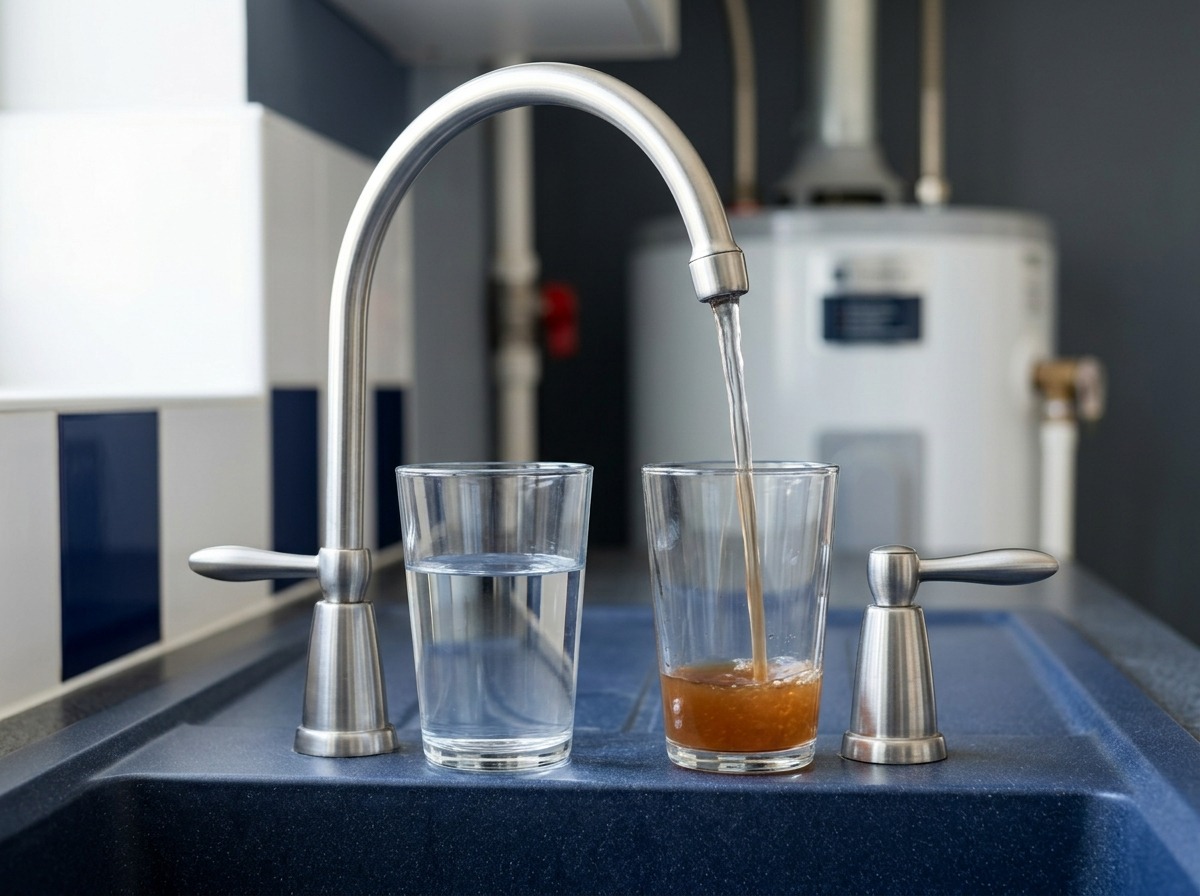
If the hot-only pattern persists, a water heater repair evaluation can determine whether sediment, an anode rod, a connection, or the tank itself is involved. If cold water is also brown, do not assume replacing or flushing the heater will solve it.
Why does only the hot water turn rusty or brown?
Only-hot discoloration usually develops inside the heater or hot-water piping. Likely causes include loose sediment, tank corrosion, a depleted sacrificial anode rod, or corroding hot-side pipes and connectors.
How does the anode rod protect a tank?
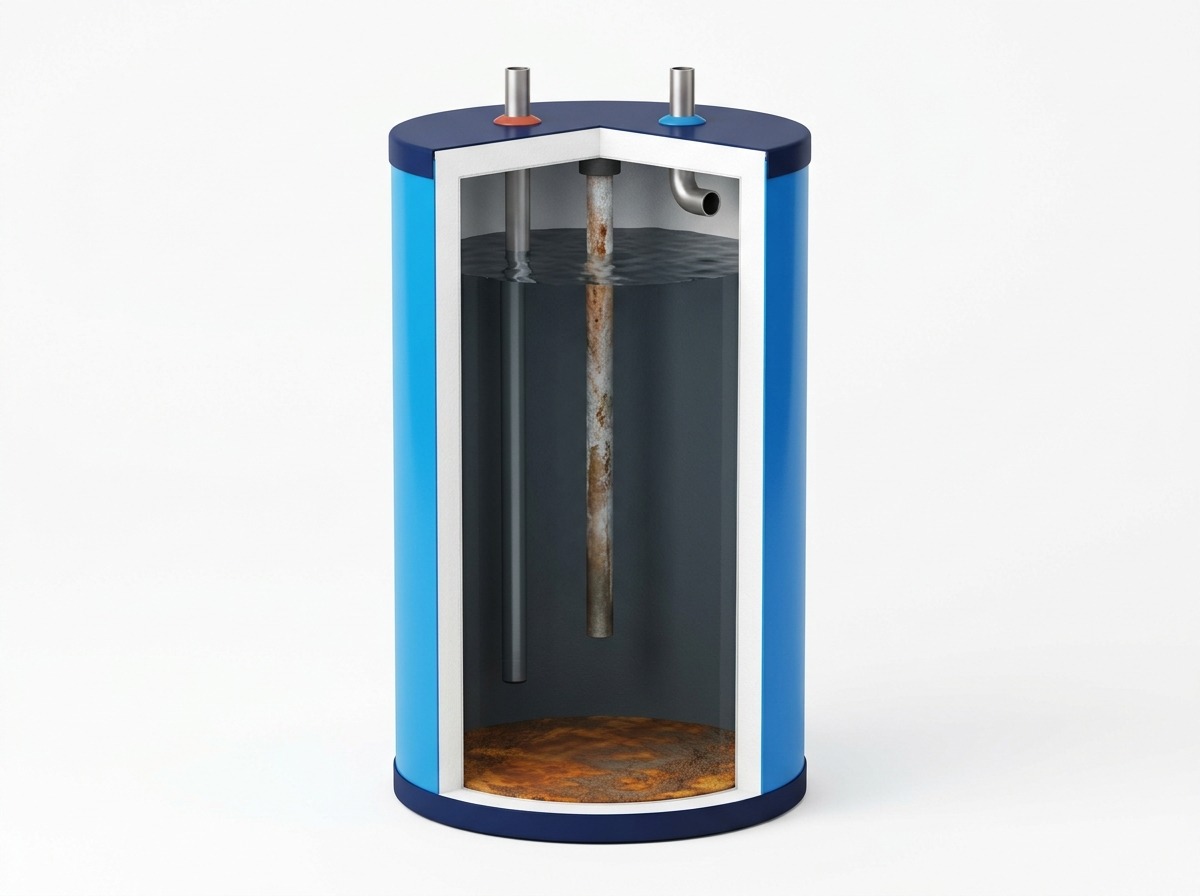
A storage water heater commonly has a steel tank protected by a lining and a sacrificial anode rod. The rod corrodes preferentially so the tank steel does not. A. O. Smith’s manufacturer maintenance guidance explains that these rods may use aluminum, magnesium, or zinc and that their service life varies with water chemistry, hot-water use, and water treatment.
A depleted rod removes corrosion protection, but brown water does not prove the rod is at fault. A technician must inspect both rod and tank. A new rod cannot reverse existing tank damage.
How do sediment and tank corrosion differ?
Loose material can collect at the bottom of a storage tank and become stirred up after heavy use, service, or a supply disturbance. A controlled flush may remove loose sediment. Persistent orange-brown water, visible flakes, or rapid recurrence after proper service raises more concern for active corrosion.
What causes brown water at both hot and cold taps?
Brown hot and cold water usually means the discoloration entered before the heater. Main-flow changes, hydrant operation, repairs, or pressure loss can disturb deposits in public pipes. Corroding household plumbing can also release material.
Check toilets and an outdoor cold tap if they connect directly to the main. If they are also discolored, contact the utility for information about work, outages, and water-use instructions.
Private-well households need a different path. The CDC says a change in a well’s color, taste, or smell is a reason to test, and its well-water testing guidance calls for a state-certified laboratory. A water-heater repair cannot correct iron, manganese, sediment, or contamination originating in the well system.
What safe checks can you do before calling for help?
Safe checks rely on observation, not disassembly. Compare samples, map affected fixtures, check official notices, and view the heater from a distance. Skip testing if you see a leak, smell gas or chemicals, or have an active water advisory.
How can you compare hot and cold water?
- Choose one faucet with separate hot and cold controls if possible.
- Fill a clean, clear glass from the cold side after a brief flow. Set it on a white background.
- Use a second glass for the hot side, keeping hands away from water hot enough to scald.
- Repeat at one or two other fixtures, including a little-used tap.
- Note whether the color appears immediately, grows as water warms, or clears with brief use.
Do not taste the samples or run large amounts of hot water just to test. Doing so can spread sediment through faucets and appliances.
What should you check around the heater?
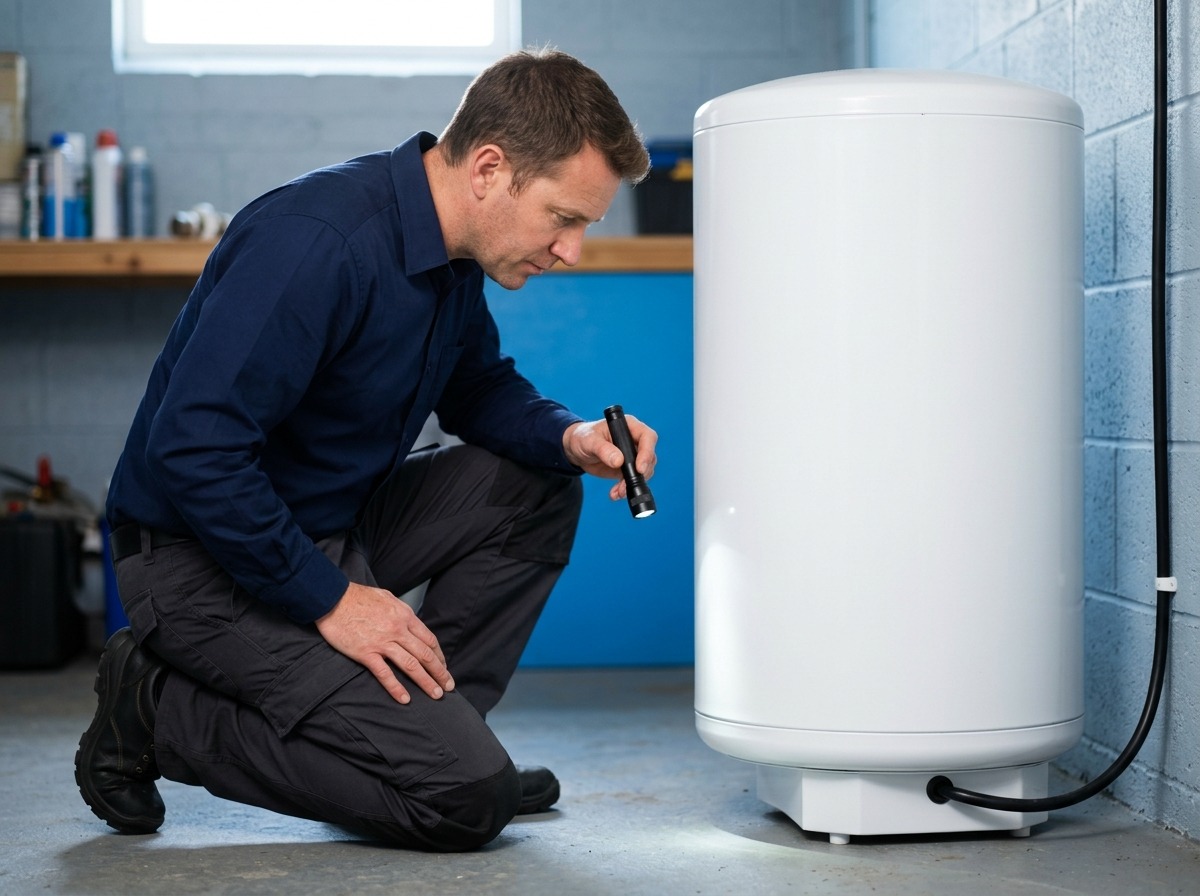
Look without removing covers or touching valves. Record the model, visible rust, dampness, unusual sounds, and when the change began. The Atlas guide to water-heater popping and sediment can help separate a noise symptom from the color problem.
Do not loosen an anode rod, operate the relief valve, or attach a hose unless you understand your model and the scald, pressure, electrical, and gas hazards.
When should you stop using discolored water?
Stop using discolored water for drinking, cooking, making ice, preparing infant formula, and brushing teeth until its source is identified and applicable official guidance says it is suitable. Color alone cannot identify the substances present.
The EPA lists iron and manganese among secondary contaminants that can affect color, taste, sediment, and staining. Its secondary drinking-water guidance also notes that color can have several causes. A familiar rusty shade therefore does not confirm that the water contains only iron or that it is safe to drink.
Stop all use and seek official direction promptly when:
- a utility or health department issues a do-not-use, boil-water, or other drinking-water advisory;
- the water has a chemical, fuel, or sewage-like odor, an oily sheen, or floating material;
- discoloration follows a main break, flood, well damage, or major pressure loss;
- anyone becomes ill after using the water;
- hot water is paired with a growing leak, steam, electrical arcing, or a gas odor.
The CDC advises contacting the water utility or health department for tap-water quality concerns and following the exact instructions in any drinking-water advisory. Do not assume a household filter, boiling, or letting the water stand will address an unidentified problem.
Can rusty hot water be repaired, or does the heater need replacement?
Rusty hot water may be repairable when a sound tank has loose sediment, a serviceable anode rod, or a corroded connector. Replacement becomes more likely when inspection finds tank or lining corrosion. Decide after inspection, not from color alone.
| Finding after diagnosis | Likely path |
|---|---|
| Loose sediment; sound tank | Model-appropriate flushing and follow-up observation |
| Depleted anode; no tank damage | Correct replacement anode and tank service |
| Rusted connector or short pipe section | Replace the affected plumbing component |
| Utility or private-well source | Address supply or treatment issue, not the heater |
| Corroded or leaking tank body | Replace the water heater |
A flush does not rebuild a corroded tank, and a new anode cannot restore lost metal. If tank damage is confirmed, Atlas’s water-heater repair versus replacement guide covers the broader equipment decision.
How can you prevent rusty brown hot water from returning?
Prevention centers on model-specific maintenance. Keep the manual, follow its flushing schedule, and have the anode inspected at the interval specified for your unit and water conditions.
Use these habits to reduce avoidable surprises:
- Record the heater’s installation date, model, and service history.
- Ask that the anode and tank condition be documented during maintenance.
- Address recurring sediment rather than repeatedly clearing faucet aerators.
- Investigate exterior rust, damp fittings, or changing hot-water color early.
- After a utility discoloration event, follow utility flushing directions before drawing hot water into the tank.
- For a private well, test when color, taste, or odor changes and follow local health-department advice.
The Atlas water-heater resource hub collects related maintenance guidance. Maintenance can slow corrosion and reveal trouble sooner, but it cannot guarantee a tank will never fail.
What do homeowners ask about rusty brown hot water?
Homeowners most often ask about showering, flushing, one-faucet discoloration, and whether brown water means the tank must be replaced.
Can I shower in rusty brown hot water?
Do not use rusty brown hot water for showering until you know the source and have checked any utility or health instructions. If officials identify a limited aesthetic issue, follow their permitted-use guidance, but remember that discolored water can stain tubs, grout, and fabrics.
Will flushing a water heater fix brown water?
Flushing can help when loose sediment inside a sound storage tank causes the color. It will not fix corroded tank steel, damaged lining, hot-water piping, or a whole-house supply problem, so diagnose the hot-versus-cold pattern before draining anything.
Why is brown hot water coming from only one faucet?
Brown hot water at one faucet usually points to that fixture, its connector, or the nearby hot-water branch. Compare both sides of that faucet and test another fixture before blaming the water heater.
Does rusty hot water always mean I need a new water heater?
No. Rusty hot water can come from sediment, a replaceable anode rod, a connector, or a hot-water pipe. Replacement is the likely path only when inspection confirms tank corrosion or another nonrepairable failure.
Who should diagnose rusty hot water in Rock Hill and York County?
Atlas Heating & Cooling can inspect a hot-only discoloration pattern and identify whether the heater needs maintenance, repair, or replacement. Schedule a rusty hot-water diagnosis through Atlas’s water heater repair service and share which taps are affected, whether cold water stays clear, and any leak, odor, or noise. If both hot and cold water are brown, contact your water utility or well professional first.