Auxiliary heat vs emergency heat describes two backup-heating modes that may use the same equipment but operate differently. Auxiliary heat turns on automatically to support a working heat pump. Emergency heat is a setting you select manually when the heat pump cannot operate properly and the home needs its backup source alone.
That distinction tells you what to do. Leave a brief AUX message alone while the system is meeting the thermostat setting. Use emergency heat only for an actual heat-pump problem, not simply because the weather feels cold. This guide explains the labels, efficiency tradeoffs, safe observations, and signs that call for service.
What Is the Difference Between Auxiliary Heat and Emergency Heat?
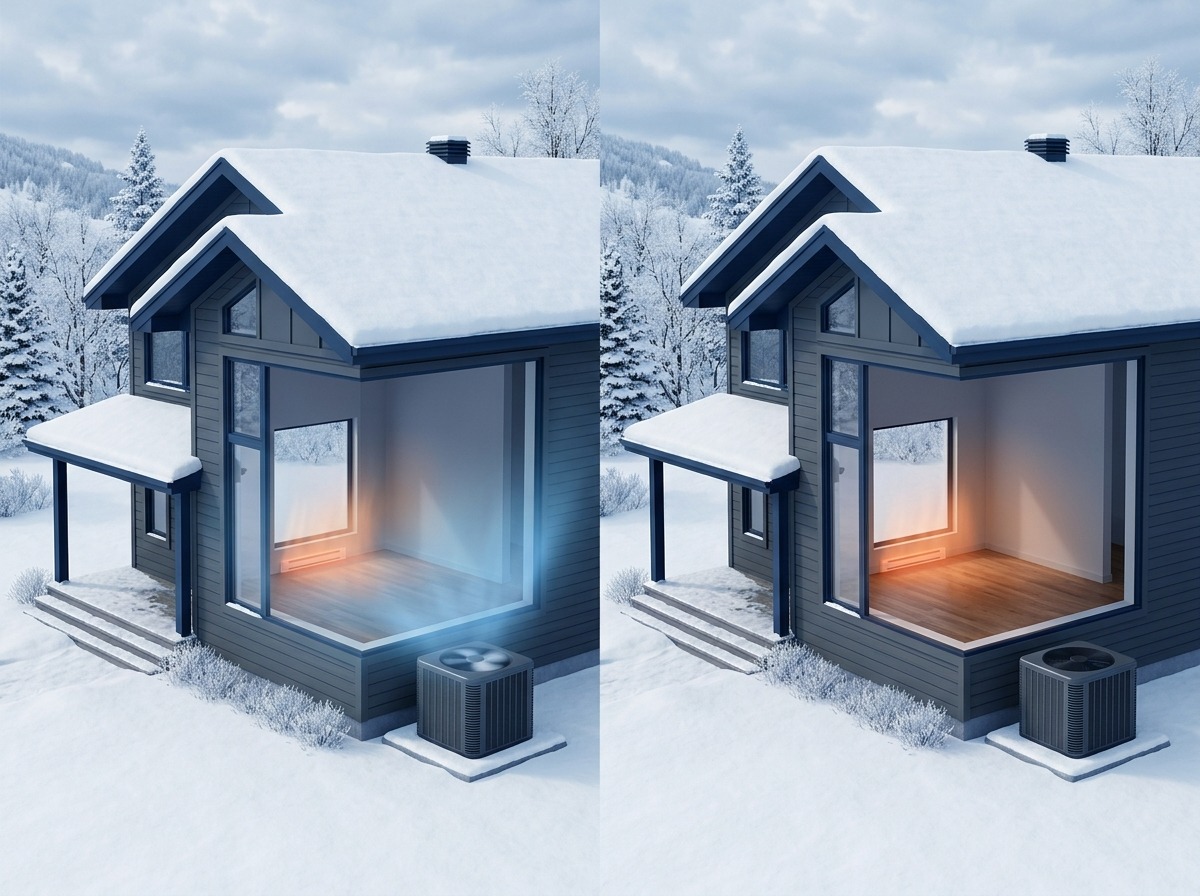
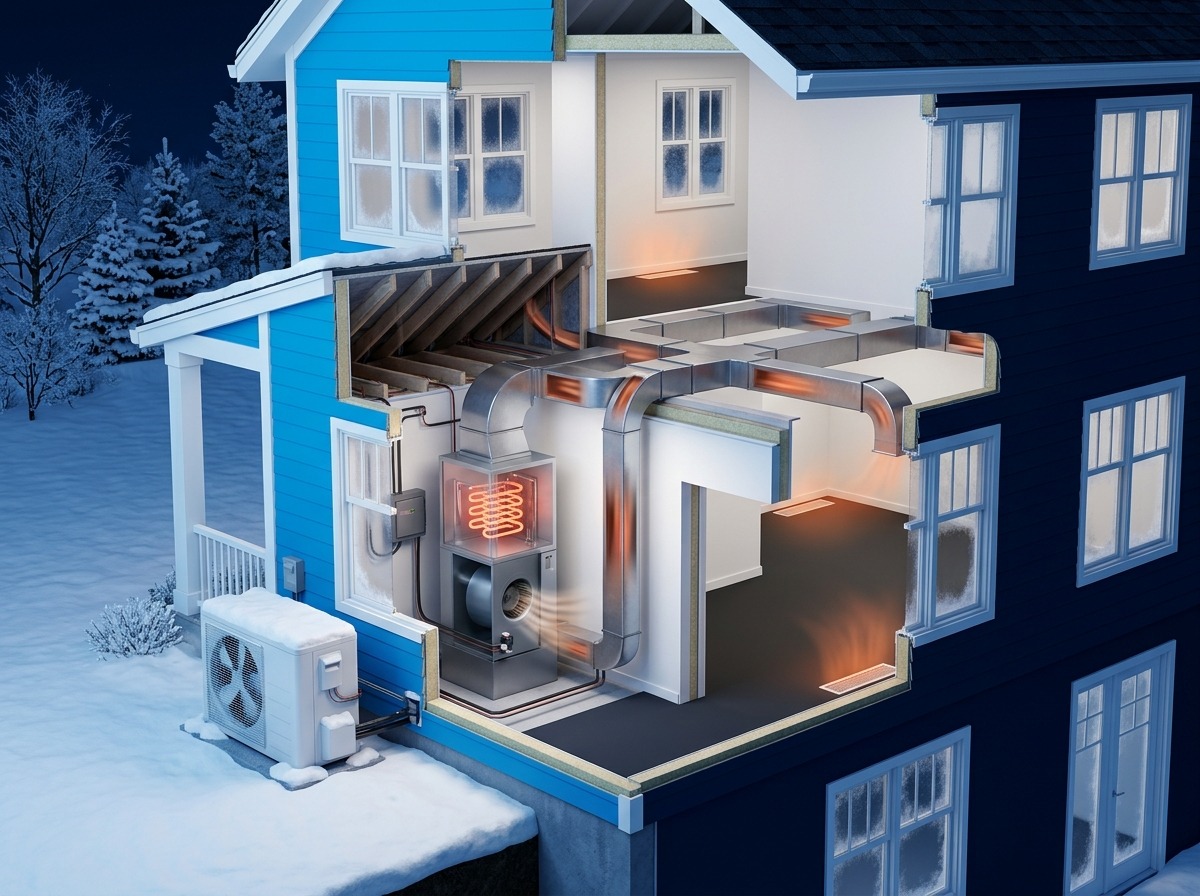
The main difference between auxiliary heat and emergency heat is who activates the backup source and whether the heat pump continues operating. Auxiliary heat is an automatic response to a heating demand the heat pump cannot meet by itself. On a common all-electric system, the heat pump and electric heat strips can operate together during an auxiliary-heat call. Emergency heat is manually selected and normally stops the compressor so the backup source heats the home alone. Both modes provide backup heat, but only emergency heat is a homeowner-selected fallback for a system problem.
Honeywell Home’s thermostat guidance confirms that AUX can run with the compressor, while selecting EM HT stops the compressor and runs only the emergency source. The exact equipment behind that second stage varies, so do not assume every home has electric heat strips.
| Comparison point | Auxiliary heat | Emergency heat |
|---|---|---|
| Who turns it on? | The thermostat or system controls | The homeowner selects the mode |
| Role | Supplements normal heat-pump operation | Uses the backup source without normal heat-pump operation |
| Heat-pump compressor | Often continues running | Normally locked out |
| Common reason | Cold conditions, a larger temperature gap, or defrost | Heat-pump failure or a condition that prevents safe normal operation |
| Homeowner action | Observe it; do not switch modes just because AUX appears | Use only when needed, then arrange diagnosis |
| Energy implication | Can increase energy use while active | Relies on the backup source for the full heating load |
One exception matters. In a dual-fuel system, the backup may be a furnace rather than electric strips. Lennox explains that second-stage operation can replace first-stage heat in a dual-fuel setup, even though an all-electric air handler can run both stages together. Your equipment manual and thermostat configuration determine the sequence in your home.
Why Does Auxiliary Heat Turn On Automatically?
Auxiliary heat turns on automatically when the system decides the heat pump needs help meeting the thermostat’s request. A brief AUX indication can be normal. The message describes an operating stage, not a diagnosis by itself.
Cold conditions increase the heating load
A heat pump extracts heat from outdoor air. As outdoor temperatures fall, the home loses heat faster and some systems deliver less heating capacity. The thermostat may call for the backup stage so indoor temperature does not continue falling. The exact changeover point depends on the equipment, thermostat settings, heat loss, and backup type, not one universal outdoor temperature.
A large setpoint increase can call for faster recovery
Raising the thermostat several degrees at once can make the controls interpret the gap as a need for second-stage heat. Carrier identifies cold weather, larger thermostat changes, and defrost cycles as common AUX triggers. If you want to adjust the temperature, make a modest change and let the system respond rather than repeatedly pushing the setting higher.
Defrost can require temporary indoor backup
A heat pump periodically removes frost from its outdoor coil. During that short defrost sequence, the refrigeration cycle changes temporarily. Auxiliary heat may run to limit the cool-air effect indoors. Light frost that clears is different from an outdoor coil that remains encased in ice.
For local seasonal context, Atlas’s guide to Rock Hill climate and HVAC demands explains why short cold snaps can put a different load on a heat pump than the area’s longer cooling season.
What Do AUX, EM HEAT, and Other Thermostat Indicators Mean?
Thermostat indicators report what the controls are requesting or which mode you selected. They do not identify the failed part. Read the exact wording, note how long it remains, and compare it with what the indoor and outdoor equipment are doing.
- AUX, AUX HEAT, or AUX HEAT ON: The thermostat has called for supplemental heat automatically. Occasional operation during a cold spell, recovery, or defrost can be normal.
- EM HEAT, EMER, or EMERGENCY: Emergency mode has been selected. The thermostat should rely on the configured backup source instead of normal compressor heat.
- HEAT ON: The thermostat is requesting heat. This label alone does not prove that the outdoor unit or backup stage has started.
- STAGE 2: The thermostat is requesting a higher heating stage. Depending on the system, this may refer to auxiliary electric heat, alternate fuel, or another staged configuration.
- ALT HEAT: Some smart thermostats use this label for a dual-fuel backup. It should not be treated as identical to electric AUX without checking the equipment setup.
- WAIT or DELAY: Many controls pause briefly before restarting equipment. This can protect against rapid cycling after a mode change or power interruption.
If the screen is blank, rebooting, or not responding, start with the safe checks in Atlas’s thermostat troubleshooting guide. A display problem and an AUX call are separate issues, even though both appear at the thermostat.
When Should You Use Emergency Heat?
Use emergency heat when the heat pump cannot provide normal heating and the backup source is needed temporarily. It is not a turbo setting and should not be the default response to a cold forecast. If the heat pump is operating normally, standard HEAT mode lets the controls decide when auxiliary support is appropriate.
Emergency heat can be a reasonable temporary step when:
- The thermostat is calling for heat, but the outdoor heat-pump unit is not operating and the indoor temperature keeps dropping.
- The outdoor unit has obvious physical damage or persistent heavy ice, and normal operation should stop until it is inspected.
- A technician or the equipment manufacturer instructs you to use emergency mode while awaiting repair.
After selecting it, confirm that warmer air arrives and the indoor temperature stabilizes. Then schedule service. Google Nest describes emergency heat as a manually controlled backup mode and advises professional testing when it is needed regularly.
Do not select emergency heat merely to warm the house faster, silence an AUX label, or avoid normal defrost. Do not keep increasing the setpoint if the house is not warming. Those actions can hide the pattern a technician needs to diagnose without restoring normal heat-pump operation.
How Do Auxiliary and Emergency Heat Affect Efficiency?
Auxiliary and emergency heat can use more purchased energy than compressor-only heating when the backup is electric resistance. A heat pump moves available heat into the home, while electric resistance strips create heat directly from electricity. AUX adds that resistance load to normal operation; emergency mode can assign the entire heating job to it.
The U.S. Department of Energy advises keeping electric resistance backup use to a minimum and recommends heat-pump thermostats that ramp temperature up gradually to avoid unnecessary strip heat. That does not support a fixed savings promise. The bill impact depends on run time, outdoor conditions, thermostat strategy, electric rate, home heat loss, and whether the backup is electric or fuel-fired.
Practical ways to avoid unnecessary backup operation include:
- Keep the thermostat in regular HEAT mode when the heat pump works.
- Avoid large, sudden setpoint increases unless comfort or safety requires one.
- Replace a visibly dirty filter with the correct size and type.
- Keep supply and return vents open and unobstructed.
- Do not change installer settings, lockout temperatures, or equipment type without system-specific guidance.
- Include backup operation in regular heating maintenance so controls and stages can be checked before cold weather.
The goal is not to prevent every AUX call. The goal is to let a properly configured system use backup only when it serves a real heating need.
When Does Backup Heat Point to a Heat Pump Problem?
Backup heat points to a possible problem when its pattern no longer matches the weather or the home’s heating demand. AUX that appears briefly on a cold morning can be normal. AUX that runs for long periods in mild weather while the room falls farther below the setpoint deserves attention.
Watch for these service indicators:
- AUX stays on through mild conditions without a recent setpoint increase.
- The home does not reach the set temperature even with AUX displayed.
- Emergency heat becomes necessary more than as a short-term fallback.
- The outdoor unit does not run in standard HEAT mode.
- The outdoor coil remains heavily iced instead of clearing after a defrost cycle.
- A breaker trips again after one reset.
- The system produces a burning odor, harsh electrical buzzing, grinding, or repeated short cycles.
- The thermostat shows an equipment alert that returns after the recommended basic reset.
What should you record before calling?
Simple observations can make the service visit more focused. Record the outdoor temperature, indoor temperature, setpoint, thermostat message, and approximate start time. Note whether the outdoor fan runs, whether the coil has light frost or solid ice, and whether air from the vents feels warm, neutral, or cool.
You can also check the filter, verify that vents are open, and look for an obviously tripped breaker. Reset a breaker only once. Leave electrical panels, refrigerant components, thermostat wiring, and ice removal tools alone. Atlas’s heat pump repair service is the appropriate next step when backup heat is masking a no-heat condition, defrost fault, or other heat-pump problem.
What Questions Do Homeowners Ask About Backup Heat?
Four practical questions clarify when backup heat is normal and when to act.
Is auxiliary heat the same as emergency heat?
No. Auxiliary heat is an automatic backup stage used during normal control of a heat-pump system. Emergency heat is a manually selected mode that normally bypasses compressor heating and uses the backup source alone.
Should I turn on emergency heat when it is below freezing?
No, not solely because the outdoor temperature is below freezing. Leave the thermostat in regular HEAT mode if the heat pump is operating and maintaining the home; the controls can call for auxiliary heat when the system requires support.
Why does auxiliary heat come on after I raise the thermostat?
Auxiliary heat can come on because a larger gap between room temperature and setpoint triggers a higher heating stage. Gradual adjustments may reduce that response, but the exact staging logic depends on the thermostat and equipment configuration.
Can emergency heat damage my heat pump?
Emergency mode is designed to stop or bypass normal heat-pump operation, so appropriate temporary use should not damage the heat pump. The concern is prolonged reliance on backup heat and the unresolved fault that made emergency mode necessary.
Do You Need Heat Pump Repair in Rock Hill?
If AUX runs in mild weather, the home keeps cooling, the outdoor unit stays iced, or you need EM HEAT to stay comfortable, switch from guessing to diagnosis. Atlas Heating & Cooling can check the heat pump, defrost operation, thermostat call, and auxiliary stage through its heat pump repair service in Rock Hill. Note your thermostat message and system behavior, then book a heat-pump service visit so normal heating can be restored.