A heat pump blowing cold air in heat mode is not always broken. Heat pumps usually deliver gentler heat than furnaces, and a brief defrost cycle can make vent air feel cool. The important test is what happens over time: a working system should return to heating and keep the house near the thermostat setting.
Persistent cold air, a falling indoor temperature, heavy ice, or repeated electrical trouble points to a real heating problem. This guide helps you separate normal operation from lost heating, complete a few safe observations, recognize likely professional repair causes, and decide what to do next.
Is a heat pump blowing cold air always a problem?
No, a heat pump blowing cold air is not always a problem. Heat pumps warm air gradually instead of producing the intense blast of many combustion furnaces. Carrier notes that lukewarm supply air around 90°F to 100°F can be normal, although temperatures vary by equipment, airflow, and weather.
Air below skin temperature can feel cool while still adding heat. If room temperature is stable or rising toward the setpoint, the heat pump is probably heating.
Use this quick distinction:
| What you observe | More consistent with normal operation | More consistent with a fault |
|---|---|---|
| Vent air | Mild or warm, then changes as the cycle runs | Stays distinctly cold through a long heating call |
| Indoor temperature | Holds steady or moves toward the setpoint | Falls or never recovers |
| Outdoor unit | Runs with light, temporary frost possible | Encased in thick ice or not operating |
| Duration | Brief cool period, followed by heat | Persistent cold air with no recovery |
| Other signs | Occasional mode-change sound or steam outside | Burning odor, harsh noise, repeated breaker trip |
How can you tell normal defrost from a malfunction?
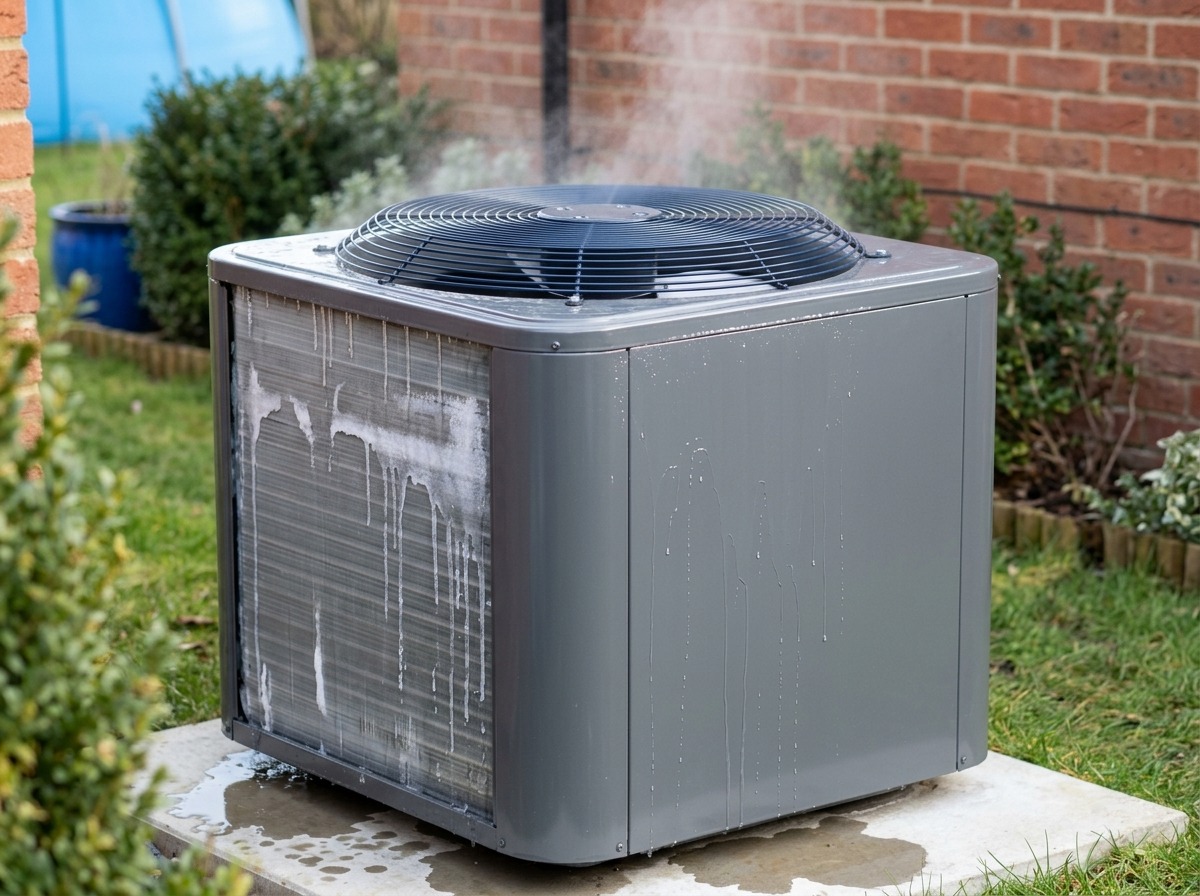
Normal defrost is brief, automatic, and followed by a return to heating. A heat pump reverses refrigerant flow for a short period so heat reaches the outdoor coil and melts frost. American Standard explains that this process may bring steam, a mode-change sound, a stopped outdoor fan, or a few minutes of cool indoor air. Those signs can look dramatic without indicating smoke or equipment failure.
What does normal defrost look like?
You may notice:
- A light frost coating on the outdoor coil before the cycle
- A whoosh as refrigerant changes direction
- The outdoor fan pausing while the compressor continues
- Water vapor rising as frost melts
- An AUX indicator on some thermostats
- Warm air returning after the cycle ends
Confirm that frost clears, heating resumes, and indoor temperature remains under control rather than relying on a universal defrost time.
What does abnormal icing look like?
Thick ice that remains after defrost or returns rapidly is not normal light frost. Do not chip it, bend coil fins, pour hot water on the unit, or open its cabinet. Note what you see and arrange service.
What should you safely check before calling for repair?
Safe checks stop at settings, filters, visible airflow, and the electrical-panel handle. Do not open equipment or test live components. The U.S. Department of Energy recommends clean filters, clear registers, and an Auto thermostat fan setting as basic heating and cooling practices.
Check the thermostat display and settings
Confirm the thermostat is set to Heat, with the setpoint above the displayed room temperature. Set the fan to Auto rather than On. The On setting can circulate room-temperature air between heating cycles, creating a cold-draft sensation even when the heat pump works correctly.
Look for AUX, EM HEAT, a low-battery warning, or an error. AUX can be normal when extra heat is requested. Emergency Heat is a manual backup setting, not a routine fix for cold air. Follow the equipment manuals rather than changing installer settings. For a blank display, use Atlas’s thermostat troubleshooting guide.
Inspect the filter and open registers
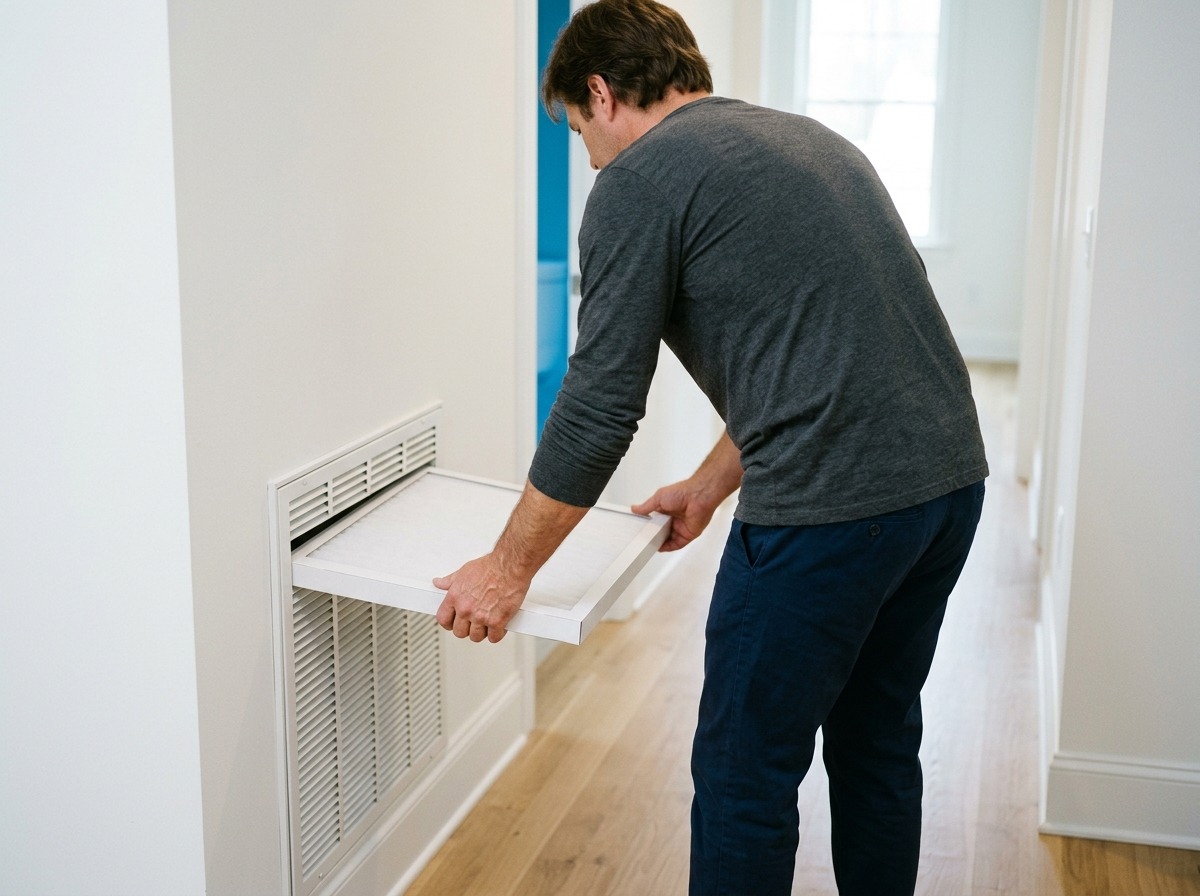
Replace a visibly loaded filter with the correct size and airflow direction. A dirty or overly restrictive filter can weaken airflow and heating performance. Atlas’s air-filter and MERV guide explains how filter choice affects the whole HVAC system.
Make sure registers and return grilles are open and uncovered. Do not close many vents to push heat into one room.
Observe the outdoor unit from a safe distance
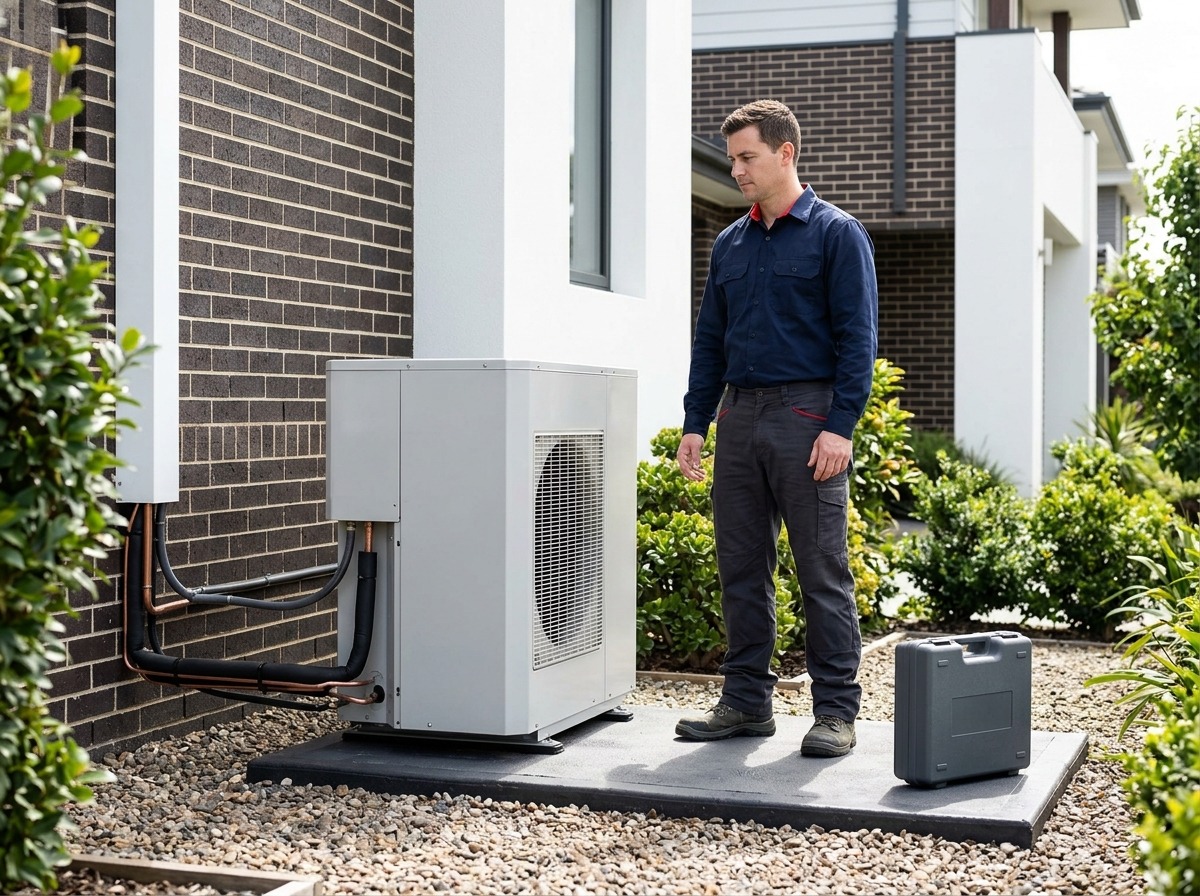
Remove loose leaves or objects blocking the cabinet only without touching the unit. Do not remove guards or panels. Record whether the outdoor fan runs and whether frost clears. A short video can preserve a temporary symptom.
Check the breaker once
Look for labeled breakers serving the heat pump and indoor air handler. If one is tripped and the panel area is dry and undamaged, reset it once only if you are comfortable and the equipment manual permits it. Do not remove the panel cover. Carrier’s troubleshooting guidance confirms that indoor and outdoor units may use separate breakers and that a breaker that trips again needs professional attention.
What professional problems can make a heat pump blow cold air?
Mechanical, refrigeration, control, and airflow faults can leave a heat pump running without useful heat. Their symptoms overlap, so a technician needs system measurements to identify the cause.
Common diagnostic paths include:
- Low refrigerant or a leak: Capacity may fall, run time may rise, and abnormal ice may form. Refrigerant work requires trained handling.
- A reversing-valve problem: A stuck valve can leave the unit in the wrong operating mode.
- A defrost control fault: A bad sensor or board may prevent frost removal or keep the unit in the wrong mode.
- Auxiliary-heat failure: A failed heat strip, relay, breaker, or control signal can reduce output in defrost or cold weather.
- Outdoor-unit trouble: A fan, capacitor, contactor, wiring, or compressor fault can stop heat transfer.
- Indoor airflow problems: A blower fault or duct leak can keep produced heat from reaching rooms.
A heat pump repair diagnosis should determine whether the equipment produces heat, airflow carries it, and controls call for the correct mode. That separates thermostat, refrigerant, and airflow problems.
Which cold-air signs require urgent action?
Smoke, sparking, a strong burning-plastic odor, or signs of overheating require immediate action. Leave the area and call emergency services if there is smoke or fire. If there is no immediate fire danger and you can approach the thermostat safely, set the system to Off and keep clear of the equipment until it is inspected.
Call for prompt HVAC service when you notice any of these conditions:
- A breaker trips again after one reset
- Thick ice covers the outdoor coil or cabinet
- The home temperature keeps falling during a heating call
- The system makes harsh grinding, banging, or electrical buzzing sounds
- Water is pooling near indoor electrical equipment
- The outdoor unit does not run while the thermostat calls for heat
- Cold air continues after the system should have returned from defrost
- Anyone in the home faces added risk from loss of heat
Do not open electrical compartments, bypass a safety switch, handle refrigerant lines, or force the outdoor fan. If a carbon monoxide alarm sounds in a home with dual-fuel or other combustion equipment, follow the alarm instructions, leave the home, and contact emergency services. A heat pump itself does not burn fuel, but its backup system might.
How does heat-pump performance connect to whole-home comfort?
Heat-pump performance depends on airflow, ducts, thermostat location, insulation, air leakage, sizing, weather, and backup-heat configuration, not only vent temperature.
One or two cold rooms may point to a closed register, damaged duct, leaky return, or draft near the thermostat. A whole-house change is more likely tied to equipment or controls.
The Atlas heating resource hub covers related questions, while the maintenance resource hub provides system-care guidance. Neither replaces diagnosis after heating output disappears.
Should you repair or replace a heat pump that is not heating?
Repair often makes sense when the fault is isolated and the rest of the system is sound. Consider replacement when a major component fails, problems keep returning, compatible parts or refrigerant create practical limits, or comfort remains poor.
Do not decide from age alone or a generic percentage rule. Ask for a written diagnosis naming the failed component and what the work should correct. For a major repair, compare that proposal with a replacement option that accounts for equipment compatibility, ducts, electrical needs, and backup heat.
Useful questions include:
- What measurements confirmed the cause of the cold air?
- Is the problem isolated or connected to another failure?
- What other components show wear or damage?
- Does the repair address a leak or only restore refrigerant charge?
- What maintenance or operating change would reduce recurrence?
- What manufacturer coverage, if any, applies to this equipment?
The right decision follows the diagnosis. Cold air by itself does not prove that the heat pump has reached the end of its useful life.
What else do homeowners ask about heat pump cold air?
Why does my heat pump blow cold air when the fan is set to On?
The On setting runs the indoor blower even when the heat pump is not actively heating. Set the fan to Auto so airflow normally stops between heating calls, then watch whether the house moves toward the setpoint.
Is steam coming from my outdoor heat pump dangerous?
Steam during a brief defrost cycle is usually normal water vapor as frost melts from the outdoor coil. Smoke has an acrid odor and may accompany sparking or persistent haze; leave the area and call emergency services if you suspect a fire.
What does AUX heat mean on a thermostat?
AUX means the thermostat has automatically called for a secondary heat source to support the heat pump. Carrier distinguishes automatic auxiliary heat from manually selected Emergency Heat, so do not treat the two settings as interchangeable.
Can a dirty filter make a heat pump blow cold air?
Yes, a heavily loaded filter can restrict airflow and reduce delivered heating. Replace it with the correct size and type, but schedule diagnosis if cold air, icing, or weak airflow continues after the filter change.
When should you call Atlas for heat pump repair?
Call when cold air persists, the indoor temperature falls, thick ice remains, or a breaker trips again. Atlas Heating & Cooling can evaluate the thermostat call, airflow, defrost operation, auxiliary heat, refrigerant circuit, and electrical components through its heat pump repair service in Rock Hill and York County. Share when the symptom began, what the thermostat displayed, and whether the outdoor unit had frost or ice so the diagnostic visit starts with a clear history.