When a water heater produces no hot water, check whether every hot-water fixture is affected, confirm the unit has power or fuel without opening it, and look for a displayed error code. Stop immediately for a gas odor, carbon monoxide alarm, smoke, damaged wiring, leaking water near electrical parts, or dangerously hot water.
A cold shower does not automatically mean the heater needs replacement. One cold faucet can point to a fixture problem, while cold water throughout the house usually points to the heater, energy supply, or hot-water piping. This guide separates those possibilities, gas and electric checks, safety limits, and professional diagnosis.
Does the no-hot-water problem affect one fixture or the whole house?
Testing several fixtures quickly shows whether the water heater is the likely source. Check the hot side at a nearby sink, a distant sink, and a tub or shower, allowing time for water in the pipe to clear.
Use what you observe to narrow the problem:
| What you find | What it suggests | Safe next step |
|---|---|---|
| One faucet or shower stays cold, but others get hot | A fixture valve, shower cartridge, or local connection may be the issue | Stop at the fixture and arrange plumbing service if needed |
| Every hot fixture runs normally but stays cold | The heater may not be heating, or it may have lost power or fuel | Identify the heater type and complete the exterior checks below |
| Hot-side flow is weak or absent throughout the house | A closed valve, restriction, or piping problem may be limiting flow | Do not force a valve; call for diagnosis |
| Water starts hot and quickly turns cold | The heater is producing some heat, but capacity or a component may be limited | Note how long the hot water lasts and which fixtures were running |
| Hot water returns after household demand stops | The stored supply may have been used faster than the unit could recover | Avoid simultaneous hot-water use and monitor the next normal cycle |
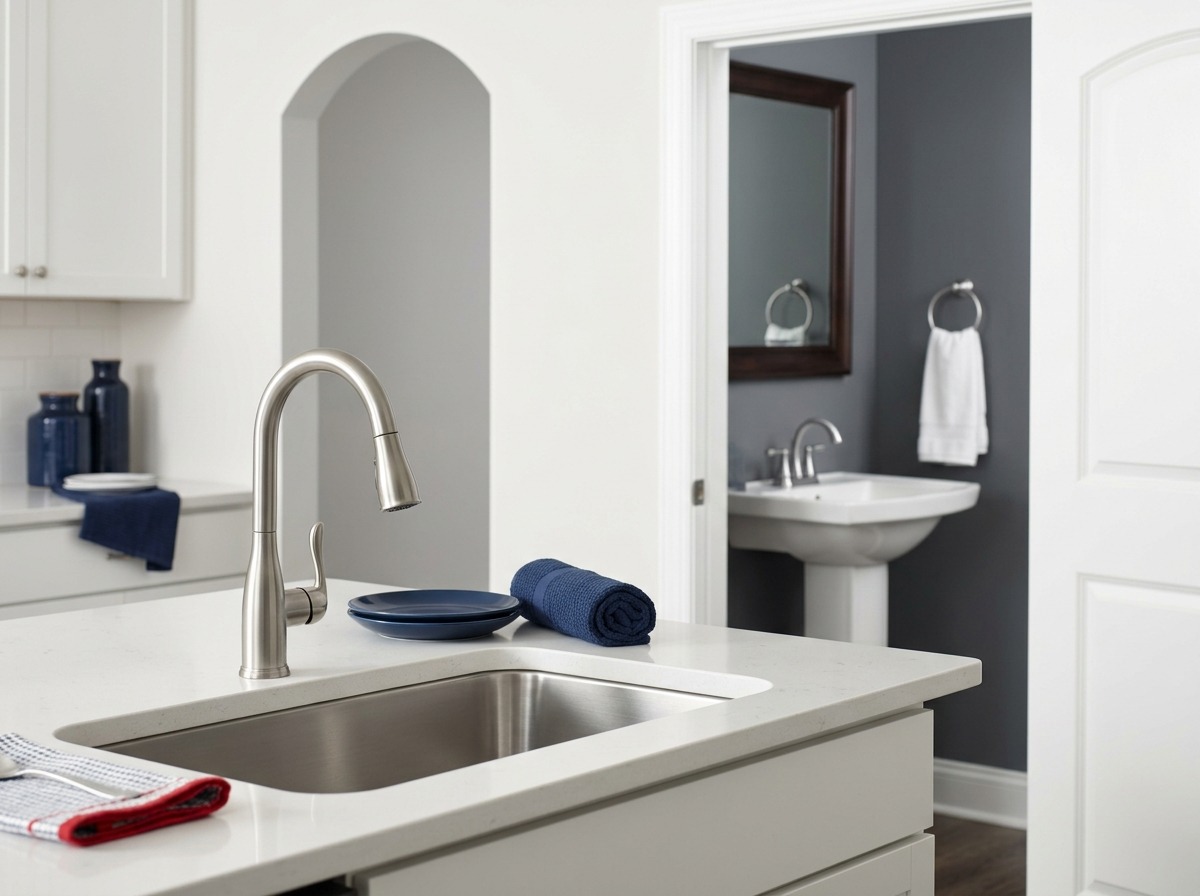
Recent showers, laundry, or dishwasher use may have depleted a storage tank. Recovery varies by tank size, fuel, input, and incoming-water temperature. If hot water does not return within the period in your model manual, continue the diagnosis.
What should you check before touching the water heater?
Identify the fuel type and inspect only what you can see without removing covers. The rating plate and owner’s manual identify gas, electric, heat-pump electric, or tankless equipment and give model-specific instructions. Photograph the model and serial numbers for a service technician.
Complete these low-risk checks:
- Record a controller message. Copy the exact error code or photograph the display instead of clearing it repeatedly.
- Confirm a service switch is on. Gas and tankless heaters may need electricity for controls and ignition. Do not touch a switch if you smell gas or see nearby water.
- Check for a wider outage. A utility outage, empty propane supply, or interrupted gas service may affect other equipment too.
- Read the model manual. Follow only the homeowner checks written for your heater.
- Leave safety devices alone. Never cap a relief pipe, bypass a cutoff, defeat a switch, or hold a breaker in position.
Do not open burner compartments, remove electric access panels, disconnect venting, test live terminals, or loosen gas fittings. The A. O. Smith troubleshooting guide warns of electricity, gas, pressure, and scald hazards, and tells homeowners to stop when a gas leak is suspected.
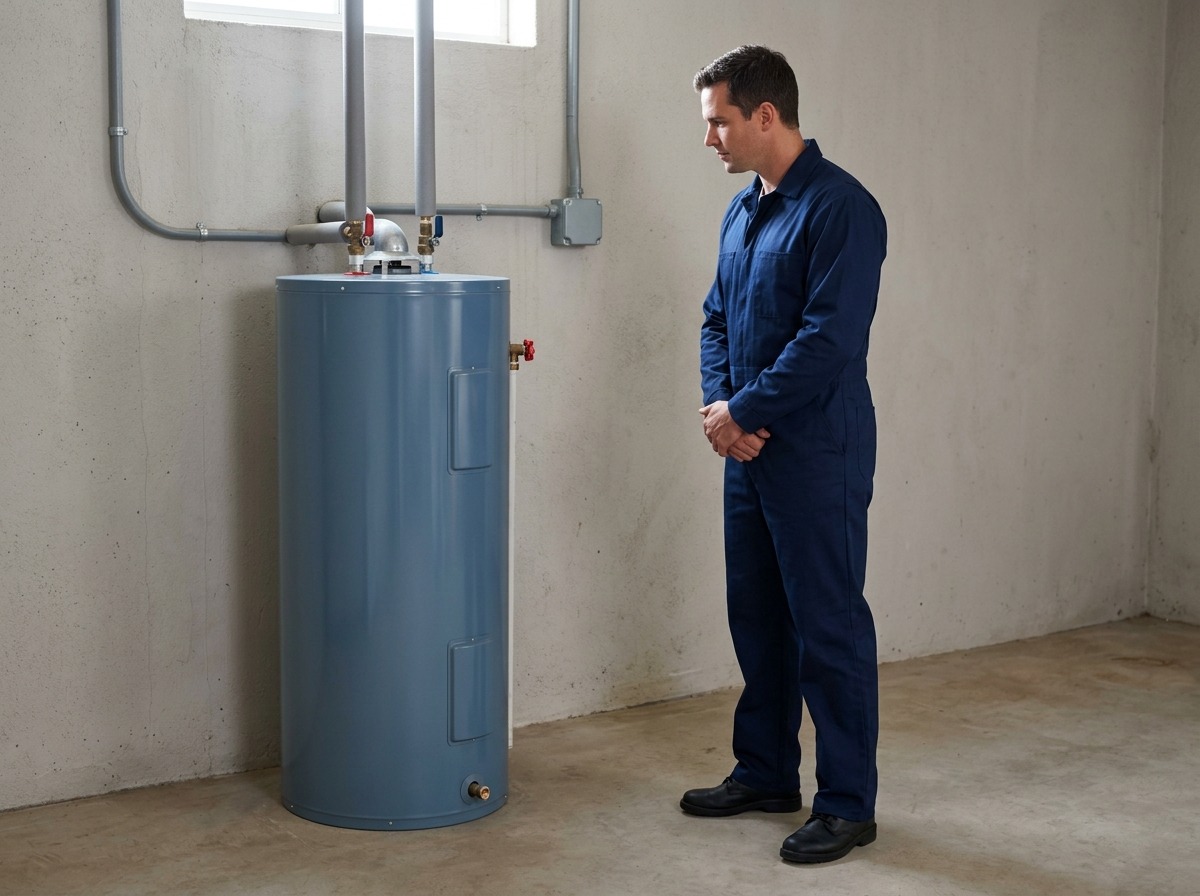
Why does an electric water heater have no hot water?
An electric water heater usually has no hot water because it lost power, its high-temperature cutoff opened, or a thermostat or heating element failed. Heat-pump models can also show control or heat-pump-system faults. Safe homeowner checks stay outside the cabinet.
At the electrical panel, find the breaker labeled for the water heater. If it is tripped and the area is dry with no burning smell, move it fully to OFF and then ON once. If it trips again, leave it off for professional electrical testing.
Do not remove access panels to press an internal reset unless your exact manual assigns that task to homeowners and you can follow every power-isolation instruction. A. O. Smith says its high-limit control operates after abnormally high water temperature and the cause should be professionally diagnosed before reset. Its electric water-heater manual lists no power, an open high limit, and a failed upper thermostat among no-hot-water causes.
A technician can test voltage, continuity, thermostats, elements, and the reason a safety device opened without exposing the homeowner to energized parts.
Why does a gas water heater have no hot water?
A gas water heater usually has no hot water because fuel is unavailable, ignition failed, a flame-sensing or gas-control part failed, or a safety fault shut the unit down. Gas tankless models may display an ignition, airflow, or venting code. Your safe role is observation, not combustion repair.
If there is no gas odor, check for control power and an exterior status light or code. You may look through a factory viewing window, but do not open a sealed combustion chamber. If another gas appliance is also unavailable, contact the gas supplier.
Relight a pilot only when your heater’s permanent instructions expressly allow it, the area is odor-free, and every step is clear. Stop if it will not stay lit or the fault returns. Never adjust gas pressure, disconnect a gas line, or modify the vent.
A gas odor changes the situation from troubleshooting to evacuation. The U.S. Consumer Product Safety Commission says to leave the building immediately, call 911 or the gas supplier from outside, and avoid matches, lights, and electrical switches when even a faint gas odor is present.
What should you check on a tankless water heater?
For a tankless water heater with no hot water, record the error code, confirm normal water flow, and check external power. Tankless controls verify flow, heating, and safety conditions, so the code is more useful than repeated power cycling.
Try one hot-water fixture by itself and confirm steady hot-side flow. Check for a vacation, standby, or disabled mode only if the manual describes it. Visually confirm a plug-connected unit is seated in a dry, undamaged receptacle, but never handle it with wet hands.
Error numbers differ among brands. Find the manufacturer’s manual by model number and follow only its permitted user actions. Leave descaling, gas-pressure checks, combustion work, internal electrical tests, and sensor replacement to service personnel.
When should you stop troubleshooting and call for help?
Stop when symptoms indicate combustion, electrical, pressure, scald, or water-damage risk. Turn equipment off only if the normal shutoff is safely accessible. Never walk through water to reach a panel or touch controls where gas may be present.
Leave the home and call emergency services or the gas utility from outside for a gas odor or carbon monoxide alarm. The CPSC’s carbon monoxide fact sheet lists headache, fatigue, shortness of breath, nausea, and dizziness as early symptoms and advises fresh air and medical attention when poisoning is suspected.
Arrange professional water heater service for any of these stop signs:
- The water-heater breaker trips again after one reset.
- You see scorched insulation, melted wiring, sparks, or smoke.
- Water is touching electrical parts, a cord, receptacle, or breaker panel.
- A gas pilot will not stay lit or an ignition fault returns.
- You see soot, a disconnected vent, flame outside the intended chamber, or heat damage.
- Steam appears at a faucet, water becomes unexpectedly scalding, or a relief pipe is discharging.
- The heater shows a persistent error code after the manual’s permitted user check.
- You are unsure which shutoff is correct or cannot access it safely.
How does the diagnosis affect repair versus replacement in Rock Hill?
A no-hot-water diagnosis identifies the failed part, the condition of the tank or heat exchanger, and whether the equipment fits the home’s demand. No hot water alone does not prove a new unit is needed. Elements, thermostats, ignition parts, sensors, and controls may be repairable when the rest of the system is sound.
Before a Rock Hill service visit, gather the model and serial numbers, installation date if known, error code, fuel type, and multi-fixture test results. Note whether the failure was sudden and whether a breaker or pilot problem recurs.
Replacement enters the discussion only when diagnosis shows repair is unsafe, impractical, or poor value for the unit’s condition. Atlas explains the broader factors in deciding when to replace a water heater rather than repair it, while the water heater resource hub covers equipment and maintenance topics.
If replacement is recommended, the diagnosis can reveal a component fault, installation condition, or demand mismatch that should inform the new system. ENERGY STAR advises reviewing installation location, current tank capacity, household changes, model availability, and contractor input in its heat-pump water-heater buying guidance.
What are common no-hot-water questions?
Common no-hot-water questions focus on recovery time, cold-water use, repeated resets, and whether replacement is necessary.
How long should I wait to see if hot water comes back?
Wait for the recovery period in your manual after heavy use or restored power. If it passes and every fixture remains cold, arrange a diagnosis.
Can I keep using cold water when the water heater is off?
Yes, you can usually use cold water when only the heater’s energy source is off. Stop if there is a leak, electrical hazard, gas concern, or contrary instruction from responders.
Should I reset my water heater more than once?
No. A recurring breaker, cutoff, ignition, or error shutdown indicates an unresolved fault. Record it and leave the unit off when the manual or safety condition requires.
Does no hot water mean my water heater is ruined?
No. Supply interruptions and replaceable controls, elements, or ignition components can stop heating. An inspection determines whether repair is safe and worthwhile.
How can Atlas help restore your hot water?
Atlas Heating & Cooling diagnoses gas, electric, tank, and tankless water heaters in Rock Hill and the surrounding service area. If every fixture is cold after these checks, schedule a water heater repair visit or book a service appointment. Call (803) 839-0020 with the fuel type, model number, error code, and any stop signs.