A burning smell the first time you run the heat each fall is almost always dust burning off the heat exchanger, and it should fade within about an hour. That is the ordinary version. The version that matters is the one that smells like plastic, electrical components, or rotten eggs, or the one that is still there after the house has warmed up.
This guide sorts the two apart. You will learn what the first-run dust smell actually is, how long it should last, which specific odors mean shut the system down, what you can safely check yourself, and when to schedule a heating repair before the first York County cold snap.
Is a burning smell from the furnace normal the first time you turn on the heat?
Yes, a dusty burning smell on the first heating cycle of the season is normal and expected. Your furnace sat unused through a Rock Hill summer. Dust settled on the heat exchanger, the burners, and the inside of the ductwork. When the system fires and those metal surfaces reach operating temperature, that dust burns off and you smell it through the vents.
Trane describes this first-run odor as the most common furnace smell homeowners notice, and one that usually clears on its own.
The smell is a seasonal event, not a fault. It should behave predictably:
- It starts within the first few minutes of the first real heating call
- It smells like hot dust or a warm electric heater, not like plastic or chemicals
- It gets weaker with each cycle rather than stronger
- It is gone within roughly an hour of runtime
- Nothing else changes: no noise, no smoke, no alarm, no reduced airflow
If your situation matches all five of those, run the system, open a couple of windows for ventilation, and let it clear.
How long should the burning smell last?
The dust-burnoff smell should be gone within about an hour of total runtime, and noticeably weaker well before that. An odor that persists past the first hour, or that returns at full strength on every cycle days later, is no longer burnoff.
| How the smell behaves | What it usually means | What to do |
|---|---|---|
| Dusty smell, fades within an hour, does not return | Seasonal dust burnoff | Ventilate and run the system |
| Dusty smell returns each cycle for several days | Heavy dust load or a filter problem | Replace the filter, then call if it continues |
| Smell strengthens as the system runs | Something is actively overheating | Shut the system off and schedule service |
| Burning plastic or electrical odor | Wiring, capacitor, or blower motor issue | Shut the system off at the thermostat and breaker, then call |
| Rotten eggs or sulfur | Possible natural gas leak | Leave the house immediately, then call the gas utility or 911 from outside |
| Smoky or sooty smell with visible smoke | Combustion or venting problem | Leave the house and call 911 |
Which furnace smells mean stop and call right now?
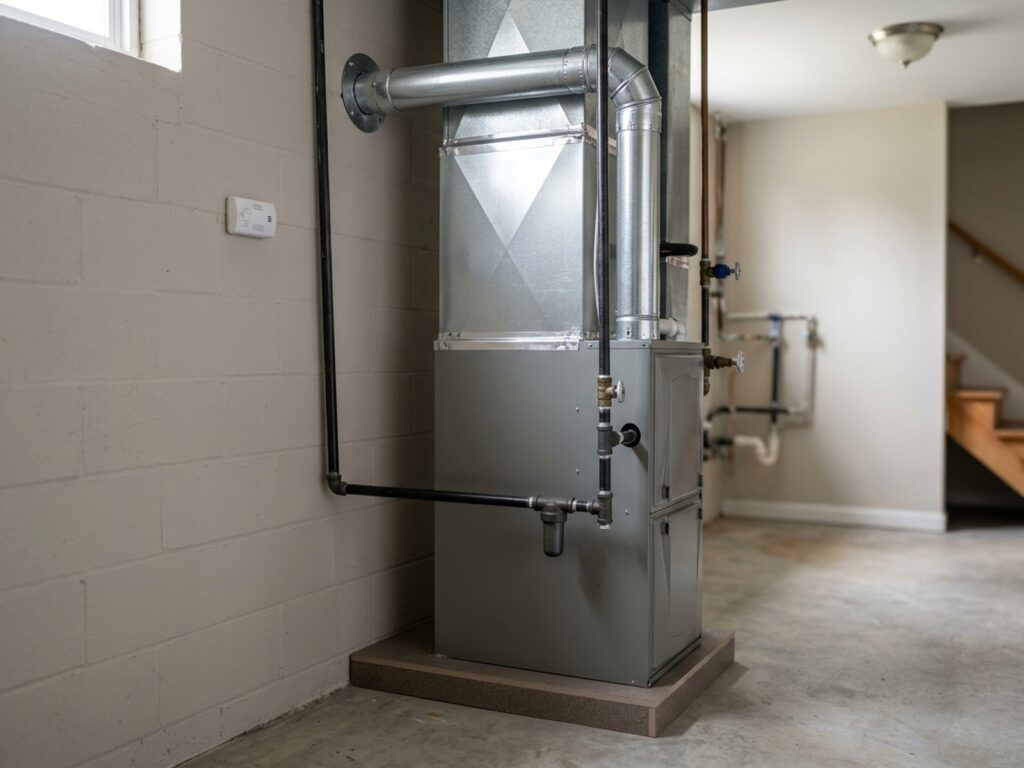
Three odors mean stop using the furnace and get help. They are worth knowing by name before the heating season starts, because each one points at a different hazard.
Rotten eggs or sulfur
Natural gas has no odor of its own. Utilities add mercaptan specifically so a leak smells like rotten eggs. Duke Energy, which serves much of this region, instructs customers who smell that odor to leave the area immediately and avoid anything that could create a spark: no light switches, no phones, no garage door opener, no vehicle.
Get everyone out of the house first. Call the gas utility’s emergency line or 911 once you are outside and well away. Do not go back in to look for the leak, and do not try to shut off the furnace on your way out.
Burning plastic, melting, or a sharp electrical odor
This is the smell of insulation, wiring, a capacitor, or a blower motor getting far hotter than it should. Shut the system off at the thermostat, then switch off the furnace circuit at the electrical panel. Leave it off and schedule a repair. Continuing to run a system that smells like melting plastic risks turning a component failure into a fire.
Smoke, soot, or an exhaust smell inside the house
Combustion byproducts belong in the flue, not in your living room. An exhaust or smoky odor indoors can indicate a cracked heat exchanger, a blocked vent, or a venting failure, and those are the conditions that put carbon monoxide into the house. Leave and call 911 if the smell is strong or anyone feels ill. Otherwise shut the system down and get it inspected before it runs again.
Carbon monoxide itself has no smell at all, which is why the odor is not the warning system. The U.S. Consumer Product Safety Commission recommends you install CO alarms on every level of the home and outside sleeping areas. Check the manufacture date printed on each alarm. CO sensors expire, and an alarm older than its rated life is not protection.
What can you safely check yourself?
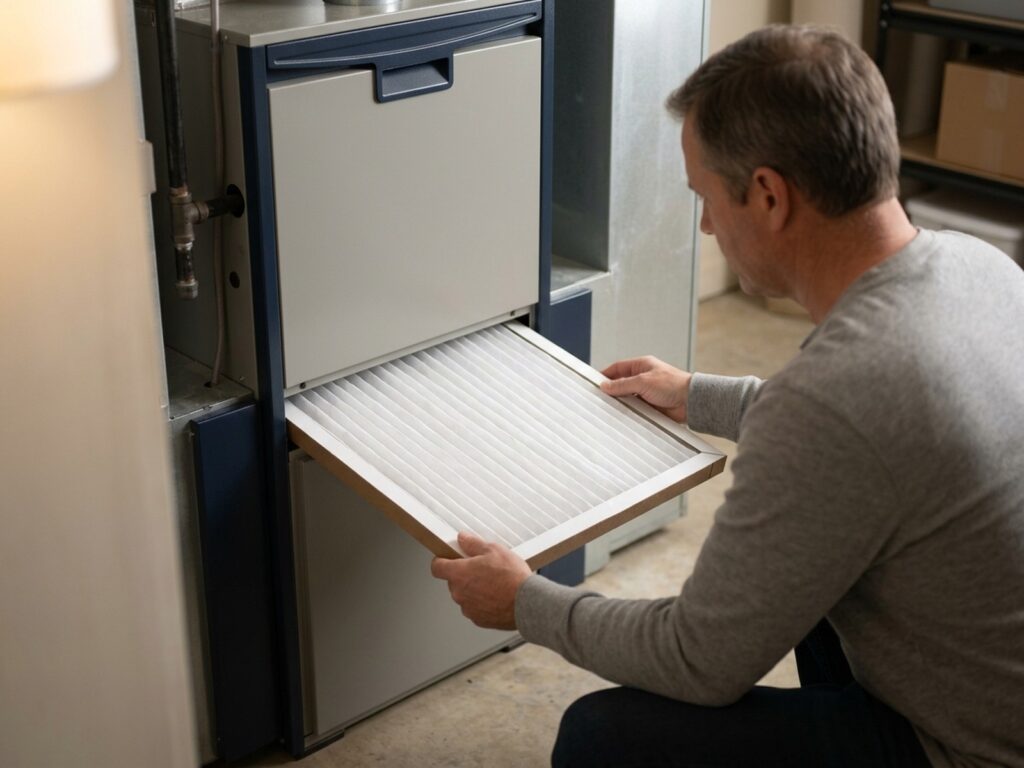
Safe homeowner checks stop at the filter, the vents, the thermostat, and the area around the furnace. Do not open the furnace cabinet, do not remove burner covers, and do not test live electrical components.
Start with the filter
A clogged filter restricts airflow, which lets the heat exchanger run hotter than designed and makes any dust smell worse. Start the heating season with a fresh filter. The U.S. Department of Energy’s Energy Saver guide lists clean filters and unblocked registers among the basic maintenance steps that keep a system operating as intended.
If you are unsure which filter rating to use, our guide to choosing an air filter and MERV rating walks through it.
Clear the space around the furnace
Over the summer, closets and garages accumulate things. Boxes, paint cans, cleaning supplies, and stored fabric near a furnace can produce their own odors when the cabinet heats up, and they are a fire risk regardless of smell. Give the unit clear space on all sides.
Look at the vents and registers
Walk the house and confirm supply registers are open and unobstructed by furniture or rugs. Closed registers in several rooms raise system pressure and operating temperature.
Note what you observe
Before you call, write down three things: what the smell is closest to, how long after startup it appears, and whether it is getting stronger or weaker. That description shortens diagnosis considerably.
What causes a burning smell that is not just dust?
When the odor outlasts the first hour, a technician is generally looking at one of a handful of causes.
- A failing blower motor. Worn bearings make the motor run hot, producing a hot-metal or electrical smell, often alongside a whine or grinding noise.
- A slipping or deteriorated belt on older belt-driven units, which smells like hot rubber.
- Restricted airflow from a heavily loaded filter or closed ductwork, which overheats the heat exchanger and can trip the high-limit switch repeatedly.
- Electrical faults, such as a failing capacitor, loose connection, or damaged wire insulation, all of which smell sharp and plastic-like.
- A cracked heat exchanger, which can let combustion odors reach the supply air. This one is a safety issue rather than a comfort issue; our overview of the signs of a cracked heat exchanger covers what technicians look for.
- Foreign material that found its way into the cabinet or ductwork over the summer, including rodent nesting.
None of these are homeowner repairs. Each one requires opening equipment, and several involve gas or line-voltage electrical work.
How do you avoid the smell next season?
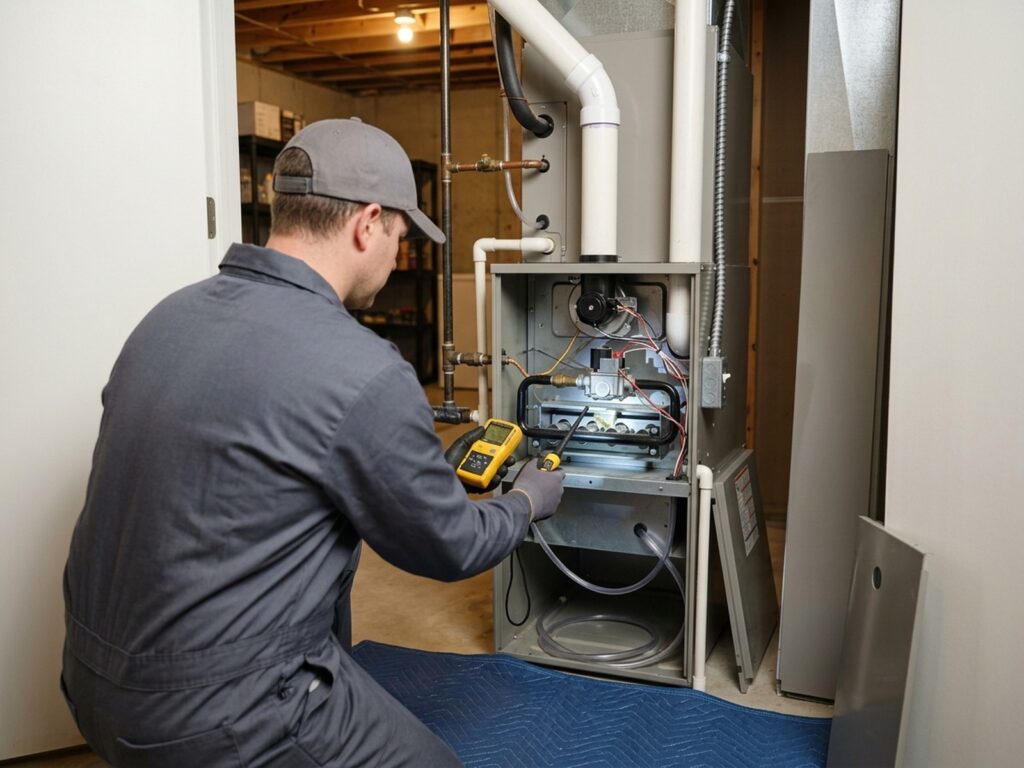
A fall tune-up before the first cold night is the practical answer. The technician cleans the burners and heat exchanger surfaces where dust accumulates, checks the blower, verifies venting, and tests the safety controls, which removes most of the dust that would otherwise burn off and catches the conditions that create the odors you do not want.
Running the heat for fifteen or twenty minutes on a mild October afternoon is also worth doing. You discover the season’s problems on a day when a repair is scheduled at your convenience, instead of on the first 28-degree morning when everyone in York County is calling at once. Our fall furnace tune-up checklist covers what that visit should include.
Frequently asked questions
Why does my heater smell like burning dust every year?
Dust settles on the heat exchanger and burners through the months the system sits idle, then burns off on the first heating cycle. It happens annually because the idle period happens annually. A fall tune-up that cleans those surfaces reduces it noticeably.
How long should a furnace burning smell last?
About an hour of runtime, weakening the whole time. A smell that is still at full strength after that, or that returns strongly days later, needs to be diagnosed rather than waited out.
Is a burning smell from the furnace dangerous?
The dusty first-run smell is not. A burning plastic or electrical smell, a rotten-egg smell, or a smoky or exhaust smell indoors all are, and each one means shut the system down. Rotten eggs means leave the house first and call from outside.
Should I open windows when the furnace smells like burning?
Yes, for the ordinary dust burnoff. Cracking a few windows ventilates the house while the dust clears. If the smell is gas, plastic, or smoke, leave the house rather than ventilating it.
Can a dirty filter cause a burning smell?
Yes. A clogged filter restricts airflow and lets the heat exchanger run hotter than it should, which intensifies any dust odor and can trip the system’s high-limit safety switch. Replace the filter before the heating season starts.
What if the burning smell comes with the furnace shutting off by itself?
That pattern usually means the high-limit switch is doing its job and shutting the burners down on overheat. Airflow is likely restricted somewhere. Replace the filter, open the registers, and if it continues, schedule service rather than repeatedly resetting it.
Get it checked before the first cold night
If the smell is not plain dust, or it has outlasted that first hour, have it looked at now rather than during the first freeze. Atlas Heating & Cooling handles heating repairs across Rock Hill, York County, and the surrounding Carolinas service areas, and a fall diagnostic on a mild day is a far easier appointment to get than an emergency call in January.
Call (803) 839-0020 to schedule.