A gas furnace that runs but blows cold air is usually still trying to heat: the blower is working while the burners either never lit or shut down early. The pattern you observe in the first two minutes tells you most of what a technician would want to know.
Four of the possible causes are things you can check and sometimes fix yourself in under ten minutes. The rest require opening the equipment, which is technician work. This guide separates the two, in the order worth working through on a cold morning in Rock Hill.
Why is my furnace blowing cold air?
A furnace blows cold air when the blower runs without sustained combustion behind it. Either the burners never ignited, or they lit and then a safety control shut the gas off while the fan kept going.
The most common reasons, roughly in the order technicians encounter them:
- The thermostat fan is set to ON instead of AUTO, so the blower runs continuously between heating cycles
- A dirty flame sensor cannot confirm the flame, so the control board closes the gas valve seconds after ignition
- A clogged filter restricts airflow, the heat exchanger overheats, and the limit switch shuts the burners down
- Closed or blocked registers create the same overheat condition as a clogged filter
- The gas supply to the furnace is off, or the pilot on an older unit has gone out
- The condensate drain on a high-efficiency unit is blocked, tripping a safety switch
- A failed igniter, gas valve, or control board
What should you check first?
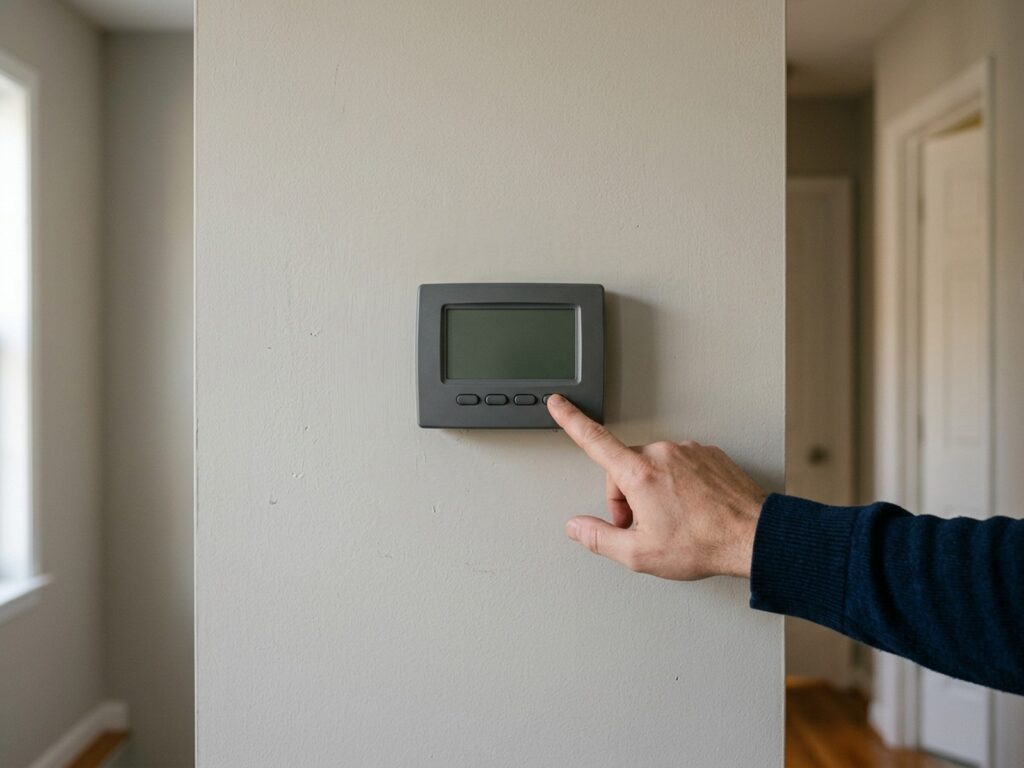
Start with the four checks that need no tools and carry no risk. Do them in this order.
1. Set the thermostat fan to AUTO
This is the single most common false alarm. With the fan set to ON, the blower runs constantly, including during the long stretches between heating cycles, when the air moving through the vents is simply room temperature. Switch the fan to AUTO and confirm the mode is HEAT with the setpoint several degrees above the current room temperature.
If the vents now blow warm during a heating call and nothing during the gaps, nothing is wrong.
2. Replace the filter
A loaded filter starves the furnace of return air. The heat exchanger climbs past its design temperature, and the high-limit switch cuts the burners to protect it while the blower keeps running to shed heat. Cold air out of the vents is the direct symptom.
If the filter is grey and matted, replace it and run the system again. Our air filter and MERV guide covers which rating suits a residential system without over-restricting airflow.
3. Open every supply register
Walk the house. Registers closed for the summer, or blocked by a sofa or rug, reduce airflow the same way a clogged filter does. Open them all, including the rooms you do not use.
4. Confirm the furnace has gas and power
Check that the gas shutoff valve at the furnace is in line with the pipe, that the furnace switch (it looks like a light switch, usually on or near the unit) is on, and that the breaker has not tripped. If you have an older furnace with a standing pilot and the pilot is out, follow the lighting instructions printed on the unit, and if it will not stay lit, stop there and call.
Carrier’s troubleshooting guidance covers this same first pass of thermostat, filter, airflow, and gas supply before any component diagnosis.
What does the burner cycle tell you?
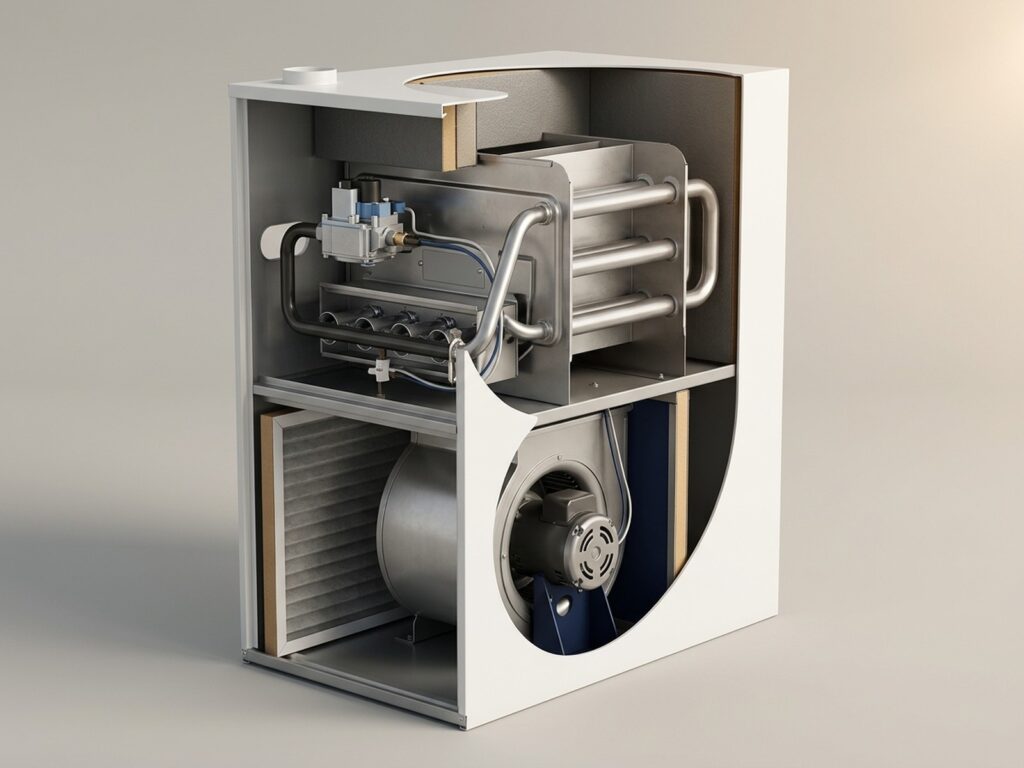
Watch what the furnace does across one full call for heat. The timing is diagnostic.
| What you observe | Most likely cause | Homeowner fix? |
|---|---|---|
| Blower runs constantly, never any warm air | Fan set to ON | Yes, switch to AUTO |
| Burners light, then go out after 3–10 seconds, repeatedly | Dirty or failing flame sensor | No |
| Warm air for several minutes, then cold, then the system shuts down | Limit switch tripping on overheat | Filter and registers first, then call |
| Igniter glows but burners never light | Gas supply or gas valve | Check the shutoff, then call |
| No igniter glow, no burner, blower only | Igniter, control board, or safety lockout | No |
| Runs fine, then locks out after several cycles | Blocked condensate drain or venting | No |
The three-to-ten-second pattern is worth knowing by name. The burners light, the flame sensor fails to verify the flame, and the control board closes the gas valve as a safety response, leaving the blower running on cold air. Lennox describes this flame sensor failure as one of the standard causes of a furnace blowing cold. The sensor is a thin metal rod sitting in the flame; years of normal operation coat it, and the signal weakens. Cleaning it is a service call, not a homeowner job, because it means opening the burner compartment.
When should you stop and call a technician?
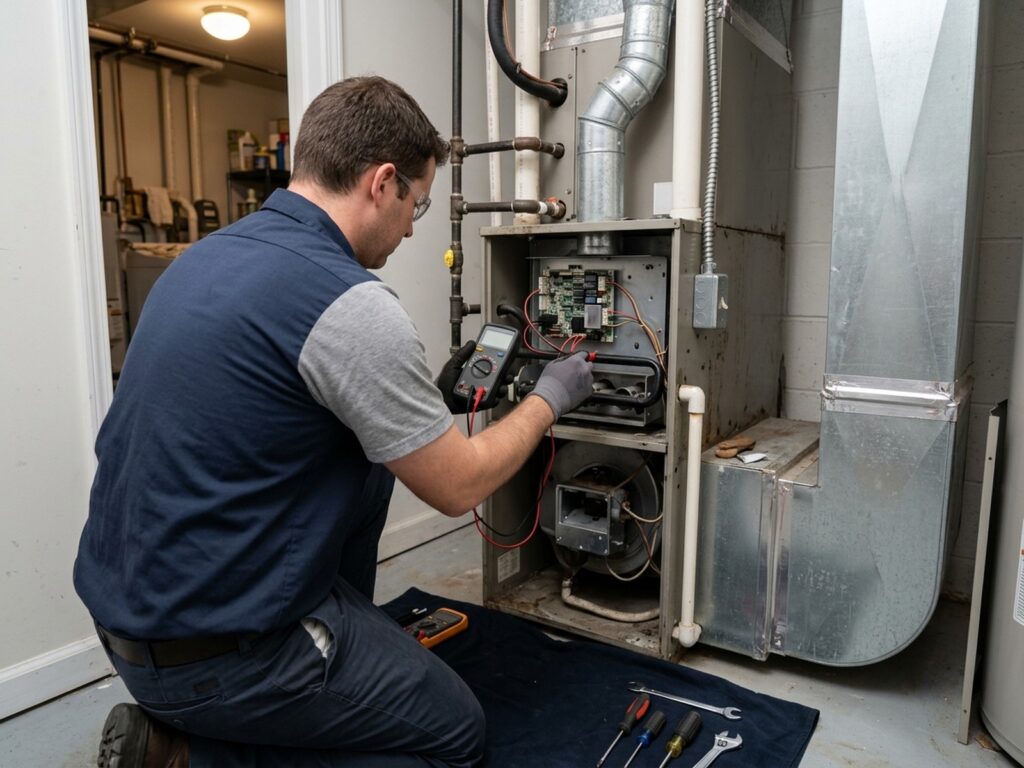
Stop after the four safe checks. Everything past that point involves gas, line voltage, or the burner compartment.
Call right away, rather than continuing to cycle the system, if any of these apply:
- The furnace lights and shuts off repeatedly. Short-cycling on a safety control stresses components and does not fix itself
- You smell rotten eggs or sulfur: leave the house first, then call the gas utility or 911 from outside
- You smell burning plastic or see any smoke: shut the system off at the breaker before calling
- The breaker trips again after you reset it once
- A pilot light will not stay lit
- You have already replaced the filter and opened the registers, and the behavior has not changed
Repeatedly resetting a furnace that keeps tripping its limit switch is the pattern that turns a filter problem into a cracked heat exchanger. Our overview of what a cracked heat exchanger looks like explains why that matters beyond comfort.
If the system is also making a noise you have not heard before, or throwing an error code on the control board, note both before you call. Most furnaces flash a diagnostic code through a small window on the cabinet; counting the flashes gives the technician a head start.
Is it different if you have a heat pump?
Yes, and it is worth checking which system you actually have. A heat pump delivering air in the 90s feels cool against your skin even though it is heating correctly, and a heat pump in its defrost cycle will blow genuinely cool air for a few minutes by design. Neither is a fault.
We cover that distinction in detail in heat pump blowing cold air, and what to do when a heat pump freezes up in winter covers the icing side. If your outdoor unit runs in winter, you likely have a heat pump rather than a straight gas furnace, and the troubleshooting path is different.
Frequently asked questions
Why is my furnace running but not blowing hot air?
The blower is running while the burners are off. Either the thermostat fan is set to ON, or a safety control shut the gas down while the fan kept going. Set the fan to AUTO first, then replace the filter.
Can a dirty filter cause a furnace to blow cold air?
Yes, and it is one of the most common causes. Restricted airflow overheats the heat exchanger, and the high-limit switch cuts the burners while the blower continues running to shed heat.
Why does my furnace blow warm air then cold air?
That is the limit switch tripping partway through the cycle: the furnace heats, overheats, and shuts the burners down. Airflow is restricted somewhere. Start with the filter and the registers.
What is a flame sensor and why does it make the furnace blow cold?
The flame sensor is a metal rod that confirms the burners actually lit. When residue coats it, it cannot verify the flame, so the control board shuts off the gas within seconds as a safety measure, while the blower keeps running. Cleaning or replacing it is a service call.
Should I keep resetting my furnace if it blows cold air?
No. If it locks out repeatedly, a safety control is doing its job and something upstream is wrong. Repeated resets stress the heat exchanger and can turn a cheap repair into an expensive one.
How much does it cost to fix a furnace blowing cold air?
It depends entirely on the cause: a filter is a few dollars, a flame sensor cleaning is a standard service call, and a control board or gas valve is considerably more. Our guide to average furnace repair costs in Rock Hill breaks down the common repairs.
Schedule a heating diagnostic
If the four safe checks did not change anything, the next step is a technician with a manometer and a multimeter, not another reset. Atlas Heating & Cooling handles heating repairs throughout Rock Hill, York County, and the surrounding Carolinas service areas.
Call (803) 839-0020 to schedule a diagnostic.