Published national data puts a typical gas furnace replacement somewhere between roughly $3,500 and $7,500 installed, with high-efficiency systems and complicated installs running higher. That range is wide for a reason: the equipment is often the smaller half of the number.
What moves the price is the work around the equipment: the size the house actually needs, the efficiency tier, the venting a high-efficiency unit requires, and whatever the existing ductwork and gas line will and will not support. This guide walks through each of those so you can read a quote and understand what you are looking at, rather than comparing two numbers with no idea why they differ.
One thing up front: no honest contractor can price your furnace over the phone. Anyone who does is guessing at a load calculation, and a guessed size is the single most expensive mistake in this category.
What is the typical cost of a new furnace?
For a standard-efficiency gas furnace in a typical single-family home, published 2026 figures cluster in the $3,500 to $7,500 installed range. Angi’s project data puts the national average furnace installation near $4,800, drawn from verified completed projects. Carrier’s own buyer guidance describes a similar spread once installation is included, with high-efficiency models sitting at the upper end.
Treat those as orientation, not as a quote. They are national averages across every house type, climate, and install condition in the country. Your number depends on the six factors below.
What actually drives the price?
1. The size the house needs
Furnace capacity is measured in BTUs, and the correct capacity comes from a Manual J load calculation, which accounts for square footage, insulation levels, window area and orientation, ceiling heights, duct location, and air sealing. Not from a rule of thumb, and not from matching whatever is currently installed.
That last part matters more than most homeowners expect. A great many existing systems are oversized, often significantly. Replacing an oversized furnace with an equally oversized one carries the problem forward: short cycling, uneven temperatures between rooms, more wear on the ignition components, and higher bills. Our AC sizing guide for South Carolina homes explains how the same calculation works on the cooling side.
2. Efficiency tier
AFUE measures how much of the fuel becomes usable heat. An 80% AFUE furnace sends roughly a fifth of the fuel’s energy out the flue; a 95%+ condensing furnace captures much more of it. High-efficiency equipment costs more up front and returns it through lower gas use over the system’s life.
In the Carolinas, that payback math is genuinely different from the Midwest. We have a mild heating season, so annual gas consumption is lower and the efficiency premium takes longer to recover than it would in Ohio. That is an argument for running the numbers on your actual usage rather than assuming the highest AFUE is automatically correct. Our explainer on AFUE efficiency ratings covers how to read them.
3. Venting requirements
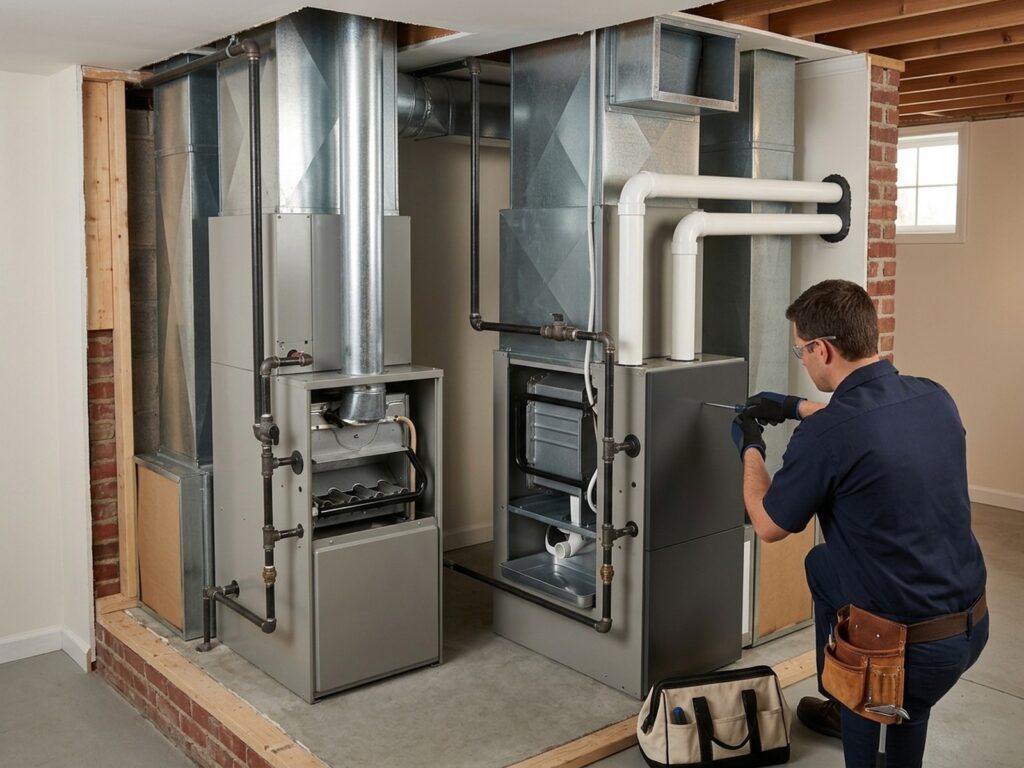
This is the cost factor homeowners most often do not see coming. A condensing high-efficiency furnace produces acidic condensate and cool exhaust, so it cannot vent through the existing masonry chimney the way an 80% unit does. It needs new PVC venting run to an exterior wall, plus a condensate drain with somewhere to go.
If your house has never had a high-efficiency furnace, moving up to one means paying for that venting work on top of the equipment. Published estimates commonly put new venting and associated modifications in the range of an additional $1,000 to $3,500 depending on the run.
4. Ductwork condition
A new furnace pushing air through leaky or undersized ducts delivers less than you paid for. If the assessment finds significant leakage, crushed flex runs, or returns too small for the system, repairs or modifications get quoted alongside the equipment. Skipping that work is how people end up with a new furnace and the same cold back bedroom.
5. Fuel or system conversion
Switching from electric to gas, or from a furnace to a heat pump, changes the scope substantially: gas line work, electrical changes, new outdoor equipment, or all three. If you are weighing that decision, heat pump vs. AC and furnace for a Carolinas home and which is cheaper to run here are the two to read first. In this climate the heat pump question is a real one, not a formality.
6. Permits and code
Rock Hill and York County require permitting and inspection for HVAC replacement. That is a line item, and it is one you want on the quote. A permitted, inspected install is what protects you if the equipment is ever questioned during a home sale. Our note on HVAC replacement permits in Rock Hill and York County covers what is involved.
What should a real quote include?
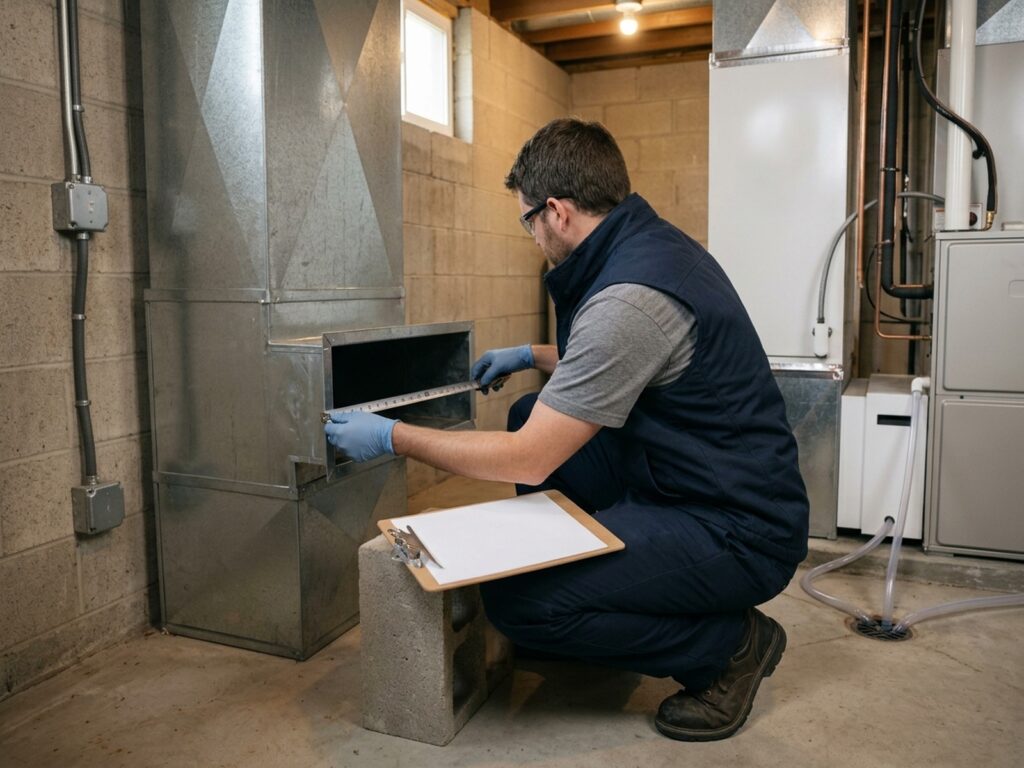
A quote you can actually compare against another quote shows its work. Look for:
| Line item | What to look for |
|---|---|
| Load calculation | A Manual J result, not “same size as the old one” |
| Equipment | Make, model number, BTU capacity, AFUE rating |
| Venting | Whether new venting is included, and what type |
| Condensate handling | Drain routing for a high-efficiency unit |
| Ductwork | Any repairs, resizing, or sealing, itemized |
| Thermostat | Included or not, and which one |
| Permit | Listed explicitly |
| Old equipment | Removal and disposal |
| Labor | Scope and crew time |
| Warranty | Manufacturer parts warranty and the labor warranty, stated separately |
Two quotes that differ by thousands usually differ in scope, not in margin. When they do, the cheaper one is frequently the one that left out the venting or the duct repair, which you will pay for later, at a worse time.
Our checklist for evaluating residential HVAC contractors and what to ask before signing a quote go deeper on this.
Should you repair or replace?
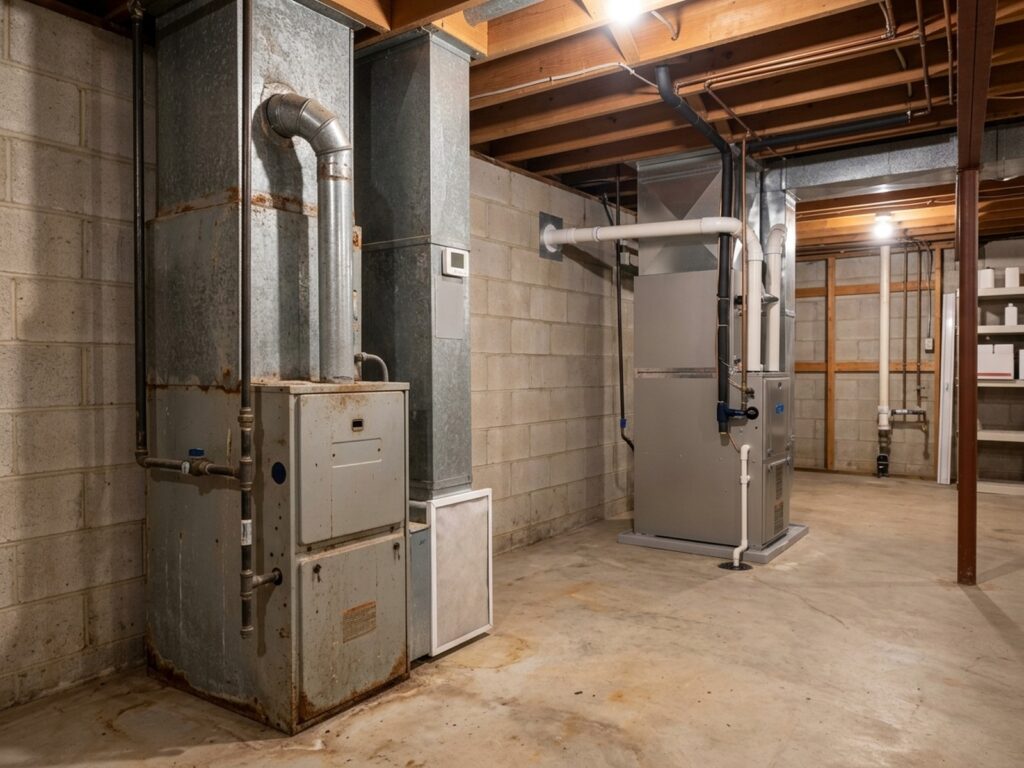
Replacement is not automatically the answer, and a furnace with years left does not need to be replaced because one part failed. The practical test is the combination of age, repair history, and the cost of the repair in front of you relative to a replacement.
A furnace past roughly fifteen years, facing a major component repair (heat exchanger, control board, gas valve) and already showing rising bills or uneven heating, is usually a replacement conversation. A ten-year-old unit needing a flame sensor is not. We cover the decision in when to replace a furnace instead of repairing it, and average furnace repair costs in Rock Hill gives the other half of the comparison.
Are there rebates or financing?
Efficiency incentives exist and they change from year to year, so verify current eligibility rather than relying on last year’s figures. Federal energy-efficiency tax credits, manufacturer promotions, and utility programs can each apply depending on the equipment and the year. Our overviews of HVAC tax credits and rebates in South Carolina and heat pump rebates and credits for 2026 cover the categories. Confirm the current-year specifics with a tax professional or the program directly before counting on them.
For spreading the cost, HVAC financing in Rock Hill walks through how that typically works.
Frequently asked questions
How much does a new furnace cost installed?
Published 2026 national figures generally put gas furnace replacement between about $3,500 and $7,500 installed, with high-efficiency and complex installations running higher. Your actual number depends on sizing, efficiency tier, venting, and duct condition.
Why do furnace quotes vary so much?
Usually because the scope differs. New venting for a high-efficiency unit, duct repairs, a gas line change, or a permit included in one quote and omitted from another can account for thousands of dollars of difference.
How long does a furnace last?
Commonly fifteen to twenty years with regular maintenance, though the number varies with usage, install quality, and how consistently the system was serviced. In the Carolinas, mild winters mean furnaces often see fewer running hours than in colder states.
Is a high-efficiency furnace worth it in South Carolina?
It depends on your actual gas usage. Our heating season is short, so the annual savings from a higher AFUE are smaller here than in a cold climate, and the payback period is correspondingly longer. It is worth running against your real bills rather than assuming.
Do I need a permit to replace a furnace in Rock Hill?
Yes. HVAC replacement in Rock Hill and York County requires permitting and inspection, and it should appear as a line item on your quote.
Can you quote a furnace over the phone?
Not accurately. The size has to come from a load calculation on your house, and the installation scope depends on what the existing venting, ductwork, and gas supply will support. A phone number is a guess.
Get a real number for your house
The honest answer to “what will it cost” comes after someone walks your house, runs the load calculation, and looks at the venting and ductwork. Atlas Heating & Cooling handles furnace installation across Rock Hill, York County, and the surrounding Carolinas service areas, and the assessment is where the real number comes from.
Call (803) 839-0020 to schedule an in-home evaluation.