Carbon monoxide has no color, no taste, and no smell. That is the entire reason this article exists: you cannot detect it with your senses, so a working alarm is not a nice-to-have backup. It is the only warning system you get.
A properly operating, properly vented gas furnace does not put carbon monoxide into your house. The risk comes from specific failure conditions, most of which a fall inspection is designed to find. This guide covers where alarms belong, what makes a furnace produce CO in the first place, the symptoms worth recognizing, and what to do if an alarm sounds.
If your CO alarm is sounding right now, get everyone outside into fresh air and call 911 from outside. Do not stop to open windows or investigate.
Can a gas furnace leak carbon monoxide?
Yes, under specific failure conditions, but a correctly installed, correctly vented, well-maintained furnace should not. Carbon monoxide is a byproduct of incomplete combustion, and in a healthy system it goes up the flue and outside.
CO reaches living space when something in that chain breaks:
- A cracked heat exchanger lets combustion gases mix with the air the blower is pushing through your ducts. This is the failure homeowners most associate with CO, and it is the one that puts it directly into the supply air.
- A blocked or damaged flue backs exhaust up into the house instead of venting it. Bird nests, collapsed liners, and debris all do this.
- Insufficient combustion air starves the burners, producing incomplete combustion and more CO than the system is designed to handle.
- A disconnected or corroded vent pipe, which simply dumps exhaust into a crawlspace, attic, or utility closet.
- A badly adjusted burner running rich.
- Unrelated sources in the same house, such as a gas water heater sharing a blocked flue, a vehicle idling in an attached garage, a generator run too close to the house, or an unvented space heater.
Our overview of the signs of a cracked heat exchanger covers the one most people ask about.
Where should carbon monoxide alarms go?
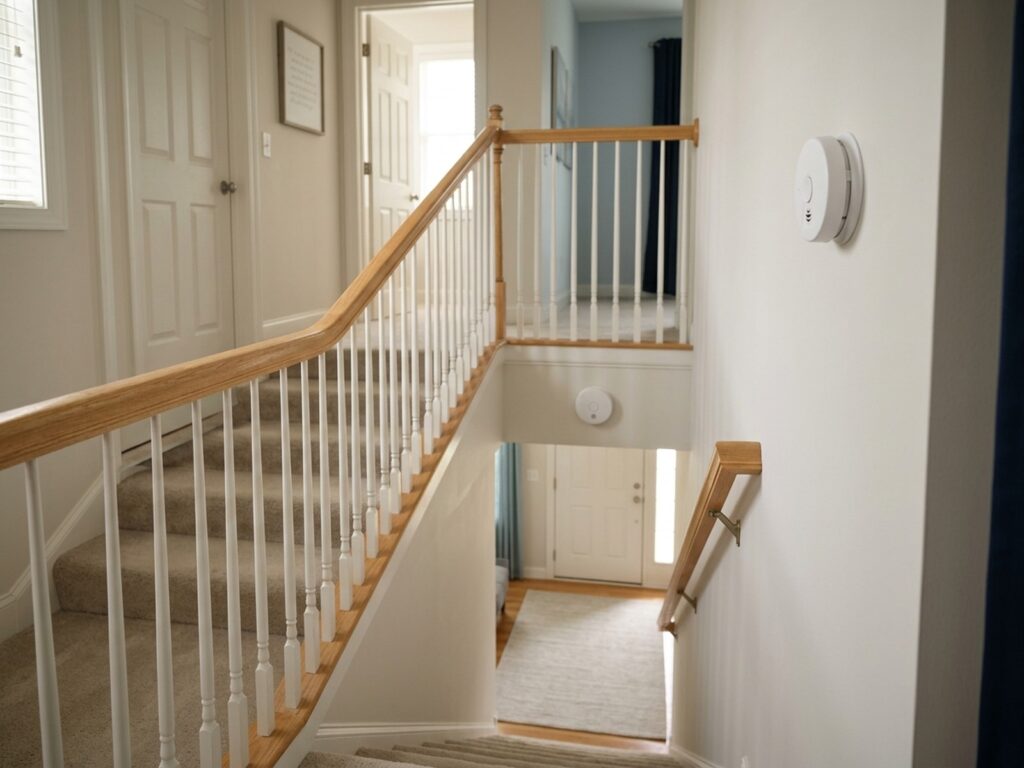
The U.S. Consumer Product Safety Commission recommends installing battery-operated CO alarms, or alarms with battery backup, on every level of the home and outside sleeping areas.
In practice, for a typical York County house:
| Location | Why |
|---|---|
| Outside each sleeping area | CO poisoning most often happens while people sleep |
| Every level, including the basement | CO mixes through the house rather than settling in one layer |
| Near an attached garage | Vehicle exhaust is a common source |
| Follow the manufacturer’s instructions for the room | Each model specifies mounting height and placement |
Avoid mounting alarms directly above or beside a fuel-burning appliance, in a bathroom, or in dead air space in a corner. Those locations produce nuisance alarms or miss real events. The manufacturer’s instructions for your specific model govern.
Alarms expire, and most people do not know it
CO sensors degrade. Every alarm has a manufacture date and a rated service life printed on the housing, and past that date the sensor may not respond even though the unit still powers on and chirps. Pull each alarm off the wall once a year, read the date, and replace any that have reached end of life.
Test every alarm monthly with the test button, and replace batteries on the schedule the manufacturer specifies.
What are the symptoms of carbon monoxide exposure?
CO symptoms imitate the flu, which is precisely what makes them dangerous in heating season: people attribute them to a virus during the exact months a furnace is running.
Common symptoms include headache, dizziness, weakness, nausea, vomiting, chest pain, shortness of breath, and confusion. Higher exposure causes loss of consciousness.
The pattern is the tell. Suspect CO when:
- Symptoms improve when you leave the house and return when you come back
- More than one person, or the pets, feel ill at the same time
- Symptoms started around the time the heat started running for the season
- There is no fever: CO poisoning does not cause one, the flu usually does
Anyone who is unconscious, confused, or struggling to breathe needs 911 immediately.
What should a fall furnace safety check cover?
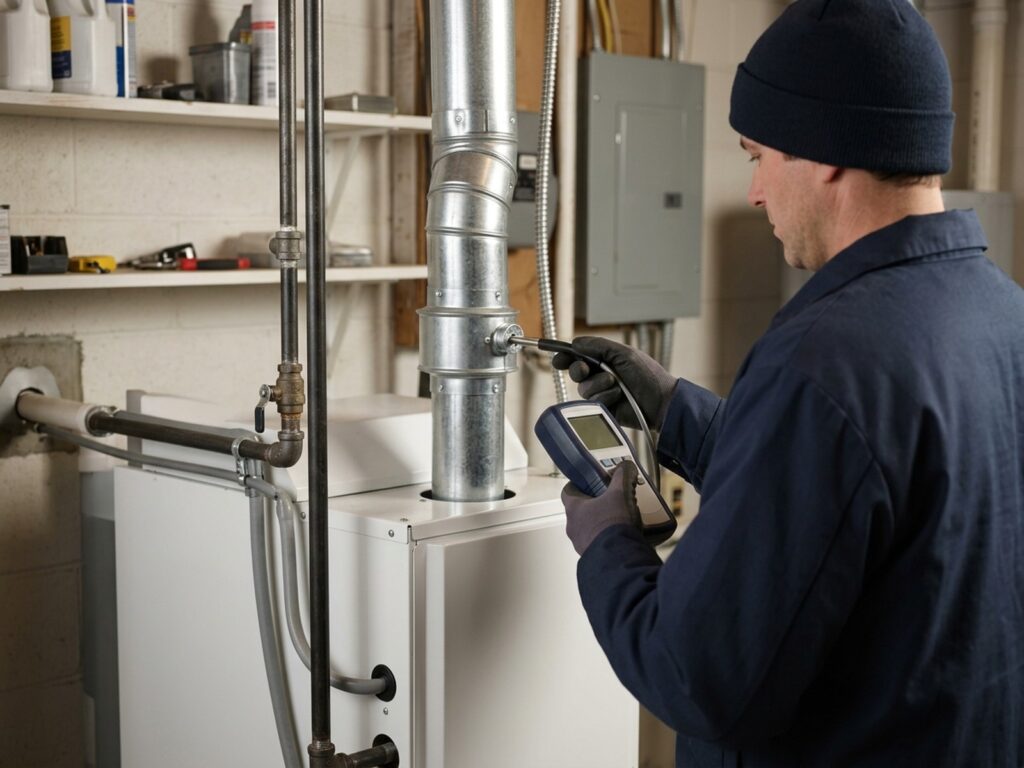
This is the annual visit’s real purpose. Comfort is the side benefit; combustion safety is the point. A proper heating inspection includes:
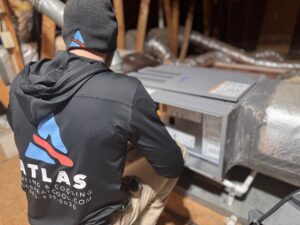
- Heat exchanger inspection for cracks, corrosion, and separation
- Flue and vent inspection end to end: connections, slope, corrosion, blockages, and termination
- Draft testing to confirm exhaust is actually leaving the building
- Burner inspection and cleaning, with a look at flame characteristics
- Combustion analysis where the equipment and conditions call for it
- Safety control testing: limit switch, rollout switch, pressure switch, flame sensor
- Gas pressure and connection check for leaks
- Combustion air verification, confirming the space supplies what the appliance needs
- CO measurement in the living space
Our fall furnace tune-up checklist covers the full visit.
Between visits, keep the area around the furnace clear, replace the filter on schedule, and never block combustion air openings in a furnace closet. Sealing up a drafty utility closet has caused more than one CO problem.
What should you do if the CO alarm sounds?
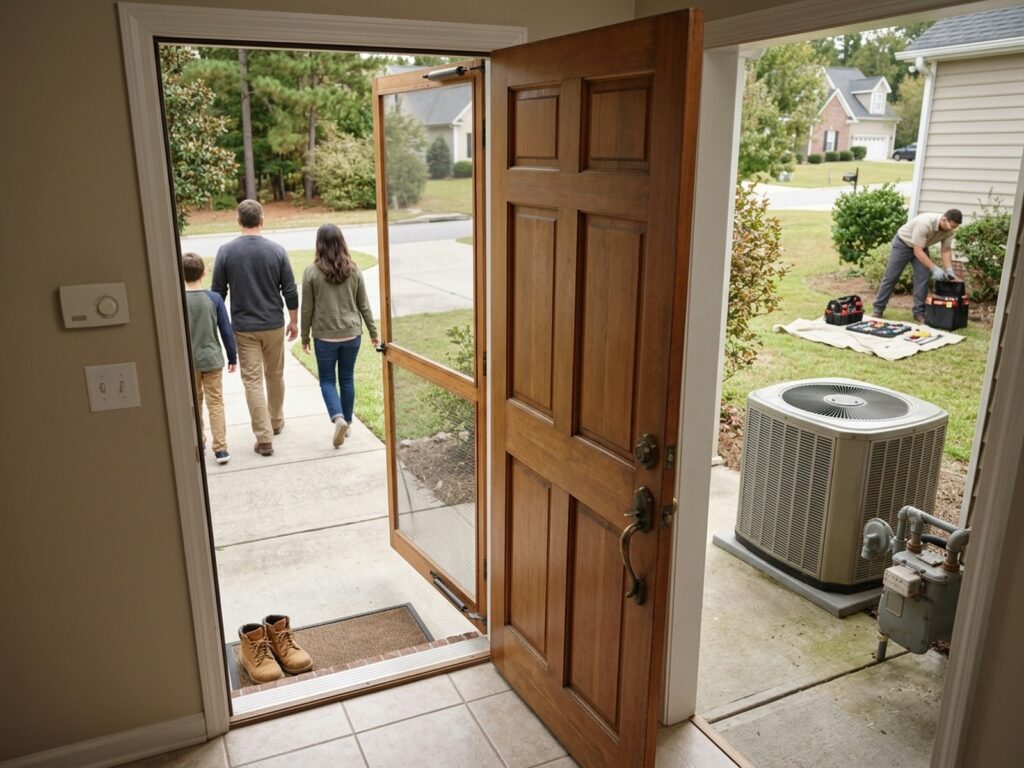
Treat every alarm as real. There is no safe way to evaluate it from inside.
- Get everyone outside immediately, including pets. Do not stop to ventilate or investigate.
- Call 911 from outside, away from the house.
- Do not go back in until the fire department or the gas utility says it is safe.
- Get medical attention for anyone with symptoms, and tell them you suspect CO exposure.
- Have the system inspected before anything fuel-burning runs again.
If you smell rotten eggs or sulfur, that is a separate emergency: a natural gas leak, not CO. Duke Energy’s guidance is to leave immediately and avoid anything that could create a spark: no light switches, no phones, no garage door. Call the utility or 911 once you are well away from the house.
Frequently asked questions
Can you smell carbon monoxide?
No. Carbon monoxide is odorless, colorless, and tasteless. Any smell you notice from a furnace is something else: dust burning off, a gas leak, or an electrical problem. A CO alarm is the only way to detect it.
How do I know if my furnace is leaking carbon monoxide?
You cannot know by sense. Indicators that warrant an immediate inspection include a CO alarm sounding, flu-like symptoms that improve when you leave the house, soot around the furnace or vents, and excessive moisture on windows near the unit. A technician confirms it with a combustion analyzer.
Where should I put a carbon monoxide detector?
On every level of the home and outside each sleeping area, per CPSC guidance, following the manufacturer’s mounting instructions for the specific model.
How often should carbon monoxide detectors be replaced?
CO sensors have a limited service life, and each alarm has a manufacture date and rated lifespan printed on it. Check the date annually and replace any alarm that has reached the end of the period its manufacturer specifies.
Does a cracked heat exchanger always mean carbon monoxide?
Not automatically, but it is a genuine safety defect that can allow combustion gases into the supply air, and it is not repairable. A furnace with a confirmed cracked heat exchanger should be shut down until it is replaced.
Is a new furnace safer from carbon monoxide?
A new, correctly installed, correctly vented furnace with functioning safety controls is generally safer than an aging unit with an unknown heat exchanger condition. Installation quality and venting matter as much as the equipment age.
Book the fall heating inspection
The annual heating inspection is the check that finds a cracked heat exchanger or a blocked flue before the season runs on it. Atlas Heating & Cooling handles heating repairs and safety inspections across Rock Hill, York County, and the surrounding Carolinas service areas.
Call (803) 839-0020 to schedule.