The U.S. Department of Energy’s standard guidance is 68°F while you are home and awake in winter, with a setback of 7 to 10 degrees for about eight hours a day saving as much as 10% a year on heating and cooling.
That advice is sound if you heat with a gas furnace. If you heat with a heat pump, the setback half of it can cost you money instead of saving it. That distinction is the single most useful thing a Carolinas homeowner can know about their thermostat, and it is the thing most winter-thermostat articles skip. A large share of homes in York County run heat pumps.
This guide covers the baseline setting, why heat pumps break the setback rule, what to do at night and when you leave, and the thermostat settings that quietly run up a power bill.
What is the recommended winter thermostat setting?
68°F while you are home and awake is the standard recommendation, and it is a reasonable starting point for most households. The Department of Energy’s Energy Saver guide puts the savings at “as much as 10% per year on heating and cooling by turning your thermostat down 7°–10°F for 8 hours a day in the fall and winter.”
Treat 68 as a starting point, not a mandate. Adjust for who lives in the house: infants, elderly residents, and anyone with a medical condition affected by cold may need a warmer setting, and that is the right call regardless of what a savings chart says.
The bigger variable is which system you have.
Why is the advice different for a heat pump?
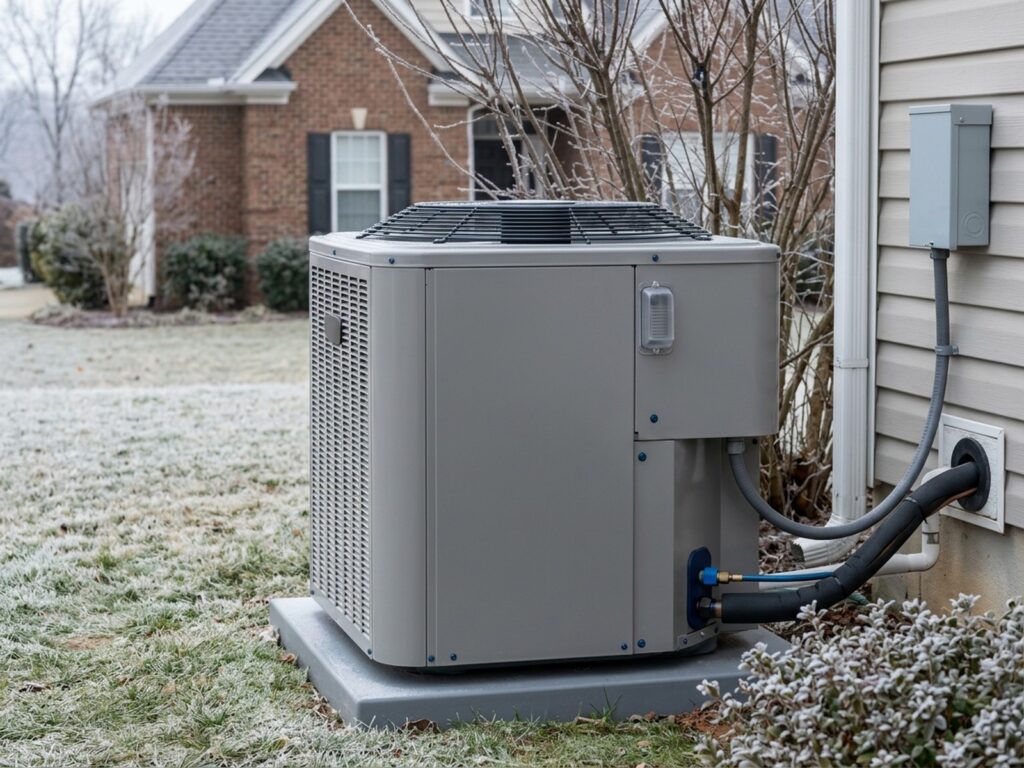
Because a heat pump recovering from a setback tends to bring on backup electric resistance heat, and that backup heat is expensive.
Here is the mechanism. A heat pump moves heat rather than generating it, which is what makes it efficient. But it heats gradually. When the thermostat calls for a large temperature jump (say you set it back to 62 overnight and bump it to 70 in the morning), the thermostat sees a gap it cannot close quickly and energizes the auxiliary electric heat strips to catch up. Those strips are essentially a giant toaster, and they consume far more electricity than the heat pump itself.
The Department of Energy attaches an explicit caveat to that same setback advice: “If you have a heat pump, don’t do this without a smart or programmable thermostat designed for use with heat pumps.” The reason is the backup heat described above: a thermostat built for heat pumps recovers gradually and holds the electric strips off, while an ordinary one calls for the full jump at once.
The practical rule for a heat pump: pick a comfortable temperature and leave it there. Small adjustments of 1 to 2 degrees are fine. Large overnight setbacks generally are not.
If you want to use a setback, the way to do it is with a heat-pump-capable thermostat that ramps the recovery slowly, starting well before you need the temperature. Our explainer on auxiliary heat versus emergency heat covers what those thermostat indicators mean and why aux heat is the line item on your bill.
What should you set it to, by system type?
| Situation | Gas furnace | Heat pump |
|---|---|---|
| Home and awake | 68°F | 68°F, held steady |
| Sleeping | Set back 7–10°F | Same setting, or at most 1–2°F lower |
| Away for the workday | Set back 7–10°F | Same setting, or at most 1–2°F lower |
| Away several days | 55–60°F (freeze protection) | 60–62°F, recover gradually on return |
| Fan setting | AUTO | AUTO |
| Emergency heat | Not applicable | Only when the heat pump has failed |
The “away several days” row matters in the Carolinas. Do not shut the heat off entirely when you travel in winter. Pipes in exterior walls, crawlspaces, and unheated garages freeze, and a burst pipe costs vastly more than the heat would have.
What thermostat mistakes actually cost money?
Cranking the thermostat to 80 to heat the house faster. It does not work. The system delivers heat at one rate regardless of the setpoint; you are not opening a valve wider. On a heat pump, the large gap triggers the expensive backup heat. On a furnace, you simply overshoot and then have to turn it back down.
Leaving the fan on ON instead of AUTO. The blower runs continuously, circulating room-temperature air between heating cycles, which feels like a draft and uses electricity for no benefit. It is also the most common cause of the “my furnace is blowing cold air” call. See furnace blowing cold air.
Running EM HEAT all winter. Emergency heat bypasses the heat pump entirely and runs on electric resistance heat alone. It exists for when the heat pump has failed. Some homeowners switch it on during a cold snap and forget it, then get a startling power bill. Use it only when the heat pump is genuinely not working.
Large nightly setbacks on a heat pump. Covered above, and this is the big one here.
A thermostat in the wrong place. A thermostat in direct sun, above a supply register, on an exterior wall, or in a drafty hallway reads a temperature the rest of the house is not experiencing, and the whole system chases a bad number.
Closing registers in unused rooms. This raises static pressure across the system rather than saving energy, and on a furnace it can trip the high-limit switch.
What else helps more than the thermostat number?
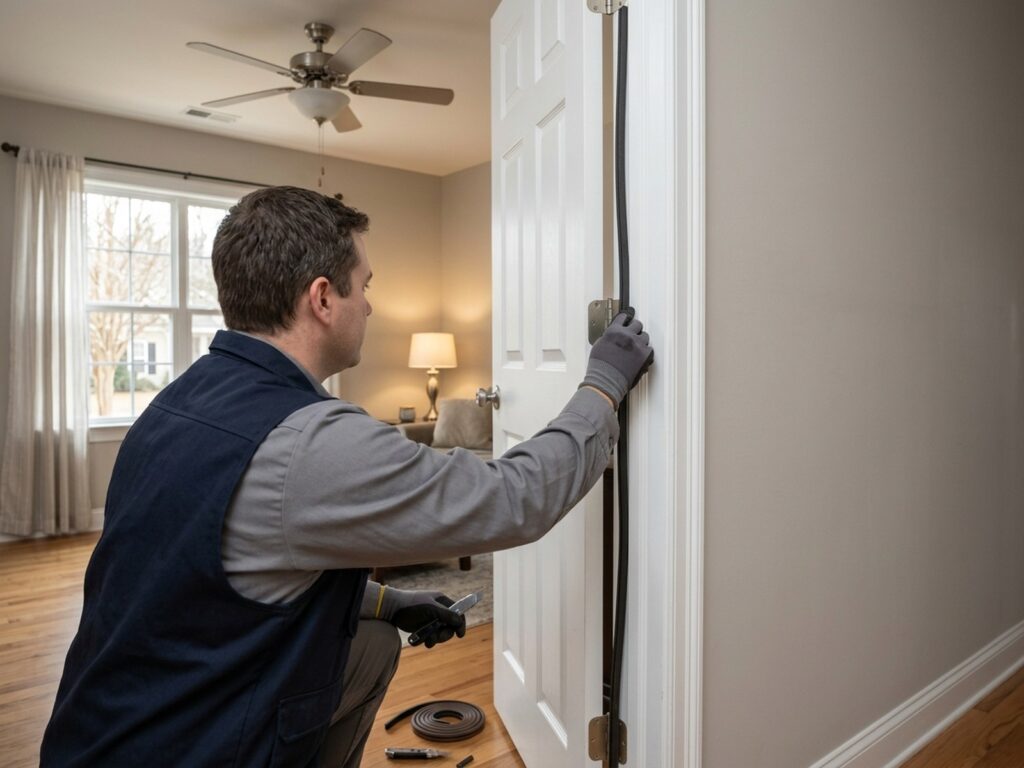
The thermostat setting is the smallest lever in the house. These matter more:
- A clean filter. Restricted airflow degrades efficiency across the whole system. Our air filter and MERV guide covers the choice.
- Sealing air leaks around doors, windows, attic hatches, and penetrations. A drafty house makes any setting feel colder.
- Ceiling fans reversed to clockwise on low, pushing warm air down from the ceiling without creating a wind-chill effect.
- Open curtains on the south side during the day, closed at night.
- Annual maintenance, which keeps the system operating at the efficiency it was rated for.
Our energy bill guide covers more of these.
Frequently asked questions
What temperature should I set my thermostat to in winter?
68°F while home and awake is the standard recommendation. Adjust for the people in the household: infants, elderly residents, and anyone with a cold-sensitive medical condition may need it warmer.
Should I turn the heat down at night with a heat pump?
Generally no, or only by a degree or two. A large setback triggers expensive backup electric heat when the system recovers, which typically cancels out the savings. Gas furnaces are the opposite: setbacks work well.
Does turning the thermostat up higher heat the house faster?
No. The system produces heat at a fixed rate regardless of the setpoint. On a heat pump, the large gap actually makes things worse by bringing on auxiliary heat.
What does EM HEAT mean on my thermostat?
Emergency heat bypasses the heat pump and runs on electric resistance heat alone. It is for when the heat pump has failed, not for cold weather generally, and running it unnecessarily is expensive.
What temperature should I set when I go away for the winter?
Do not turn the heat off. 55–60°F on a furnace, or 60–62°F on a heat pump, keeps pipes from freezing in exterior walls and crawlspaces.
Is 68 degrees too cold?
That is a household decision, not a rule. 68 is the efficiency recommendation, but comfort and health come first, particularly for infants, elderly residents, and anyone with a medical condition affected by cold.
Make sure the system can hold the setting
A thermostat setting only matters if the equipment behind it can actually reach it. If your house struggles to hold temperature, the aux heat indicator is on for long stretches, or the bill jumped without a change in the weather, that is a maintenance issue rather than a settings issue. Atlas Heating & Cooling handles heating maintenance across Rock Hill, York County, and the surrounding Carolinas service areas.
Call (803) 839-0020 to schedule.