A gas furnace typically lasts 15 to 20 years, and a well-maintained one can run closer to 25. That is the range Carrier and Trane both publish, and the InterNACHI home-inspection life-expectancy chart puts the upper end at 25 years.
In South Carolina the number needs one adjustment. Our winters are mild, so the burners log fewer hours than they would in Ohio. But in most York County homes the furnace also houses the blower that moves air for the air conditioner, and that blower works hard from May to October. A furnace here ages on two clocks: the heating clock and the cooling clock.
This guide covers the typical lifespan by system type, why South Carolina furnaces age the way they do, what shortens a furnace’s life, the age signs worth watching, and what to do with a 20-year-old furnace that still runs.
How long does a furnace last?
A furnace lasts 15 to 20 years on average, according to the homeowner guidance Carrier publishes on furnace lifespan. Trane gives the same 15 to 20 year range, and the InterNACHI chart lists furnaces at 15 to 25 years.
Those figures describe typical service life, not a promise. Two furnaces installed on the same day can finish ten years apart, because furnace life expectancy depends on four things:
- Sizing. A furnace matched to the house runs long, steady cycles. An oversized one starts and stops far more often.
- Maintenance. Annual service keeps burners, the blower and safety controls in spec.
- Airflow. Filters, return grilles and duct condition decide how hot the heat exchanger runs.
- Installation quality. Venting, gas pressure and condensate drainage set up the next two decades.
The U.S. Department of Energy draws its own line. Its Energy Saver guide tells homeowners to consider replacing a furnace or boiler once it is more than 15 years old, and a heat pump or air conditioner once it passes 10. That is a planning threshold, not an expiration date.
How long does a gas furnace last compared with an electric furnace or heat pump?
A gas furnace lasts 15 to 20 years, an electric furnace often lasts 20 to 30, and a heat pump lasts 10 to 15. The difference comes down to how many hours each system runs and how many parts wear.
| System | Typical lifespan | Why |
|---|---|---|
| Gas furnace | 15 to 20 years (up to 25) | Combustion parts, the inducer motor and the heat exchanger wear with heating hours |
| Electric furnace | 20 to 30 years | No combustion and fewer moving parts, per Carrier |
| Heat pump | 10 to 15 years | Runs in both heating and cooling seasons, so it logs far more hours |
| Central AC (for comparison) | 12 to 17 years | Long, humid cooling seasons push it toward the low end |
The heat pump figure comes from the InterNACHI life-expectancy chart, which lists heat pumps at 10 to 15 years and furnaces at 15 to 25. So how long should a heat pump last in a Carolinas home? Plan on the low-to-middle part of that range, because a heat pump here heats all winter and cools all summer. Our guide to how long an AC unit lasts in South Carolina covers the cooling side of the same system in detail.
If you are weighing a switch between fuel types, our comparison of whether a heat pump or gas furnace is cheaper to run in the Carolinas puts the operating costs side by side.
Do furnaces last longer in South Carolina?
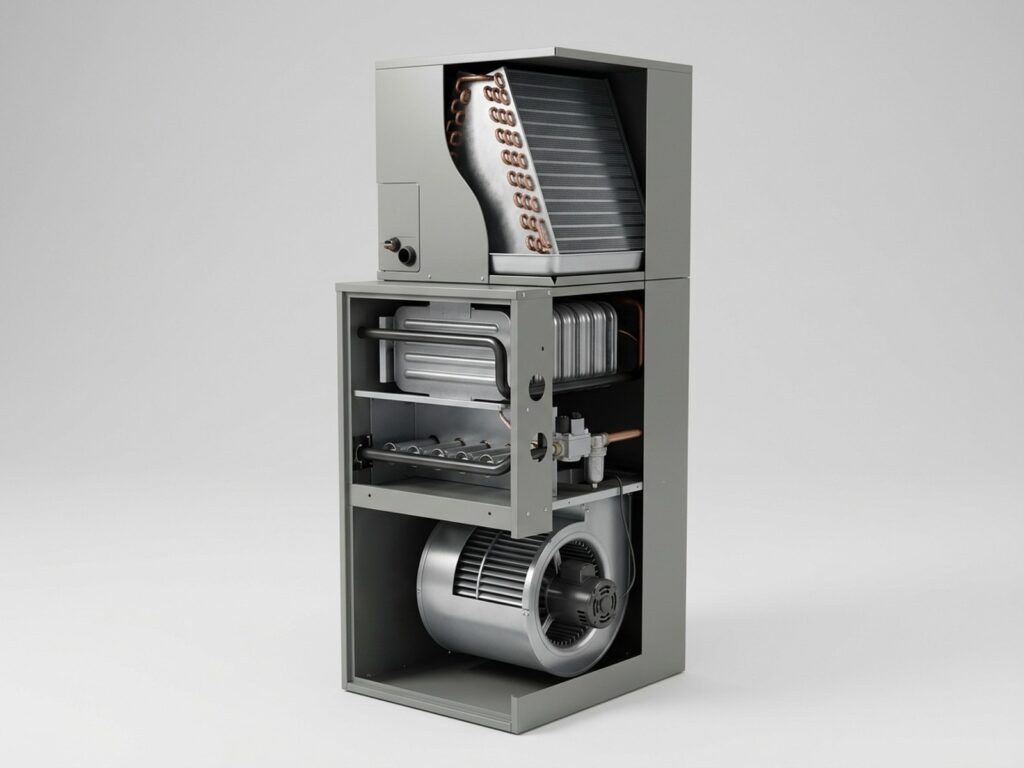
Furnaces do not automatically last longer in South Carolina. A furnace here burns gas for fewer hours than a furnace in a cold state, but its blower usually runs year-round, so the shared parts keep wearing after the heating season ends.
Carrier makes the same point: because the furnace often serves as the air handler for a central air conditioner or heat pump, year-round use affects its total lifespan. In a Rock Hill split system, three furnace parts work every cooling cycle from late spring into October:
- The blower motor, which moves all of the cooled air through the house
- The blower capacitor, which starts that motor thousands of times a season
- The control board, which runs the blower on every call for cooling
The burners and heat exchanger get a lighter workload. The parts that move air do not.
South Carolina homes divide almost evenly between the two main ways to heat. The EIA’s 2020 Residential Energy Consumption Survey state data shows that 46% of the state’s 1.97 million homes heat mainly with a furnace and 41% with a central heat pump. A furnace household should expect gas-side wear to be modest and air-side wear to look a lot like a cooling-climate system.
That changes how to read the furnace’s age. A 17-year-old furnace in York County may have a heat exchanger in good shape and a blower motor near the end of its life. The age on the data plate is a starting point. The inspection tells you which clock is running out first.
What shortens a furnace’s life?
Five problems account for most furnaces that quit early. Each one either makes the furnace run more hours or makes the heat exchanger run hotter than it was designed to.
A furnace sized by rule of thumb
The Air Conditioning Contractors of America publishes Manual J, the ANSI-recognized standard for residential load calculation. A furnace sized from a Manual J calculation runs long, even cycles. An oversized furnace reaches the thermostat setting in minutes, shuts off and restarts again soon after. Every start wears the igniter, inducer and controls. Oversizing is common in the Carolinas, where a modest heating load is easy to overshoot.
Skipped maintenance
The ENERGY STAR maintenance checklist recommends a heating check-up every fall that covers gas connections, gas pressure, burner combustion and the heat exchanger. It notes that a dirty burner or cracked heat exchanger causes improper burner operation and can make the equipment run less safely and efficiently.
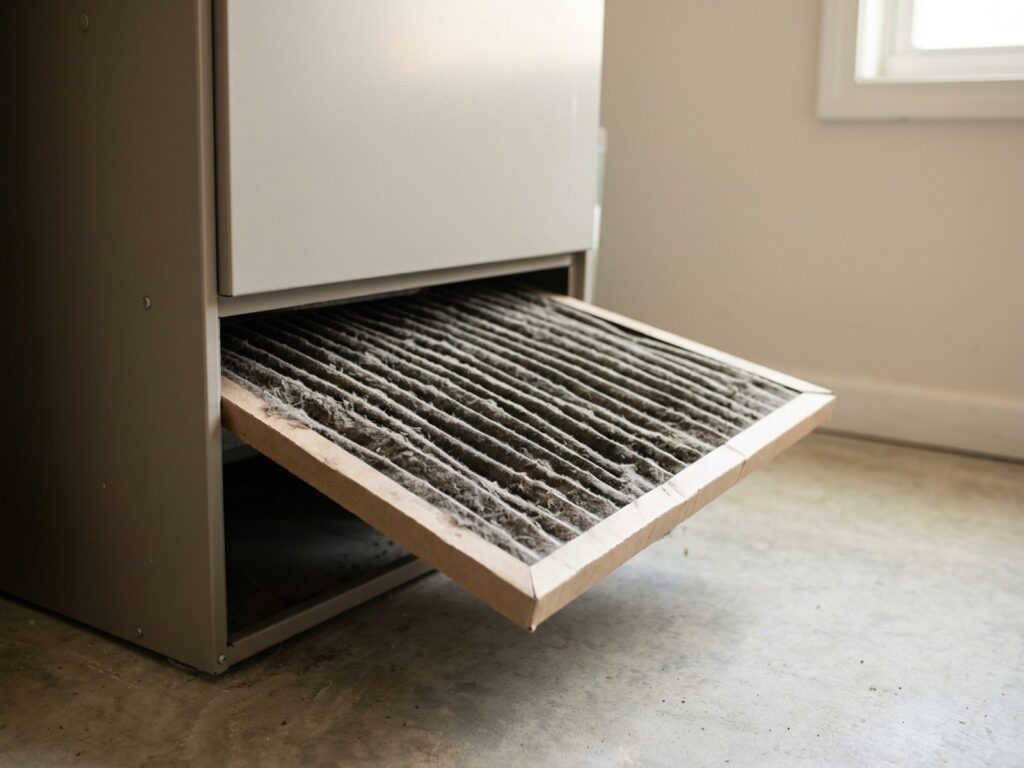
Filter neglect
ENERGY STAR warns that a dirty filter can increase energy costs and damage equipment, leading to early failure. A clogged filter starves the furnace of return air. The heat exchanger overheats, and the high-limit switch shuts the burners off to protect it.
Venting and condensate problems on 90%+ furnaces
A high-efficiency condensing furnace vents through PVC pipe and produces acidic condensate that has to drain away. A sagging vent pipe, a blocked termination outside or a clogged condensate line will shut the furnace down on a safety switch. Left unrepaired, condensate leaks can corrode parts inside the cabinet.
Heat exchanger stress with age
Every heating cycle expands and contracts the metal of the heat exchanger. After enough cycles, especially with chronic overheating, the metal can crack. That is the age-related failure that ends a furnace on safety grounds rather than on cost.
How do you know your furnace is near the end of its life?
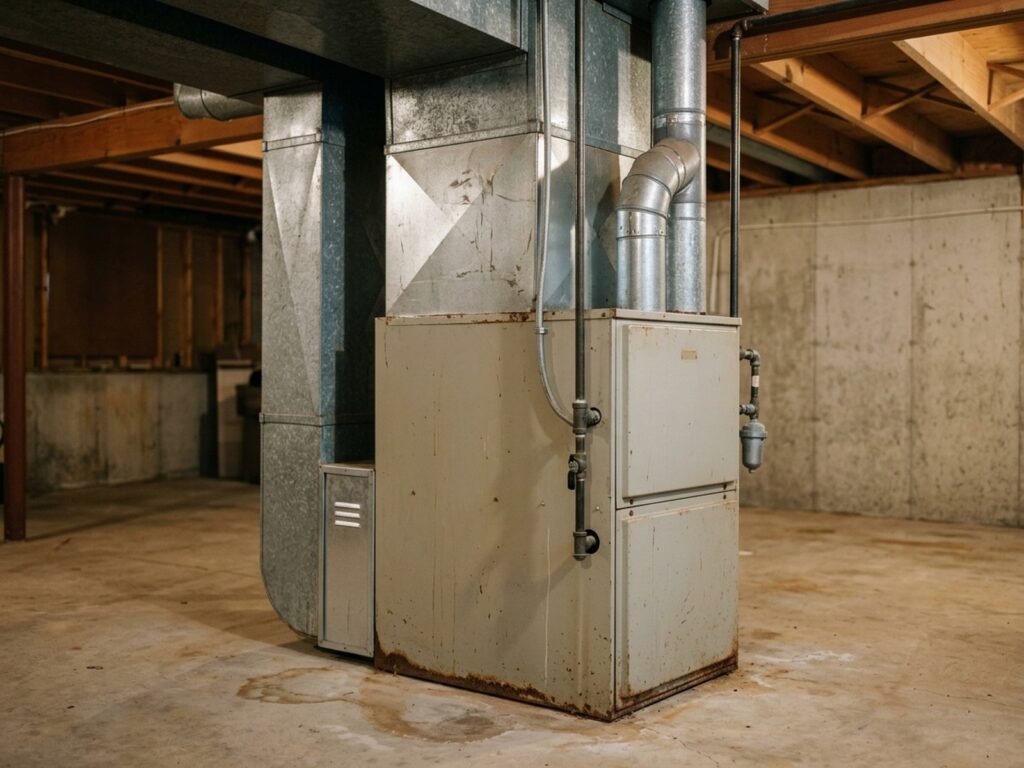
Your furnace is near the end of its life when age, repair frequency and comfort start pointing the same way. The DOE Energy Saver guide lists three signs alongside age:
- The equipment needs frequent repairs
- Energy bills keep going up
- Some rooms in the home are too hot or too cold
Start with the age. The data plate inside the furnace door lists the model and serial number, and the manufacturer can date the unit from the serial. Trane’s guide to how long a furnace should last advises paying closer attention once a furnace passes 10 years, because most furnace repairs happen in the last few years of its life.
| Furnace age | What to watch | What to do |
|---|---|---|
| Under 10 years | Repairs should be rare. Early failures usually trace to sizing, airflow or installation. | Annual fall maintenance, regular filter changes. Repair what breaks. |
| 10 to 15 years | First wear-part repairs: igniter, flame sensor, inducer, blower capacitor. Gas bills creeping up. | Keep a repair log. Ask at each service visit how the heat exchanger and blower look. |
| 15 to 20 years | Past the DOE replacement threshold. Repeat repairs, uneven rooms, longer run times. | Get a replacement quote alongside any major repair, so both numbers are on the table. |
| 20 years and older | Past the typical range. Heat exchanger wear is the main safety concern. | Plan the replacement before a failure forces it. Keep carbon monoxide alarms working on every level. |
For the repair-or-replace decision itself, our guide on when to replace a furnace instead of repairing it walks through the rules of thumb technicians use and the failures that call for replacement regardless of age.
Should you replace a 20-year-old furnace that still works?
You do not need to replace a 20-year-old furnace that still works just because of its age. One that heats evenly, passes its annual safety inspection and has a clean repair history can keep running. What changes at 20 is the planning: you are now replacing on your own schedule or on the furnace’s.
Replacing a working furnace on your own schedule has three real advantages:
- Time for a proper Manual J load calculation instead of matching the old size
- Time to compare written quotes line by line
- No pressure to accept whatever equipment is in stock on the coldest night of January
Three questions decide the timing:
- How old is the air conditioner or heat pump paired with it? If the outdoor unit is 15 years old too, quoting both together often makes more sense than replacing one now and the other in two summers.
- What did the last inspection find? Rust inside the cabinet, scorch marks near the burners or a heat exchanger flagged for monitoring all move the decision forward.
- What is the repair history? Two significant repairs in two winters is a pattern, not bad luck.
The replacement market has one Carolinas-specific wrinkle as of November 2026. ENERGY STAR certifies a separate class of gas furnaces for the southern half of the country, and its furnace program page says those “U.S. South” models are up to 16% more efficient than standard models and save an average of $60 a year in energy costs. That modest saving reflects our short heating season, and it is why efficiency tier deserves a real calculation here instead of an automatic upgrade.
Frequently asked questions
How often should you replace your furnace?
You should replace a furnace about every 15 to 20 years, when it reaches the end of its service life, not on a fixed calendar. The DOE suggests considering replacement once a furnace is more than 15 years old, especially if repairs and energy bills are climbing.
How can I tell how old my furnace is?
Check the data plate inside the furnace’s front panel for the model and serial number. Most manufacturers encode the manufacture date in the serial number, and the manufacturer or a technician can decode it for you.
Can a furnace last 30 years?
A furnace can last 30 years, but that is well past the typical 15 to 20 year range. Carrier says high-quality furnaces can reach 30 years when they are properly installed and meticulously maintained, and electric furnaces often last 20 to 30 years because they have no combustion parts.
Does annual maintenance make a furnace last longer?
Yes. ENERGY STAR recommends a heating check-up every fall that covers gas pressure, burner combustion and the heat exchanger. That inspection catches overheating, venting and wear problems before they shorten the furnace’s life or create a safety issue.
Plan your next furnace before you need it
The useful answer to “how long will my furnace last” comes from looking at the furnace itself: its age, its heat exchanger, its blower and its repair history. Atlas Heating & Cooling handles furnace installation and replacement across Rock Hill, York County and the surrounding Carolinas service areas, starting with a load calculation on your home.
Call (803) 839-0020 to schedule a furnace evaluation.