Furnace short cycling is when a furnace fires, runs for only a few minutes, shuts off and starts again, over and over. Carrier defines it as heating cycles that last less than 5 to 10 minutes, too short for the system to finish a full cycle.
Short cycling is a symptom, not a diagnosis. Usually a safety control is stopping the burners early because air cannot move through the furnace. The cause ranges from a filter you can change in two minutes to a cracked heat exchanger that needs a technician today.
This guide covers what short cycling looks like, the usual causes in order of likelihood, the checks that are safe to make yourself, what the limit switch does, and when short cycling becomes a safety problem.
What is furnace short cycling?
Furnace short cycling is a heating pattern where the furnace shuts off before the house reaches the thermostat setting, then restarts within minutes. Carrier’s guide to understanding furnace short cycling says a system that repeatedly runs for less than 5 to 10 minutes before shutting off may be short cycling and needs attention.
Run length varies with the furnace, the house and the weather, so treat any minute figure as a rough guide. The pattern matters more than the stopwatch.
| What you notice | Normal heating cycle | Short cycling |
|---|---|---|
| Run time | Runs long enough to raise the room temperature, often 10 minutes or more in moderate weather on many systems | Runs only a few minutes, often under 5 to 10 minutes |
| How the cycle ends | The thermostat is satisfied and stops calling for heat | The burners stop while the thermostat is still calling for heat |
| Time off | The furnace stays off until the house cools a degree or two | The furnace restarts within a few minutes |
| Comfort | Rooms reach the setting and hold it | Rooms stay cool or swing between warm and chilly |
Lennox uses an even tighter test in its homeowner guidance on furnace short cycling: a furnace that shuts off in under five minutes, or starts again almost immediately after shutting off, could be short cycling.
Why does my furnace keep turning on and off?
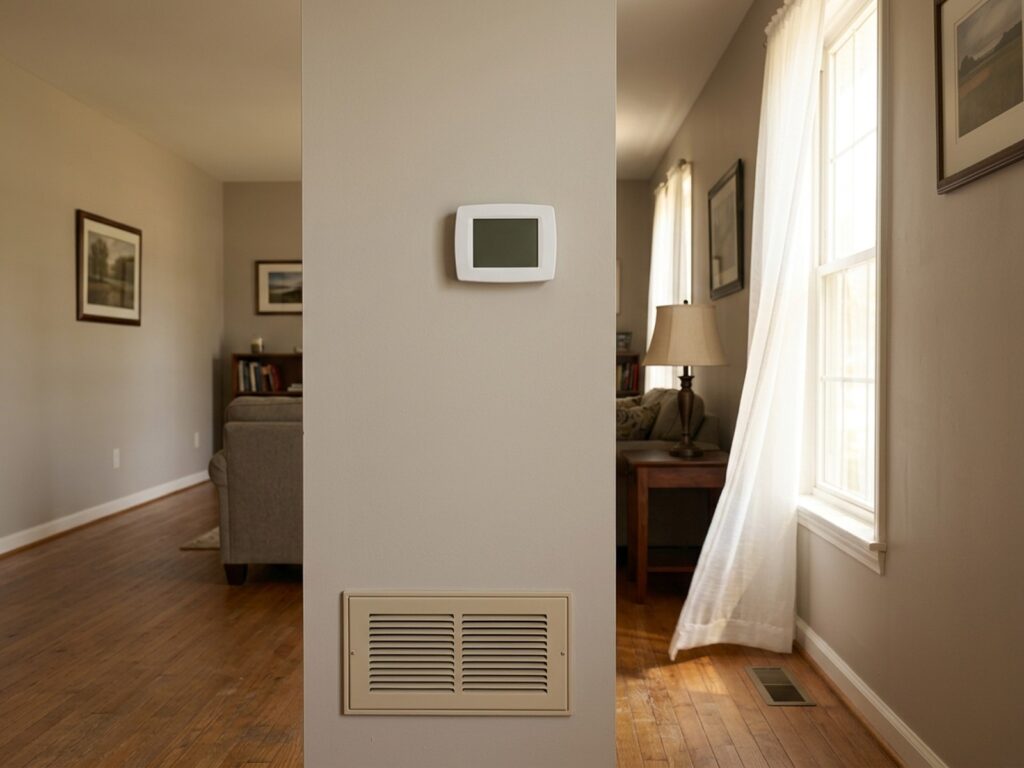
A furnace keeps turning on and off because something is stopping each cycle early. Trane’s furnace short cycling troubleshooting page lists the most common furnace short cycling causes as thermostat issues, restricted airflow, a faulty limit switch, a cracked heat exchanger and an oversized furnace.
In homes around Rock Hill, these are the causes worth working through, roughly from most likely and easiest to most serious:
- A clogged air filter. Restricted airflow overheats the heat exchanger, and the high-limit switch shuts the burners off. This is the most common cause you can check yourself.
- Thermostat location or settings. A thermostat near a supply register, a lamp, a sunny window or a drafty door reads the wrong temperature and ends the cycle early.
- Blocked supply registers or return grilles. Closed vents and furniture over a return starve the furnace of air the same way a dirty filter does.
- A dirty flame sensor. The burners light, the sensor cannot confirm the flame, and the control board shuts the gas off within seconds. Cleaning it is a technician task.
- An oversized furnace. A furnace with far more capacity than the house needs reaches the setting in minutes and shuts off. Trane notes that if the furnace has short cycled since the day it was installed, sizing is the likely cause.
- Blocked intake or exhaust vents on a 90%+ furnace. Leaves, a bird nest or frost on the outdoor PVC pipes trip a safety switch.
- A pressure switch or inducer motor fault. The furnace cannot prove it is venting safely, so it stops the cycle.
- A cracked heat exchanger. Damaged metal can overheat and trip the limit repeatedly. This one is a stop-and-call problem.
Oversizing is common in the Carolinas, where the heating load is modest and easy to overshoot. The Air Conditioning Contractors of America’s Manual S standard for residential equipment selection exists to match equipment capacity to the load a Manual J calculation finds, which is how a replacement furnace avoids repeating the problem.
Why does my furnace shut off before the house is warm?
A furnace shuts off before the house is warm when a safety control ends the cycle instead of the thermostat. The thermostat is still calling for heat, but the furnace’s own controls have detected overheating, a lost flame or a venting problem.
Three shutdown patterns are worth telling apart:
- Warm air for a few minutes, then cold air, then silence. This is the classic furnace overheating pattern. The high-limit switch opened because the heat exchanger got too hot.
- Burners light, then go out after a few seconds, repeatedly. The flame sensor is not confirming the flame. The blower may keep running on cool air.
- The inducer motor starts, but the burners never light, or light and drop out. The pressure switch is not proving draft, which points to venting, condensate or inducer problems.
Note which pattern you see before you call. It tells the technician where to start.
What can you safely check yourself?
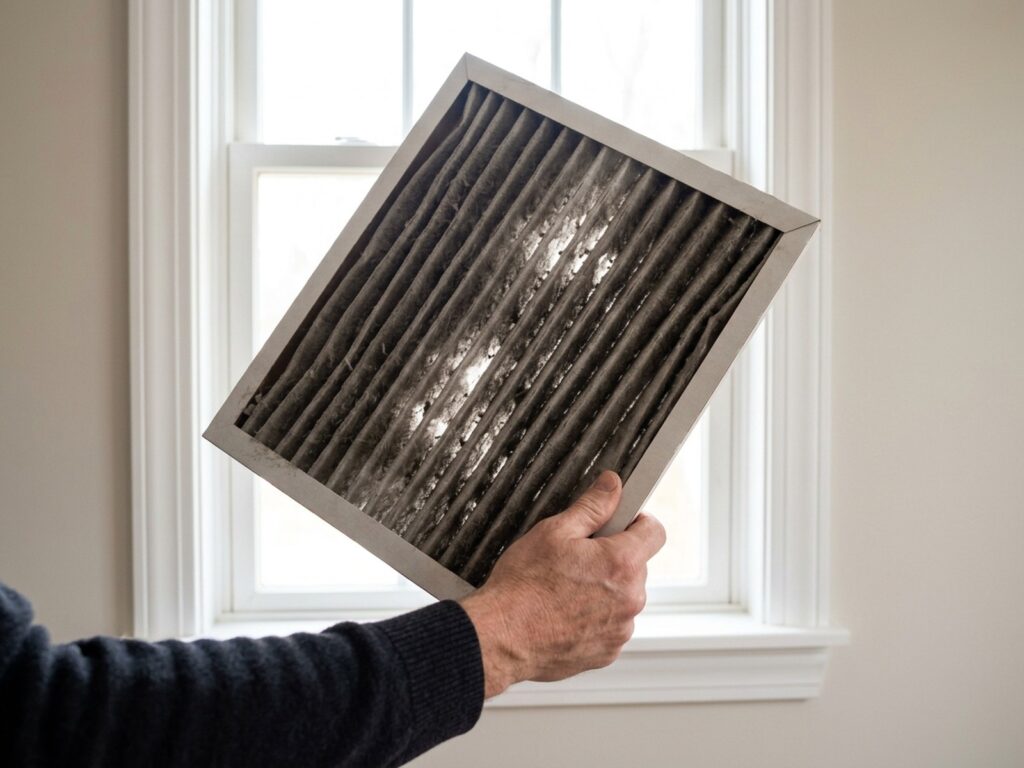
You can safely check four things: the filter, the thermostat, the vents inside the house and the vent pipes outside. Carrier’s short cycling checklist starts with the same two: airflow first, then the thermostat. Everything past these checks involves gas, line voltage or the burner compartment.
1. Replace the air filter
Pull the filter and hold it up to a light. If light barely passes through, replace it and run the furnace again. The ENERGY STAR maintenance checklist warns that a dirty filter can increase energy costs and damage equipment, leading to early failure. Our guide to furnace and AC filters and MERV ratings explains which filter suits a residential system without choking airflow.
2. Check the thermostat
Replace the batteries if the thermostat uses them, and confirm the mode is HEAT and the fan is AUTO. Then look at where it sits: a supply register, lamp, sunny window or drafty door nearby can end a cycle early.
3. Open supply registers and clear returns
Walk the house. Open every supply register, including rooms you do not use, and move furniture, rugs and boxes away from return grilles. The DOE’s Energy Saver guide makes the same point: keep warm-air registers clear of furniture, carpeting and drapes.
4. Look at the outdoor vent pipes
A high-efficiency furnace has two PVC pipes ending outside the house. Look at them from outside and clear away leaves, mulch or snow around the openings. Do not pull on the pipes, disconnect anything or push objects inside them.
Stop after these four checks. Do not clean the flame sensor, open the burner compartment, bypass or jump the limit switch, or keep resetting the furnace to see if it clears. A limit switch that keeps tripping is protecting the furnace from a real problem.
What does the furnace limit switch do?
The furnace limit switch is a temperature safety control that shuts the burners off when the air inside the furnace gets too hot. It protects the heat exchanger from overheating, then lets the furnace restart once it cools.
That restart is what makes a limit trip look like short cycling. The furnace heats, overheats, trips the limit, cools down, restarts and trips again. Trane notes that a faulty limit switch can also think the furnace is overheating when it is not, which shuts the furnace down prematurely.
A tripping limit switch is usually a symptom, not the fault. Replacing the switch on a furnace that is genuinely overheating removes the warning and leaves the cause in place, so a technician first confirms whether the switch failed or something upstream is making the furnace run hot.
When is short cycling a safety problem?
Short cycling is a safety problem when the furnace is overheating repeatedly, when the heat exchanger may be damaged, or when there is any sign of carbon monoxide or a gas smell. A filter-related limit trip that stops after a new filter is not an emergency. Repeated trips that continue after the safe checks are.
Trane explains that a cracked heat exchanger can cause the furnace to overheat and shut down, cool off, try again, quickly overheat and shut down again. A cracked heat exchanger can let combustion gases into the airstream, which is why our page on the warning signs of a cracked heat exchanger treats it as a stop-and-call condition.
Turn the furnace off and call right away if any of these apply:
- The short cycling continues after a clean filter and open vents
- You see scorch marks, soot or rust around the burner area
- A carbon monoxide alarm sounds
- You smell rotten eggs or sulfur near the furnace or gas meter
The U.S. Consumer Product Safety Commission’s carbon monoxide information center recommends CO alarms on every level of the home and outside sleeping areas. If an alarm sounds, or you smell gas, get everyone outside to fresh air first, then call 911 or your gas utility from outside.
Our list of signs your furnace needs immediate repair puts short cycling alongside the other symptoms that should not wait for a convenient day.
How do technicians fix short cycling?
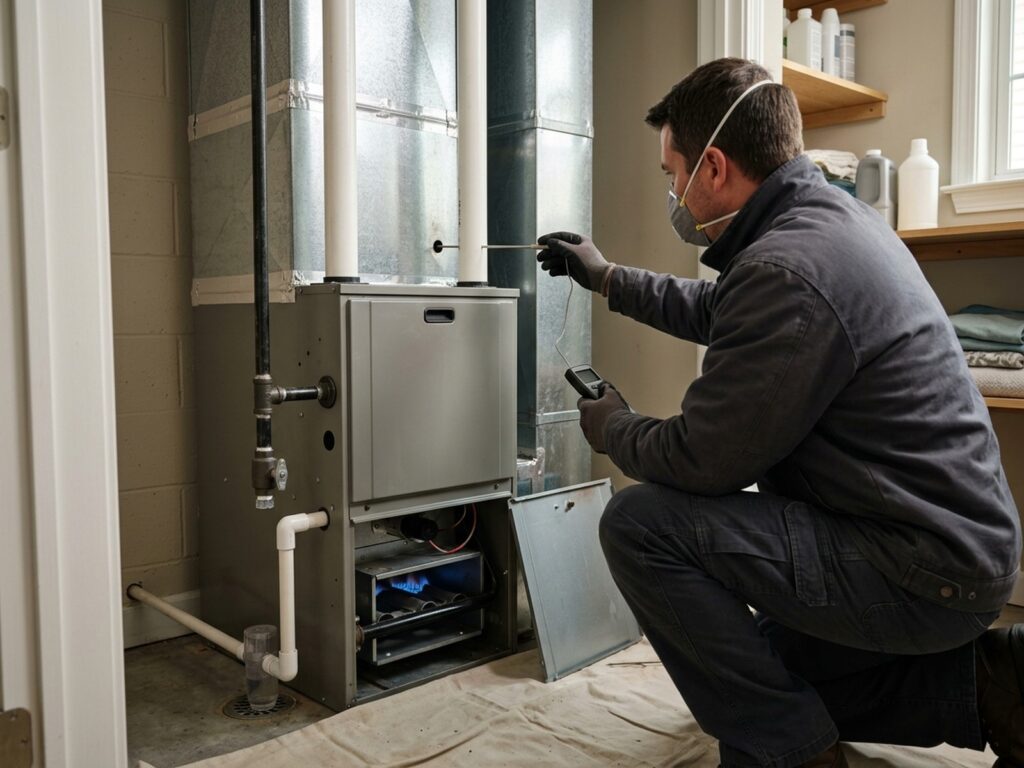
Technicians fix short cycling by finding which control is ending the cycle and why, then repairing the cause rather than the control. A proper diagnostic is done with the furnace running, because short cycling rarely shows itself on a cold furnace.
A heating diagnostic for short cycling usually covers:
- Temperature rise. The difference between return-air and supply-air temperature, compared with the range printed on the furnace’s rating plate. Too high a rise confirms an airflow or overheating problem.
- Airflow and static pressure. Filter, blower wheel, blower motor and duct restrictions.
- Flame sensing. The flame signal the control board reads, and the condition of the sensor and burners.
- Venting and draft. Inducer motor, pressure switch, vent pipes and the condensate drain on a 90%+ furnace.
- Heat exchanger inspection. Visual and instrument checks for cracks, rust-through or separation.
- Sizing. If nothing else explains it, a load calculation to see whether the furnace is oversized for the house.
Most short cycling ends with a straightforward repair, such as an airflow correction, a cleaned flame sensor or a cleared condensate line. An oversized or failing furnace turns the conversation into a replacement plan sized to the home.
Frequently asked questions
Is furnace short cycling dangerous?
Furnace short cycling is not always dangerous, but it can be. A limit trip caused by a dirty filter is a comfort and wear problem. Repeated overheating, a cracked heat exchanger or a carbon monoxide alarm make it a safety problem that needs a technician right away.
How long should a furnace run per cycle?
A furnace should run long enough to bring the house up to the thermostat setting, often 10 minutes or more per cycle in moderate weather on many systems. Carrier treats cycles that repeatedly last less than 5 to 10 minutes as possible short cycling.
Can a dirty filter cause a furnace to short cycle?
Yes. A dirty filter is the most common cause you can check yourself. It restricts airflow, the heat exchanger overheats, and the high-limit switch shuts the burners off until the furnace cools and restarts.
Should I reset my furnace if it keeps shutting off?
No. Reset it once at most, after the filter and vent checks, and only if the manual allows it. A furnace that keeps shutting off is responding to a real fault, and repeated resets put more stress on the heat exchanger.
Get short cycling diagnosed before it gets worse
If a new filter and open vents did not stop the cycling, the next step is a technician measuring the furnace while it runs. Atlas Heating & Cooling handles furnace and heating repairs across Rock Hill, York County and the surrounding Carolinas service areas. If a CO alarm has sounded or you smell gas, leave the house first and call 911 or your gas utility from outside.
Call (803) 839-0020 to schedule a heating diagnostic.