A furnace making a loud noise is telling you which part is in trouble: a bang at startup usually means delayed ignition, a squeal points to the blower motor, a buzz points to an electrical part, and a whistle points to restricted airflow. A soft hum, a click before ignition, and light pinging from the ducts are normal.
The urgency varies widely. A whistle is often a dirty filter you can change today; a boom every time the burners light is a combustion problem that means turning the furnace off. This guide decodes each sound, separates urgent from harmless, and lists the checks you can make without opening the cabinet.
Why is my furnace making a loud noise?
A furnace making a loud noise usually has one of five problems: delayed ignition at the burners, a worn blower motor or belt, a failing electrical part such as a capacitor or transformer, a loose panel or part, or restricted airflow. Trane’s homeowner guidance puts it plainly: a furnace shouldn’t make any loud noises, although you may hear it more when it runs at full capacity.
Noises get more common as motors, bearings, and burners wear. Match the sound to its likely cause:
| Sound | Likely cause | Urgency | What to do |
|---|---|---|---|
| Bang or boom as the burners light | Delayed ignition, often dirty burners | Urgent | Turn the furnace off at the thermostat and call |
| High-pitched squeal or screech | Worn blower motor bearings or a slipping belt | Soon | Book a repair before the motor fails |
| Loud hum or buzz | Capacitor, transformer, blower motor, or inducer motor | Soon; urgent with a burning smell | Call; shut off if you smell burning |
| Rattle while running | Loose access panel, loose screws, or a failing inducer motor | Depends | Check the panel door is seated, then call if it continues |
| Whistle | Restricted airflow: dirty filter, closed registers, blocked returns | Low | Change the filter and open registers |
| Scraping or grinding | Blower wheel rubbing its housing, or failed bearings | Urgent | Turn the furnace off and call |
| Ticking or pinging from the ducts | Metal ducts expanding and contracting | Normal | Nothing |
When the noise happens (at ignition, while the blower runs, or after shutdown) narrows the cause further.
What does a bang or boom when the furnace starts mean?
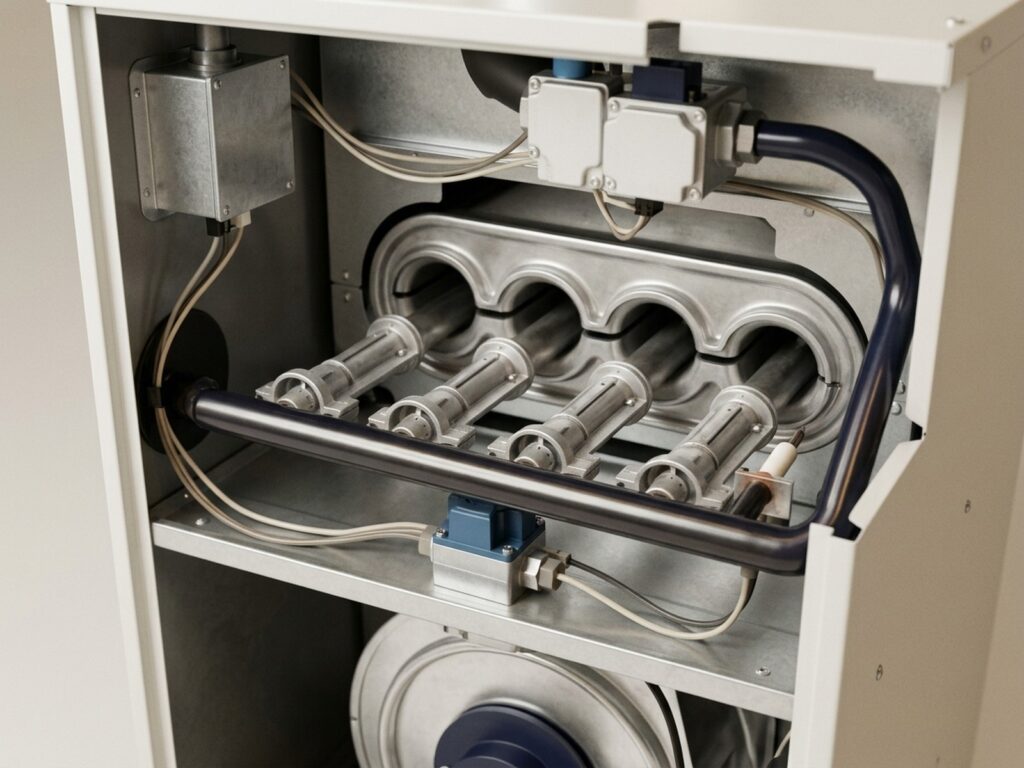
A bang or boom when the furnace starts almost always means delayed ignition: gas builds up in the burner area for a moment before it lights, so it ignites all at once instead of smoothly. Trane says a sudden bang at the furnace when it first starts up could indicate a delayed gas ignition issue, and needs immediate attention.
Common causes include:
- Dirty or rusted burners that slow the flame from spreading across the burner row
- A weak igniter or ignition sequence that lights the gas late
- Gas pressure that is out of adjustment
- A burner that is out of alignment
Why delayed ignition is a safety problem
Each small ignition bang puts a jolt of heat and pressure on the heat exchanger. The heat exchanger is the metal barrier that keeps combustion gases out of the air your blower pushes through the house. Repeated stress can crack it over time, and a cracked heat exchanger can let carbon monoxide into the supply air. Our guide to the signs of a cracked heat exchanger explains how a technician confirms one.
If your furnace bangs at ignition:
- Set the thermostat to OFF so the furnace stops trying to light.
- Do not open the burner compartment to watch the flame.
- Check that your carbon monoxide alarms work. The U.S. Fire Administration advises installing CO alarms in a central location outside each separate sleeping area and on every level of your home.
- Call for a heating repair before running the furnace again.
Why is my furnace squealing or screeching?
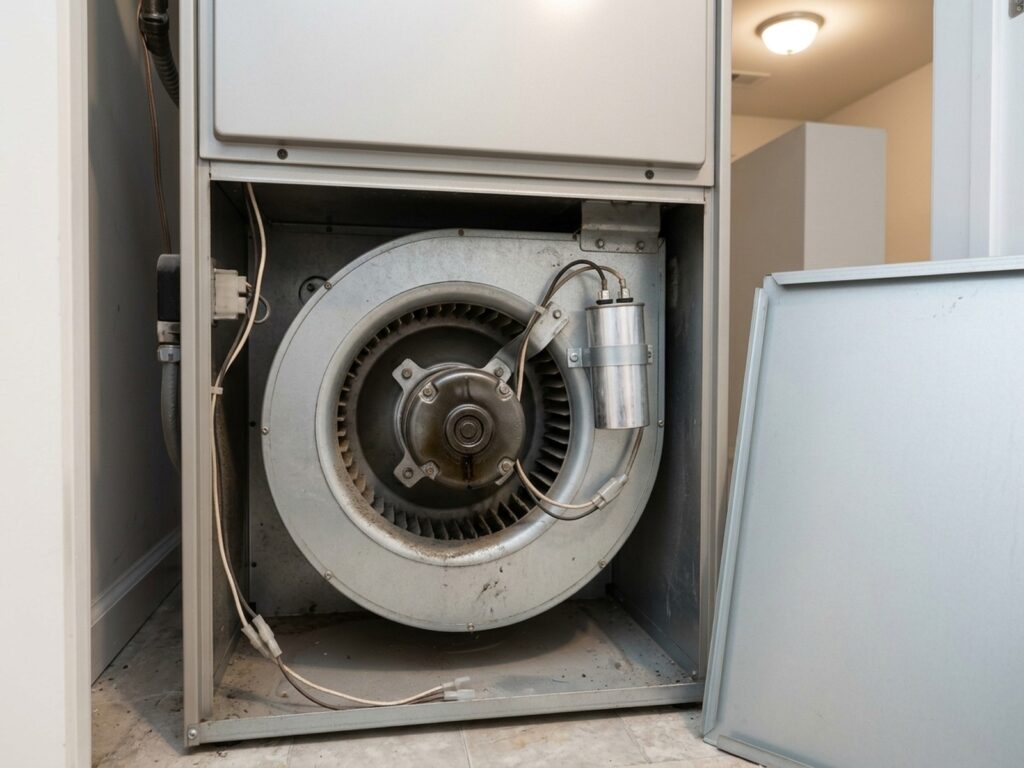
A furnace squealing or screeching is usually the blower motor. On direct-drive blowers, worn motor bearings make a high-pitched whine; on older belt-drive blowers, a worn or slipping belt squeals. Trane notes that the ball bearings in an older furnace fan motor may start to wear out, and the repair may be new bearings or a replacement blower motor.
A squeal is not an immediate danger, but ignored, it usually ends with a blower that stops entirely and no heat at all.
Do not oil the motor or adjust the belt yourself. The blower sits behind panels with line-voltage wiring, and ENERGY STAR’s maintenance checklist lists lubricating moving parts and tightening electrical connections as part of a contractor’s check-up, not as homeowner tasks.
A squeal that comes with a burning rubber smell points to a belt. Turn the furnace off and call.
Why is my furnace humming or buzzing?
A furnace humming quietly while it runs is normal, but a loud hum or buzz usually means an electrical part is failing. Trane separates the two: humming is a normal sign that things are going smoothly, while buzzing is louder and is not normal.
The usual sources of a buzz are:
- A loose or failing transformer. It steps incoming voltage down for the furnace controls.
- A failing capacitor. It helps start and run the blower motor, and a weak one often buzzes before it fails.
- A worn blower motor or inducer motor. The inducer is the small fan that pulls combustion gases through the furnace before ignition.
- Loose ductwork. This one is not the furnace at all, and it is not an emergency.
Buzzing that comes with a burning smell, flickering lights, or a tripped breaker is an electrical problem. Turn the furnace off and call. If the breaker trips again after one reset, leave it off.
What causes rattling or whistling in a furnace?
Rattling in a furnace usually comes from a loose access panel, loose screws, or a loose part inside the cabinet, while whistling almost always comes from restricted airflow.
Furnace rattling
Start with the blower door. If it is not seated, the panel vibrates while the blower runs. Many furnaces also have a door safety switch that stops the furnace when the door is off or loose, so a badly seated panel can cause both a rattle and a no-heat call.
A rattle that continues with the panel firmly in place, especially from the small motor that starts just before ignition, can be a failing inducer motor. That is technician work.
Furnace whistling
A whistle while the blower runs usually means the furnace is pulling air through too small an opening. Trane’s guidance is to check the filter, make sure registers are open, and make sure return vents are not blocked by furniture. Restricted airflow can also overheat the heat exchanger and trip the high-limit switch.
Scraping or grinding
Metal-on-metal scraping usually means the blower wheel has shifted and is rubbing its housing, or the motor bearings have failed. Turn the furnace off. Running it can destroy the motor.
What furnace noises are normal?
Normal furnace noises are quiet and predictable: a click before ignition, a soft whoosh as the burners light, a steady hum from the blower, and light ticking or pinging from metal ducts as they warm and cool. Trane lists a clicking noise before ignition and slight pinging or popping from ductwork among the normal sounds.
American Standard adds that crackling can be metal parts cooling after the furnace shuts off.
What matters is change. A sound that is new, louder than last winter, or getting worse each week deserves a call. Heat pump owners will also hear a whoosh and a short hum from the outdoor unit during its defrost cycle, which is normal and separate from furnace noise.
What can you safely check yourself?
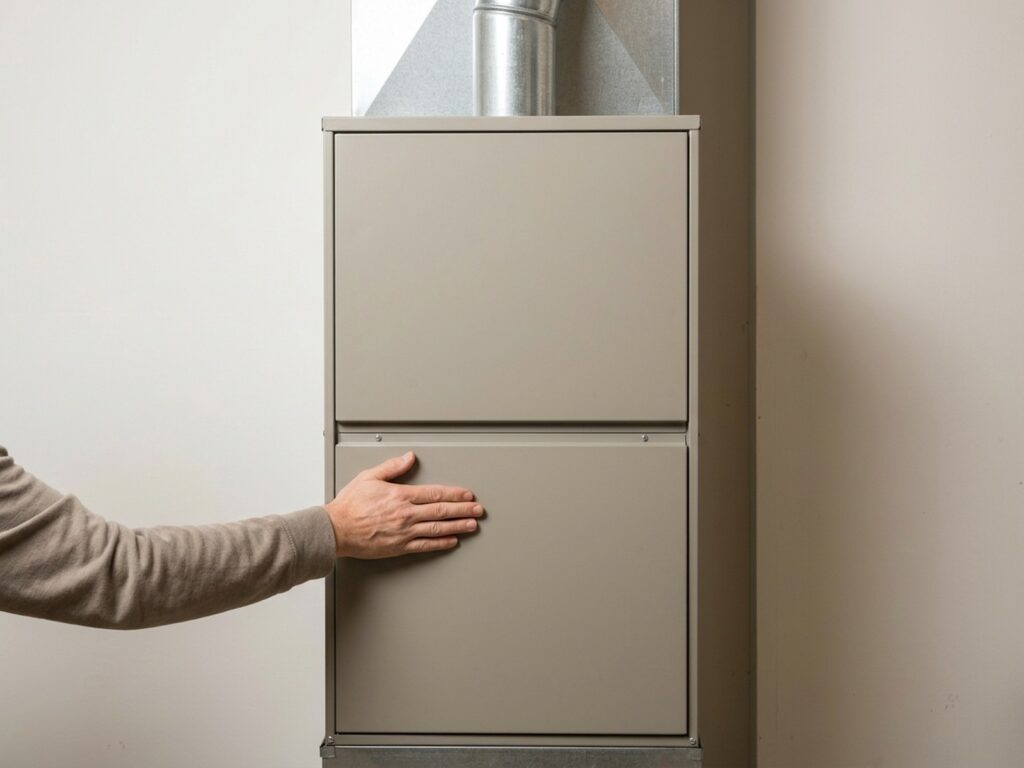
You can safely check four things on a noisy furnace without tools or opening the cabinet: the filter, the registers and returns, the blower door, and the thermostat fan setting.
- Replace the filter. A clogged filter causes whistling and can lead to overheating. ENERGY STAR recommends you inspect, clean, or change the filter once a month.
- Open every supply register and clear the returns. Furniture, rugs, and closed vents restrict airflow the same way a dirty filter does.
- Make sure the blower door is seated. Press the panel firmly into place. Do not remove inner panels or reach inside.
- Set the thermostat fan to AUTO. On ON, the blower runs constantly, which can make a normal hum seem new.
Stop there. Burners, motors, belts, wiring, and the gas valve are all technician work. If the noise is a bang at ignition, skip the checks and turn the furnace off first. Our furnace ignition troubleshooting guide covers the related no-heat checks if the furnace will not light at all.
Which furnace noises mean turn it off now?
Turn the furnace off and call for repair if you hear a bang or boom at ignition, scraping or grinding, or buzzing with a burning smell or a tripped breaker. These are combustion, mechanical, and electrical failures that get worse with every cycle. Two situations call for leaving the house first:
- A hissing sound near the furnace with a rotten-egg smell. That may be a gas leak. Leave the house and call the gas utility or 911 from outside. Do not flip switches on the way out.
- Any noise plus a carbon monoxide alarm. Get everyone outside and call 911 from outside.
The stakes are real. The U.S. Fire Administration reports that heating was the second leading cause of home fires in 2021, with an estimated 32,200 home heating fires, and it recommends having heating equipment inspected each year by a professional. Our list of signs your furnace needs immediate repair covers the other symptoms that cannot wait.
What does a technician check on a noisy furnace?
A technician diagnosing a noisy furnace runs a full heating cycle, listens for where and when the sound happens, and inspects the part it points to. The check-up ENERGY STAR describes for heating equipment includes gas connections, gas pressure, burner combustion, and the heat exchanger, along with motor voltage and current and the system’s starting cycle.
A bang at ignition usually leads to burner cleaning, a gas pressure reading with a manometer, and a heat exchanger inspection. A squeal or buzz leads to motor amperage, bearing, capacitor, and wiring checks.
Bring a clear description: when the noise happens, whether it is getting louder, and a short phone video with the sound. A recording saves diagnostic time when the noise is intermittent.
Furnace noise questions
Is it normal for a furnace to make noise when it turns on?
Yes, a click and a soft whoosh when the furnace turns on are normal. The click is the ignition sequence and the whoosh is the burners lighting. A loud bang or boom at startup is not normal and usually means delayed ignition.
Why does my furnace make a loud bang when it shuts off?
A single bang or pop from the ducts after shutdown is usually sheet metal contracting as it cools, and is generally harmless. A bang from inside the furnace cabinet, or one that gets louder over time, should be inspected.
Can a noisy furnace leak carbon monoxide?
A noisy furnace does not automatically leak carbon monoxide, but delayed ignition can stress and eventually crack the heat exchanger, which can. Working CO alarms outside sleeping areas and on every level are the only reliable warning, because CO has no smell.
Should I turn off my furnace if it is making a loud noise?
Turn it off if the noise is a bang at ignition, scraping, grinding, or any noise with a burning or gas smell. A whistle or a light rattle can usually wait until you check the filter and blower door, then book a repair.
Get a noisy furnace diagnosed
A new noise is the cheapest point to catch a furnace problem, before a worn bearing becomes a dead blower or delayed ignition damages the heat exchanger. Atlas Heating & Cooling handles furnace and heating repairs across Rock Hill, York County, and the surrounding Carolinas service areas.
Call (803) 839-0020 to schedule a diagnostic, and mention what the noise sounds like and when it happens.