Hot water that smells like rotten eggs is usually hydrogen sulfide gas forming inside the water heater. Penn State Extension explains that the tank’s magnesium anode rod can react with sulfates in the water to produce it, which is why the smell often shows up in the hot water only.
Before anything else, check where the smell is. A rotten egg smell at the faucet, only while water runs, is a water problem. A rotten egg smell in the air near a gas water heater, furnace, range or gas meter may be a natural gas leak. If that is what you notice, leave the house now and call 911 and your gas utility from outside.
This guide covers how to tell gas from water, why only hot water smells, whether sulfur-smelling water is dangerous, how city water and wells differ, and how the smell gets fixed.
Is the rotten egg smell coming from your water or from gas?
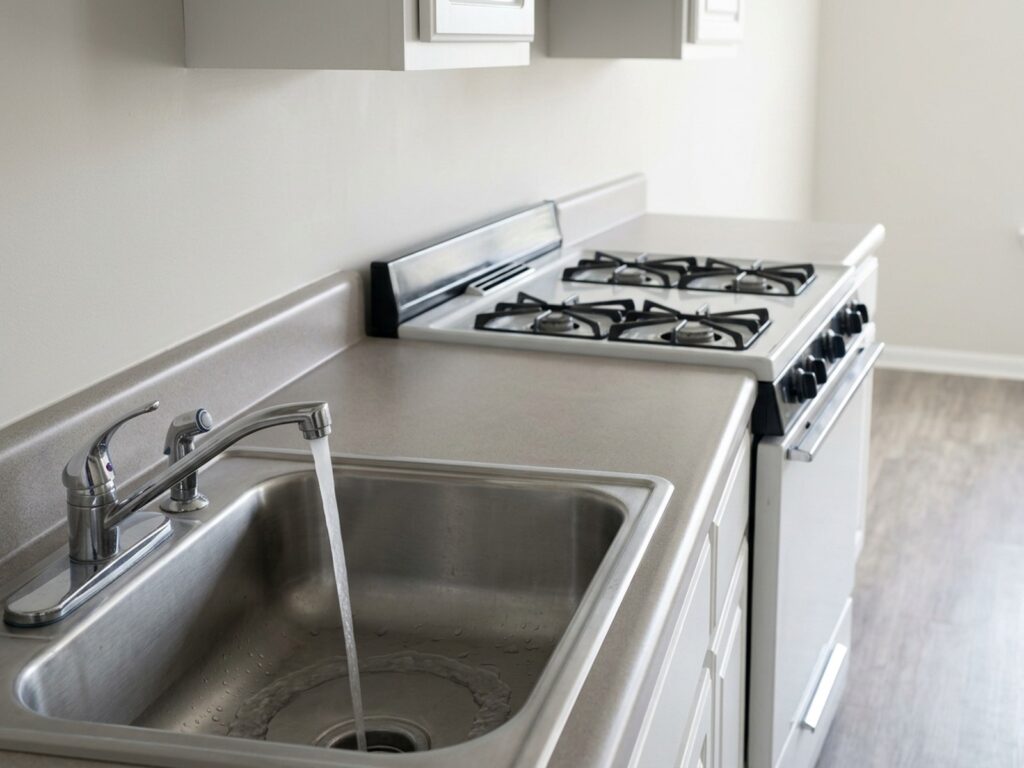
The rotten egg smell is coming from your water if it appears at the tap when water runs and fades when the faucet is off. It may be coming from gas if the smell hangs in the air, is strongest near a gas appliance or the meter, and stays when no water is running.
Natural gas has no smell of its own. Utilities add an odorant called mercaptan so leaks are easy to detect, and York County Natural Gas Authority’s gas safety page describes that odor as similar to rotten eggs or a burnt match.
The federal pipeline safety rule PHMSA enforces, 49 CFR 192.625, requires distribution gas to be odorized so a person with a normal sense of smell can detect it at one-fifth of the concentration at which it could ignite.
| Where and when you smell it | Most likely source | What to do |
|---|---|---|
| In the air near a gas appliance, the water heater closet or the meter | Possible natural gas leak | Leave the house, then call 911 and the gas utility from outside |
| At hot taps only, while water runs | Water heater (anode rod and bacteria) | Read on; plan a water heater evaluation |
| At hot and cold taps | Source water, most often a private well | Have the water tested |
| At one sink or tub only, even with the water off | Drain or trap | Clean the drain; call a plumber if it persists |
If you suspect a gas leak
York County Natural Gas Authority, which serves Rock Hill and much of York County, gives this guidance as of November 2026:
- Leave the home immediately and warn others to stay away.
- Do not use light switches, garage door openers, doorbells, phones or anything electrical that could spark.
- Do not light a match, candle or cigarette, and do not try to operate gas valves.
- From a safe location, call 911, then YCNGA’s 24-hour emergency line at (866) 201-1001.
If your home is served by a different gas company or uses propane, call that provider’s emergency line from outside instead. Do not go back in until the utility or fire department says it is safe.
Why does only my hot water smell like rotten eggs?
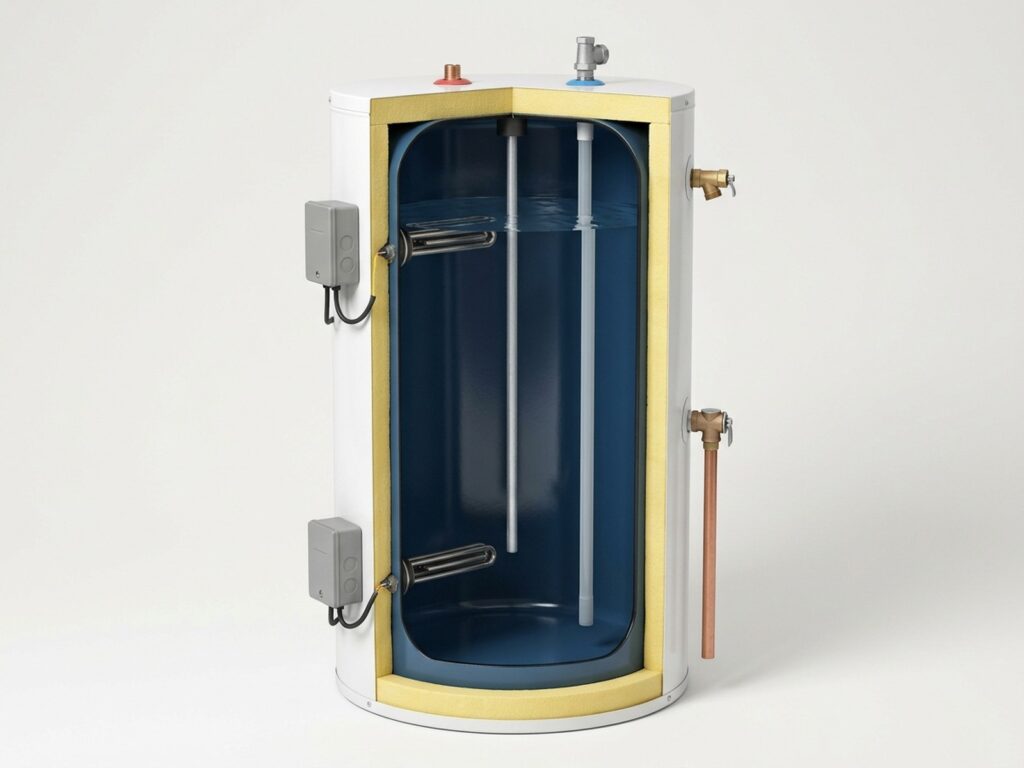
Only the hot water smells like rotten eggs because the reaction that makes hydrogen sulfide happens inside the water heater tank. Penn State Extension’s guide to hydrogen sulfide in household water says water heaters are fitted with a magnesium rod to inhibit corrosion, and that the magnesium rod can chemically reduce sulfates to form hydrogen sulfide.
Three conditions usually line up:
- Sulfate in the water supply. Many water sources carry small amounts naturally.
- Sulfur-reducing bacteria. Penn State notes these bacteria thrive in low-oxygen environments such as wells and plumbing systems.
- A magnesium anode rod. It protects the steel tank by corroding first, and that same reaction can feed hydrogen sulfide production.
Warm, still water in a tank gives the reaction time to build, so the smell is often strongest first thing in the morning or after a trip away. Penn State also notes that in rare cases a water softener can create a favorable environment for these bacteria.
The anode rod is the same part involved when hot water turns rusty. Our guide to rusty or brown hot water explains how the sacrificial anode protects the tank and what happens when it wears out.
Is sulfur-smelling hot water dangerous?
Sulfur-smelling hot water is usually a nuisance, not a health hazard, as long as you have ruled out a gas leak. Penn State Extension describes hydrogen sulfide in water as an aesthetic concern that causes a disagreeable taste and odor, and notes that most people can smell it at levels well below 0.5 mg/L.
The gas itself is poisonous and flammable, but Penn State explains that the human nose detects it well before it reaches levels that cause health concerns. The sulfur-reducing bacteria behind the odor do not cause human health concerns either.
The smell still deserves attention for three reasons:
- Corrosion. Hydrogen sulfide can corrode metal plumbing and leave yellow or black stains on fixtures.
- A worn anode. An anode rod reactive enough to cause odor may also be wearing down, and a tank without working anode protection corrodes faster.
- Misread gas leaks. A household used to a “sulfur smell” can dismiss a real gas leak. Keep the two separate every time.
Does it matter if you’re on city water or a well?
It matters, because the water source changes where the smell starts. On city water, a rotten egg smell at hot taps only almost always points to the water heater. On a private well, hydrogen sulfide can come from the groundwater itself, so both hot and cold water may smell.
Penn State Extension notes that hydrogen sulfide problems are most common in wells drilled into acidic bedrock such as shale and sandstone. If you are on a well and the cold water smells too, a water test from a state-certified laboratory is the next step, because changing the anode will not fix a problem that starts in the well.
If you are on city water and both hot and cold taps smell, contact your water utility. That pattern points to the supply rather than the heater, and the utility will want to know.
How do you get rid of the rotten egg smell in a water heater?
You get rid of the rotten egg smell in a water heater by removing the bacteria and changing the reaction that feeds them, usually with a flush and disinfection plus a different anode rod. The fixes below run roughly from most to least common.
- Professional flush and disinfection. Draining the tank, flushing sediment and disinfecting it clears the bacteria living inside. A. O. Smith’s water heater maintenance guidance notes that sediment buildup raises the risk of leaks and bad smells, so the flush helps on two fronts.
- A different anode rod. Penn State Extension says replacing the magnesium rod with an aluminum rod should eliminate the odor while keeping corrosion protection. Depending on the manufacturer, a technician may recommend an aluminum-zinc rod or a powered anode instead. Use only a rod the tank’s manufacturer approves.
- A temperature adjustment, within limits. Some technicians temporarily raise the tank temperature as part of disinfection. Any change should stay within scald-safe practice, which our guide to the right water heater temperature setting covers.
- Water testing. If the cold water smells too, test the source water before spending money on the heater.
What not to do. Do not pull the anode rod out and leave it out. Penn State Extension warns that removing it “could cause increased corrosion and reduced life of the hot water heater and will likely void the manufacturer’s warranty.” Do not pour bleach or other chemicals into the tank yourself, either. Disinfecting a water heater involves gas or electrical shutoff, a full drain and careful rinsing, and the chemicals can damage the tank or reach your taps.
When should a technician handle it?
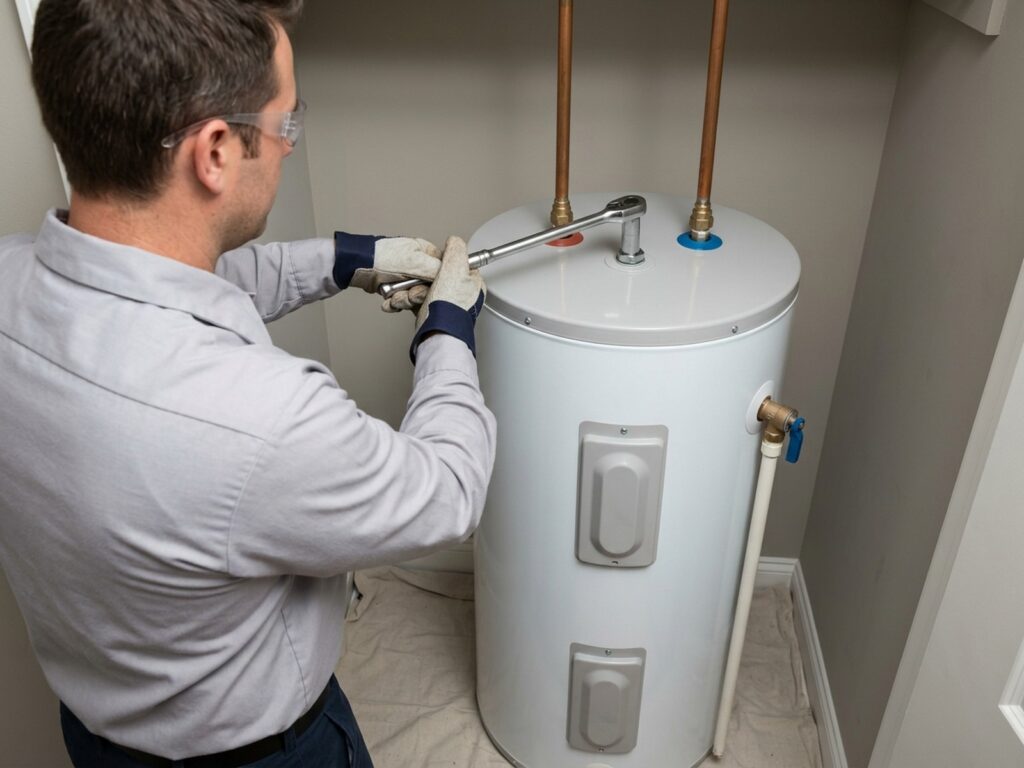
A technician should handle the fix whenever it involves opening the tank, changing the anode or disinfecting the heater. Anode rods are often seized into the top of the tank, sit under the gas or power connections, and must match the manufacturer’s specification to protect the warranty.
Call for a water heater evaluation if:
- The smell is in the hot water only and has lasted more than a few days
- The odor came back after a flush
- You also see rusty water, hear popping or rumbling, or find moisture under the tank
- The water heater is near the end of its service life
Age changes the math. The DOE’s Energy Saver guide says most storage water heaters last 10 to 15 years. On a heater at that age, an anode change may not be the best use of money, and our guide on when to replace a water heater instead of repairing it helps weigh the two. On a younger tank, an anode change and flush are usually the right first step.
Frequently asked questions
Can I remove the anode rod to stop the rotten egg smell?
No. Removing the anode rod can stop the smell, but Penn State Extension warns it can increase corrosion, shorten the heater’s life and likely void the manufacturer’s warranty. Replacing a magnesium rod with an approved aluminum or aluminum-zinc rod is the safer route.
Will flushing the water heater get rid of the sulfur smell?
Flushing and disinfecting the water heater can clear the smell, but it may return if the magnesium anode keeps feeding the reaction. That is why technicians often pair a flush with an anode change when the odor is in the hot water only.
Is it safe to shower in water that smells like rotten eggs?
Yes, in most cases. Penn State Extension calls hydrogen sulfide in water an aesthetic concern and says people smell it well before it reaches levels that cause health problems. Rule out a gas leak first if the smell is in the air rather than at the tap.
Does a tankless water heater get a rotten egg smell?
A tankless water heater rarely causes a rotten egg smell, because it has no storage tank and no magnesium anode rod for the reaction to start in. If water from a tankless system smells of sulfur, look at the water source first.
Get the smell traced to its source
A rotten egg smell from the hot water is fixable, and finding the cause is most of the work. Atlas Heating & Cooling provides water heater repair and service across Rock Hill, York County and the surrounding Carolinas service areas. If the smell is in the air near a gas appliance or meter, leave the house first and call 911 and your gas utility from outside.
Call (803) 839-0020 to schedule a water heater evaluation.